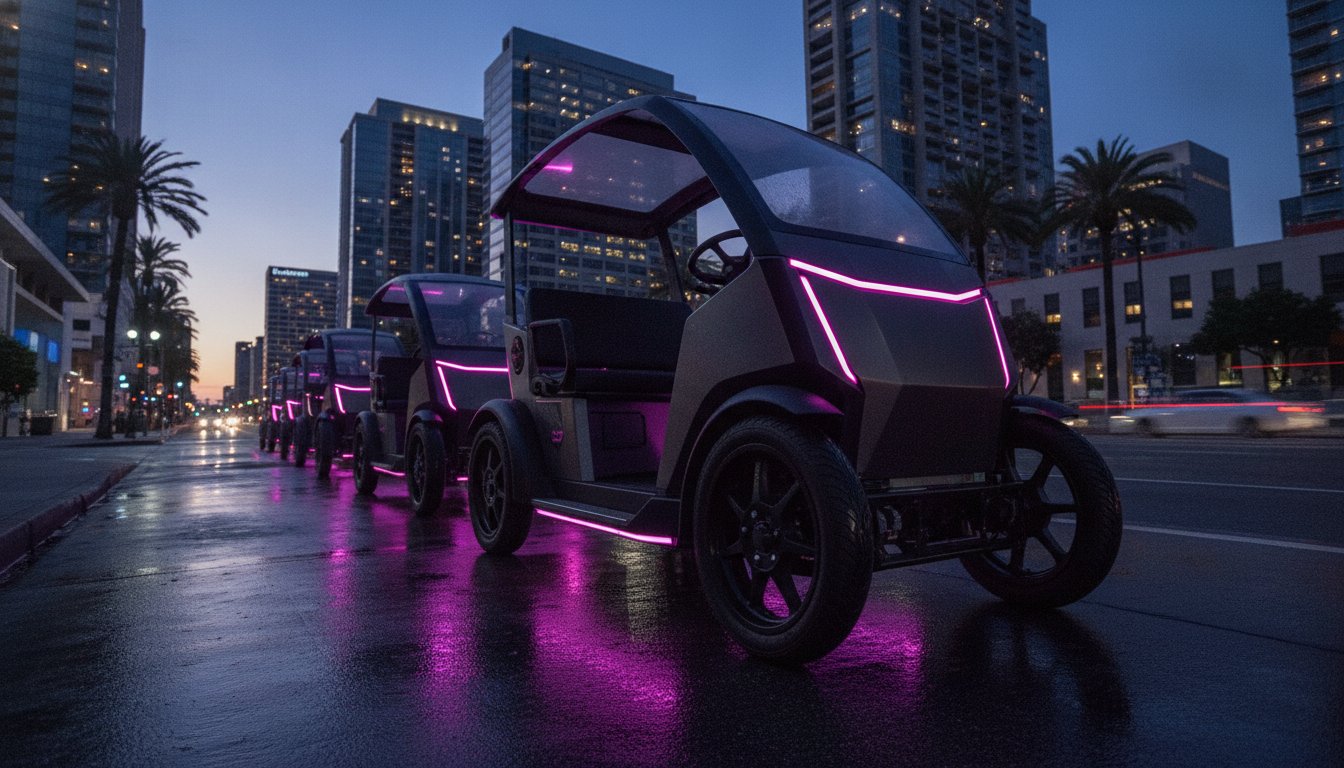
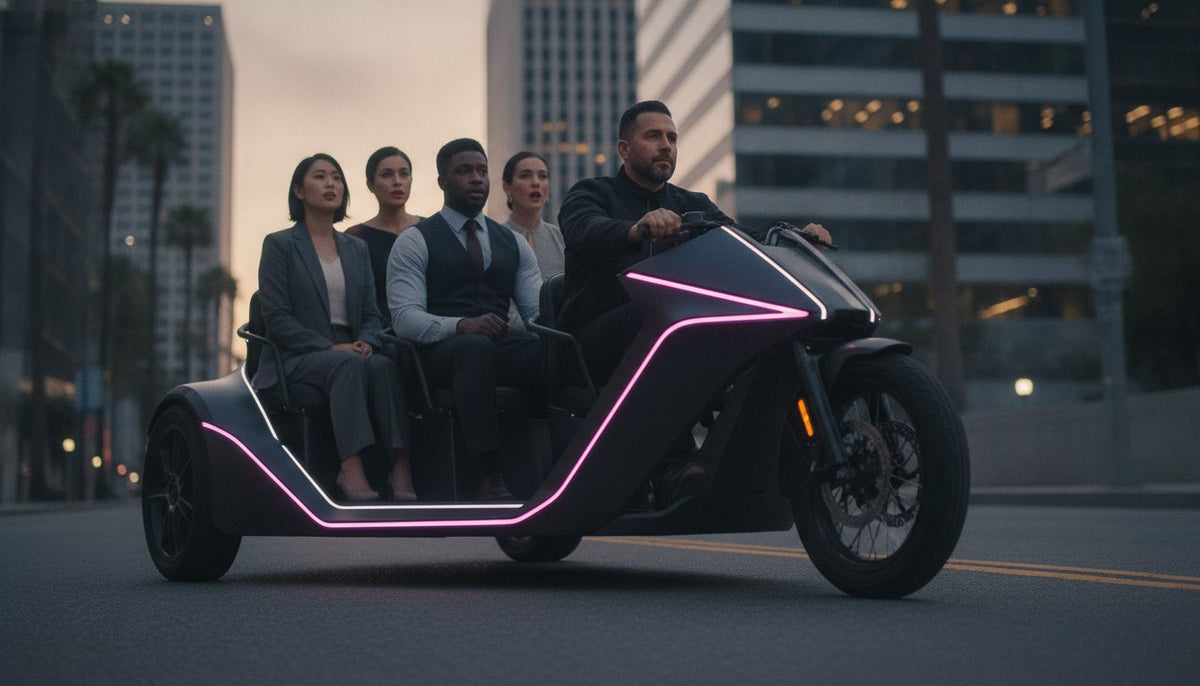
A cheap imported trike isn't a business asset; it's a ticking liability that will bleed your maintenance budget dry before the first season ends. Serious operators know that in the high-stakes world of urban transport, downtime is the ultimate profit killer. If you're searching for commercial electric pedicabs for sale, you've likely realized that frequent mechanical failures and the nightmare of hunting for elusive replacement parts can turn a promising fleet into a graveyard of expensive scrap metal. It's a frustrating cycle that holds your growth hostage.
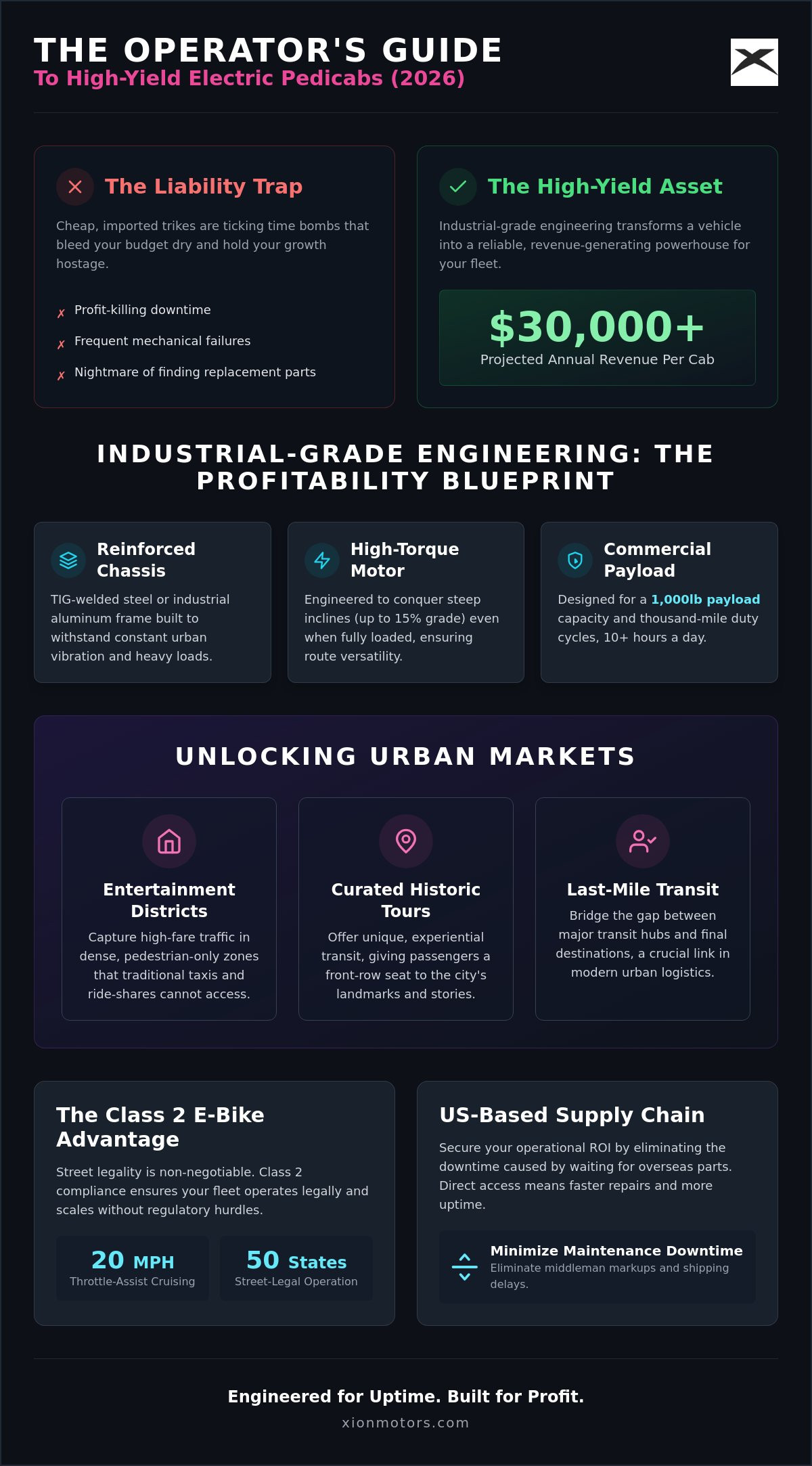
We've spent over 20 years in the trenches of fleet operations, and we've engineered the solution to these common industry pains. This 2026 buying guide will show you how to identify industrial-grade engineering that transforms a simple vehicle into a high-yield asset capable of generating $30,000 or more in annual revenue per cab. You'll learn how to evaluate motor torque for hilly terrain and ensure your fleet remains street-legal under Class 2 E-Bike standards. We'll examine the critical components that minimize maintenance intervals and explain why a US-based supply chain is the only way to secure long-term operational ROI.
Key Takeaways
- Identify the engineering benchmarks that separate industrial-grade vehicles from hobbyist trikes, focusing on high-torque motor systems and reinforced TIG-welded chassis.
- Compare the operational advantages of agile 3-seat models against high-capacity 6-seat variants when browsing commercial electric pedicabs for sale for your specific district.
- Master the business case for electric-assist fleets, including how to target a projected $30,000 to $35,000 in annual revenue per vehicle through fares and high-visibility advertising.
- Learn to navigate Class 2 E-Bike compliance to ensure your fleet remains street-legal and scalable across demanding urban environments in all 50 states.
- Secure your operational ROI by leveraging direct-to-operator fleet packages and a US-based supply chain that eliminates middleman markups and minimizes maintenance downtime.
The High-Performance Shift: Why Commercial Electric Pedicabs are Replacing Manual Fleets
Manual labor is no longer a viable business model for urban transit. In the context of cycle rickshaw history, we've moved beyond the era of raw physical exertion and limited range. Today's commercial electric pedicab is a precision-engineered Class 2 e-bike powerhouse. It's built for the relentless demands of city streets, not the occasional weekend ride. This shift represents a fundamental evolution from novelty transport to a legitimate industrial transit solution.
Professional electric-assist vehicles differ fundamentally from "hobbyist" manual trikes. A hobbyist trike is a leisure item; a professional pedicab is a high-yield asset. When you're searching for commercial electric pedicabs for sale, you're investing in a vehicle designed for thousand-mile duty cycles and heavy passenger loads. Electric assistance isn't a luxury. It's a mandatory requirement for driver retention and route versatility. It allows your fleet to conquer steep inclines and long-distance routes that would paralyze a manual operator. Drivers who aren't exhausted by noon stay on the road longer, generate more fares, and remain loyal to your operation.
The Class 2 E-Bike Advantage
Street legality determines the survival of your operation. Class 2 compliance allows these vehicles to operate on public roads without the complex licensing or insurance hurdles associated with motor vehicles. The integrated throttle-assist mechanism provides effortless 20mph cruising, ensuring your drivers can keep pace with urban traffic flow. Successfully starting a pedicab company depends on using equipment that meets these strict regulatory standards while delivering industrial-grade performance. It's the difference between a fleet that's sidelined by code enforcement and one that dominates the curb.
Market Demand in 2026 Urban Logistics
Metropolitan areas are rapidly closing their centers to traditional cars, but people still need to move. Pedestrian-only zones and historic districts are expanding, creating a massive opportunity for nimble, zero-emission transport. The rise of electric pedicabs for entertainment districts reflects a shift toward experiential transit. Passengers don't just want a ride; they want a front-row seat to the city. This transit model excels in three core areas: high-density entertainment districts, curated historic tours, and last-mile transit solutions between major hubs and final destinations. Much like the specialized excursions offered by Moab In A Day, a professional pedicab fleet provides an intimate, high-value way to experience a location while capturing a market that traditional taxis and ride-shares simply can't access.
Industrial-Grade Engineering: What Separates a Professional Pedicab from a Consumer Trike
Treating a pedicab like a standard bicycle is a recipe for operational disaster. When you're evaluating commercial electric pedicabs for sale, you must look past the aesthetic and examine the structural DNA. A professional vehicle is defined by its ability to handle a 1,000lb payload for ten hours a day, seven days a week. Consumer-grade components simply aren't built for this level of mechanical stress. They fail under the weight of commercial reality. And when they fail, your revenue stops immediately.
Engineering is your primary defense against fleet downtime. A chassis must be constructed from reinforced TIG-welded steel or high-grade industrial aluminum to survive the constant vibrations of urban asphalt. While competitors might claim a standard 750W motor is sufficient, real-world experience proves otherwise. You need high-torque systems designed for the rigors of a commercial duty cycle. Investing in commercial electric pedicabs for sale requires a focus on longevity; anything less is a liability that will cost you more in repairs than you saved on the initial purchase.
The CyberX Engineering Standard
The CyberX serves as the industry benchmark for structural integrity. It features a high-torque drive system specifically engineered to maintain performance on 15% grade inclines while fully loaded. This isn't just about raw power; it's about sustained reliability under pressure. We prioritize modular parts to ensure field-serviceability. If a component needs attention, your mechanics can swap it quickly, keeping the vehicle on the road where it belongs. This modularity eliminates the long-term downtime associated with proprietary, non-serviceable consumer designs.
Braking and Suspension for 1,000lb Payloads
Stopping a half-ton vehicle requires more than standard bicycle hardware. Mechanical rim brakes are dangerous under these conditions. You must demand hydraulic disc brakes that offer consistent, fade-resistant stopping power. Safety isn't just a preference; it's a legal and ethical requirement for any professional operator. Understanding Portland pedicab operating responsibilities highlights why professional-grade equipment is necessary to meet strict safety and record-keeping standards in regulated districts.
Heavy-duty suspension is equally critical for the lifespan of your fleet. It protects the frame from fatigue and ensures passenger comfort over uneven city streets. Without it, the constant impact of potholes will eventually crack even the best-welded joints. If you're ready to upgrade your operations with equipment built for the long haul, you can explore our full lineup of industrial trikes to see the difference for yourself. High-performance suspension isn't just for comfort; it's an insurance policy for your chassis.
3-Seat vs. 6-Seat Models: Selecting the Right Pedicab for Sale for Your District
Selection isn't a guess; it's a calculation of district dynamics. We've seen operators fail because they brought a high-capacity shuttle to a district with narrow, winding alleys. Choosing the right equipment requires matching the vehicle's footprint to your specific urban environment. When you're searching for commercial electric pedicabs for sale, you're choosing the foundation of your revenue stream. One model isn't "better" than the other. They are different tools designed for different operational goals.
The 3-seat model is the backbone of the high-speed tour rotation. Priced at $13,500, it offers the agility needed to navigate dense city traffic and tight corners. It's the ideal choice for point-to-point transit where speed and maneuverability are paramount. On the other hand, the 6 seat electric pedicab, available for $17,500, is a group transport powerhouse. It excels in flat districts, beachfronts, and stadium zones where moving large parties is the primary demand. You trade a tighter turning radius for a significant increase in per-trip fare potential.
The VorteX: High-Capacity Precision
High-traffic zones require vehicles that can move volume without sacrificing structural integrity. The Custom VorteX Trike is specifically engineered for these specialized business needs. By utilizing a 6-seat configuration, operators maximize their revenue per mile by capturing larger groups in a single booking. This seating arrangement is optimized for passenger visibility and safety, ensuring a premium experience that justifies higher fare rates. It's the definitive solution for shuttling wedding parties or corporate groups between venues.
Operational Dynamics of 3-Seat Powerhouses
Smaller units offer distinct advantages in specialized environments. These models are often the preferred choice for electric pedicabs for historic districts where cobblestone streets and restricted access make maneuverability essential. Driver ergonomics are a primary focus in our 3-seat designs. Lighter vehicles reduce physical strain during ten-hour shifts, which is critical for long-term driver retention. These units also benefit from faster battery swap and charge cycles because they carry less overall mass. When you evaluate commercial electric pedicabs for sale, consider the 3-seat option if your business model relies on rapid, nimble rotations in high-density urban cores.
Calculating the Business Case: ROI, Revenue Potential, and Operational Longevity
Pedicabbing is a high-yield business, but only if the math works. Operators in active urban districts report earning between $30,000 and $35,000 per vehicle annually. This isn't theoretical. It's the result of combining consistent fare revenue with secondary income streams. When browsing commercial electric pedicabs for sale, you're looking for a platform that supports this level of output. Unlike gas-powered shuttles, electric units eliminate fuel costs and drastically reduce insurance premiums. The ROI on an electric fleet is significantly faster because your overhead is stripped to the essentials. Gas-powered shuttles are burdened by complex engine maintenance and volatile fuel prices. In contrast, an electric fleet offers a predictable, low-cost operational profile. The charging cost for a full shift is often less than two dollars. This massive delta in operational expense allows you to recapture your initial capital investment much faster than with traditional internal combustion vehicles.
Revenue Optimization Strategies
Maximize your yield by treating the vehicle as a multi-channel revenue tool. High-visibility advertising wraps can generate consistent monthly retainers from local businesses. These contracts often cover the vehicle's monthly finance payment before the first passenger even boards. Implement dynamic pricing for peak events where demand outstrips supply. Training your operators to act as local concierges also drives tip-based revenue. A driver who provides value beyond the ride is a driver who earns a significant premium on every fare. Success in this industry requires viewing your fleet as a mobile marketing agency as much as a transit provider.
Maintenance and Depreciation Management
Operational longevity is the silent partner in your ROI. You must factor in the total cost of ownership, which includes rigorous electric pedicab maintenance to protect your investment. High-capacity lithium battery systems are designed for thousands of charge cycles, but their lifespan depends on proper care and industrial-grade charging hardware. As you evaluate commercial electric pedicabs for sale, remember that a lower sticker price often masks higher long-term maintenance costs. Working with an electric pedicab manufacturer USA based ensures you have immediate access to parts and technical support. This local connection reduces "dead-on-street" time. Scheduling preventative maintenance during off-peak hours avoids the catastrophic loss of a vehicle during your busiest season. If you want to scale effectively, you need equipment that stays in the field.
Build your high-yield fleet with Xion Motors.
Scaling Your Fleet with Xion Motors: Industrial Solutions for Modern Operators
Selecting a single vehicle is a start, but building a sustainable transit business requires a partner who understands the mechanics of scale. When you evaluate commercial electric pedicabs for sale, you aren't just buying hardware; you're securing a supply chain. Most manufacturers treat sales as a one-time transaction. We treat them as the beginning of a professional partnership. Our direct-to-operator sales model is designed to eliminate middleman markups. This ensures your capital goes directly into the quality of your frames and the power of your drive systems rather than padding a distributor's margin. It's a pragmatic approach for operators who value performance over fluff.
Scaling a fleet requires more than just capital. It requires a logistical infrastructure that can support growth across diverse urban environments. We provide national shipping capabilities to all 50 states, ensuring that whether you're launching in a coastal tourist hub or a landlocked entertainment district, your equipment arrives ready for assembly and deployment. Joining the Xion Motors network means you're aligning with a community of professional practitioners who prioritize industrial-grade reliability over consumer-grade shortcuts.
Fleet Pricing and Procurement
Growth is rewarded through our specialized electric pedicab fleet packages. These incentives apply to orders of 3 or more units, allowing you to mix and match 3-seat and 6-seat configurations to suit your district's specific needs. We've streamlined the logistics of national shipping to keep your lead times predictable. Once your units arrive, our support protocols provide your team with the technical guidance and replacement parts needed to maintain a high-performance standard. We don't just sell you a fleet; we provide the blueprint for keeping it on the street and generating revenue.
The Xion Motors Legacy
Every frame we build is backed by over 20 years of fleet operational experience. We've spent decades in the trenches, refining our engineering based on real-world failures and successes. This legacy is why we refuse to compromise on industrial-grade standards. We know that a pedicab isn't a toy; it's a commercial vehicle that must withstand 1,000lb payloads and relentless urban duty cycles. Our commitment to durability is your primary defense against depreciation. When you're ready to move beyond hobbyist equipment and invest in a high-yield transit asset, we're ready to build it for you. Explore our commercial pedicab collection and request fleet insights to begin your expansion today.
Dominate Your District with Industrial-Grade Transit
Success in the 2026 urban landscape requires moving beyond the limitations of hobbyist equipment. You've seen how industrial-grade engineering serves as your primary defense against downtime and how the right seating configuration maximizes every fare. Choosing between the CyberX or the VorteX isn't just a purchase; it's a strategic investment in a vehicle built to survive the rigors of the street. Our 20+ years of fleet operational experience are baked into every weld. This expertise ensures your operation is positioned for maximum reliability and growth.
Operators using our platforms are targeting $30,000 to $35,000 in annual revenue per vehicle. When you search for commercial electric pedicabs for sale, look for the engineering that supports these numbers. High-torque systems and reinforced chassis are the benchmarks of a serious operator. Don't settle for imported liabilities that stall your progress. It's time to deploy a fleet that works as hard as you do. We're here to help you scale with precision and confidence.
Shop Commercial Electric Pedicabs for Sale at Xion Motors
Frequently Asked Questions
How much does a commercial electric pedicab cost?
A professional 3-seat electric pedicab costs $13,500, while a high-capacity 6-seat model is priced at $17,500. These figures represent an investment in industrial-grade engineering that is built to withstand thousands of miles of urban transit. Unlike cheaper consumer alternatives, these vehicles are designed as high-yield assets with a focus on long-term structural integrity and operational reliability.
What is the typical ROI for a single electric pedicab?
Operators typically generate between $30,000 and $35,000 in annual revenue per vehicle through a combination of fares, tips, and advertising. Because the cost of electricity and maintenance is significantly lower than gas-powered alternatives, most owners see a full return on their investment within the first year. This fast recapture of capital makes scaling a fleet a highly viable entrepreneurial path.
Are electric pedicabs street legal in the USA?
Yes, our vehicles are engineered for Class 2 E-Bike compliance to ensure they are street legal across the United States. This classification allows them to operate on public roads without the specialized licensing or heavy insurance mandates associated with motor vehicles. It's a critical advantage that simplifies the regulatory hurdles of launching a new transit business in any municipality.
How long does the battery last on a commercial shift?
Our high-capacity lithium battery systems are specifically designed to power a vehicle through a standard 8 to 10 hour commercial shift. While the exact range depends on passenger loads and terrain steepness, the power delivery remains consistent throughout the duty cycle. For 24/7 operations, our modular battery designs allow for rapid swaps to keep your fleet in constant motion.
What is the difference between a 3-seat and 6-seat pedicab for business?
The 3-seat model provides the agility and speed needed for narrow historic districts and point-to-point tours. In contrast, the 6-seat model, such as the VorteX, is a high-volume shuttle designed to maximize per-trip revenue by transporting larger groups. Choosing the right unit depends on whether your business model prioritizes nimble navigation or maximum passenger throughput per hour.
Can I wrap my electric pedicab for advertising revenue?
High-visibility advertising wraps are one of the most effective ways to generate passive monthly income for your fleet. These vehicles serve as mobile billboards in high-traffic areas, allowing you to charge local businesses for premium exposure. In many cases, the revenue from a single advertising contract can cover the entire monthly operational cost of the vehicle.
What maintenance is required for an industrial-grade electric trike?
Routine maintenance focuses on the hydraulic disc brakes, tire pressure, and drive system lubrication to ensure peak performance. Because we use modular components, most service tasks can be completed quickly in the field to minimize downtime. Regularly inspecting these commercial electric pedicabs for sale ensures that your fleet remains safe and profitable throughout the busiest seasons of the year.
Does Xion Motors ship pedicabs to all 50 states?
We provide comprehensive shipping services to all 50 states from our USA-based manufacturing facility. Our logistics team handles the complexities of transporting these industrial vehicles to ensure they arrive at your location ready for final assembly. We also maintain a robust inventory of replacement parts to support our operators nationwide, ensuring you never face extended downtime due to shipping delays.