Your fleet's profitability shouldn't be capped by the physical limits of a bicycle frame designed for the previous decade. It's a hard truth many operators face when underpowered assist motors fail during peak tourism hours. If you're tired of frequent maintenance and frame fatigue in high-volume entertainment districts, it's time to consider a professional Main Street Pedicabs alternative. We've spent over 20 years in the trenches of fleet operations. We've seen exactly how legacy equipment fails to scale when the real work begins. True market leadership requires a vehicle built for the demands of industrial-grade commercial duty.
We agree that a limited 2-seat capacity is a massive bottleneck for modern commercial growth. You deserve a vehicle that runs double shifts without mechanical failure and generates the revenue of a small bus. This guide reveals why the industry is moving toward industrial-grade electric propulsion and how 6-seat configurations are redefining the business case for pedicabs in 2026. We'll examine the engineering requirements for high-torque performance and the financial impact of switching to an electric-first fleet. Discover how to secure your ROI with vehicles designed for durability, precision, and maximum passenger throughput.
Key Takeaways
- Transition from legacy pedal-power to industrial-grade electric propulsion to meet the rigorous demands of 2026 commercial transit.
- Learn why integrated electric drive systems outperform bolt-on assist kits in high-torque scenarios like hill-climbing and heavy-load starts.
- Discover how upgrading to a 6-seat passenger capacity with the VorteX can significantly increase your revenue-per-mile in high-volume entertainment districts.
- Identify the superior Main Street Pedicabs alternative by evaluating vehicles engineered for structural integrity and long-term fleet ROI.
- Implement industrial-grade maintenance standards and professional parts to ensure your fleet maintains commercial continuity during peak operation hours.
Evaluating the Evolution of Commercial Pedicabs: Beyond Legacy Brands
The commercial landscape for short-range transit has undergone a fundamental transformation. For decades, the industry relied on human-powered trikes built for the "heart" of the driver, but the demands of 2026 require a shift toward industrial-grade electric propulsion. Operators are no longer looking for a better bicycle; they're demanding a professional revenue generator that can withstand the rigors of high-volume entertainment districts. If you're seeking a Main Street Pedicabs alternative, you've likely realized that nostalgia doesn't translate to fleet ROI. Modern profitability is driven by torque, capacity, and mechanical uptime.
Legacy brands often prioritize the traditional cycle rickshaw overview of pedaling over performance. While this approach worked for low-volume tourism in the past, it fails in today's competitive market where speed and passenger throughput are the primary metrics for success. A vehicle that functions as a glorified bike is a liability when you need to move six passengers up a steep grade in mid-July heat. Professional operators now treat their pedicabs as light electric vehicles (LEVs), requiring engineering standards that far exceed the capabilities of traditional frame designs.
The Problem with Retrofitted Electric Kits
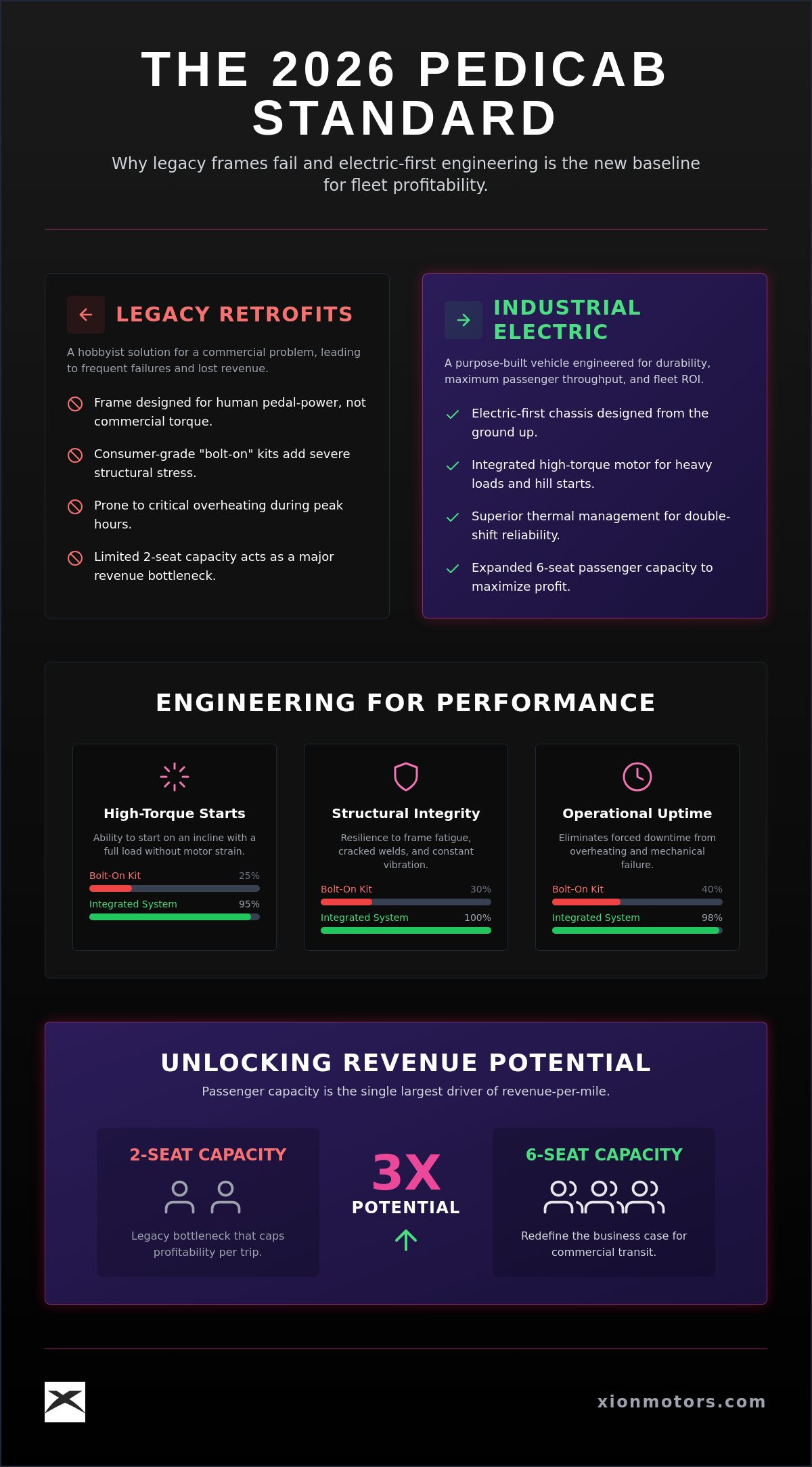
Adding a motor to a frame designed for human pedaling is a recipe for catastrophic failure. These retrofitted kits introduce structural stress points that the original chassis was never engineered to handle. We've seen frames buckle and welds crack under the constant vibration and torque of an aftermarket electric drive. Beyond structural fatigue, consumer-grade assist systems suffer from severe thermal management issues. When a motor is forced to push a heavy load without integrated cooling or proper gearing, it overheats. This leads to forced downtime during your most profitable hours. An underpowered drivetrain isn't just a nuisance; it's a direct drain on your bottom line.
Defining the 2026 Industrial Standard
The 2026 standard for a Main Street Pedicabs alternative is defined by electric-first chassis engineering. This means the vehicle is designed from the ground up to accommodate high-capacity batteries and high-torque motors as central components, not afterthoughts. Fleet operators are now prioritizing torque density. They need vehicles that can initiate a heavy-load start on an incline without straining the electrical system. Market demand has also shifted toward higher passenger volumes. The ability to move 6 passengers instead of 2 or 3 effectively doubles your revenue potential per trip. Transitioning to a dedicated electric platform allows for faster turnaround times and the reliability needed to run double shifts without mechanical intervention. This is the new baseline for commercial continuity.
Electric-First Engineering vs. Traditional Pedal-Assist Kits
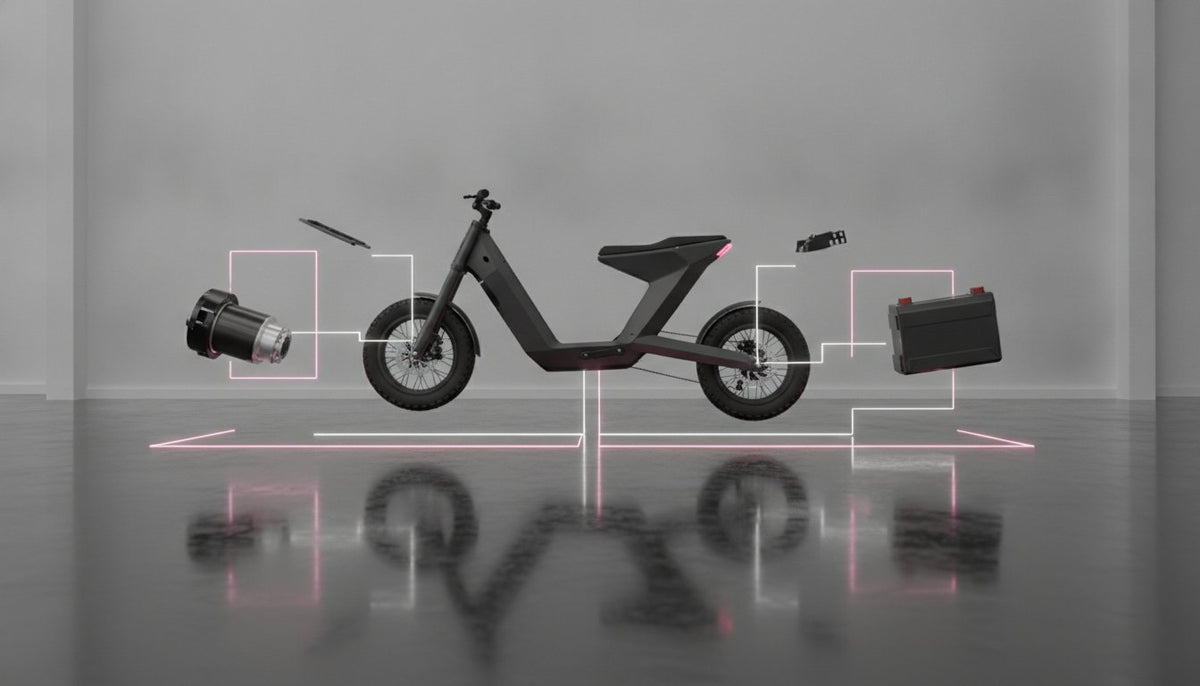
Engineering a vehicle for 2026 requires more than just slapping a motor on a bicycle frame. It demands a ground-up approach where the powertrain and chassis are developed in unison. Many operators realize that a bolt-on assist kit is a hobbyist solution trying to solve a commercial problem. If you're searching for a Main Street Pedicabs alternative, the primary differentiator is integrated engineering. A purpose-built electric vehicle handles the stress of constant operation; a retrofitted bike merely survives it until the first major component fails.
The shift to high torque electric pedicab technology is the new baseline for ROI because it eliminates the most common point of failure: the start. Initiating movement with a full load of passengers puts immense strain on a drivetrain. Traditional kits often stutter or overheat during these heavy-load starts, especially on inclines. Integrated systems utilize mid-drive or high-efficiency hub motors designed for high-amp draws, ensuring smooth acceleration every time. This reliability is critical when navigating complex pedicab industry regulation environments where vehicle performance and safety standards are increasingly scrutinized by municipal authorities.
Propulsion and Power Delivery
Stop-and-go urban environments are brutal on electrical systems. Efficiency isn't just about battery life; it's about thermal management. Integrated drive systems manage heat better than exposed bolt-on motors, allowing for consistent performance throughout a ten-hour shift. Regenerative braking plays a vital role here. It doesn't just extend your daily fleet range by recovering energy; it reduces the wear on your mechanical braking system. Maintaining a steady 15 to 20 mph with a full passenger load requires precise power delivery that only a dedicated commercial controller can provide. Anything less is just an expensive experiment in downtime.
Chassis and Suspension for the Electric Era
When your vehicle is regularly carrying 1,000 lbs or more in passenger weight, pedicab frame durability becomes a safety-critical metric. Legacy frames were designed for the torque of human legs, not the instant, raw power of an industrial electric motor. A professional chassis features reinforced mounting points and oversized, heat-treated axles to prevent catastrophic failure under load. Industrial-grade suspension is equally important. It protects the vehicle's electronic components from road vibration while ensuring a premium experience for your passengers. Investing in a vehicle built for these loads is the only way to ensure long-term commercial viability. You can explore our range of Electric Pedicabs to see these engineering standards in action.
Maximizing Passenger Capacity: 3-Seat and 6-Seat Revenue Potential
Revenue in the transit industry is a simple math problem: capacity multiplied by throughput. If your vehicles are limited to the traditional two or three passenger seats, your earnings are hard-capped regardless of how many hours your drivers work. This is where most legacy brands fall short. When evaluating a professional Main Street Pedicabs alternative, the primary objective is to break the three-passenger barrier. Scaling a fleet in 2026 requires the ability to capture larger groups, families, and corporate event contracts that smaller trikes simply cannot accommodate.
Calculating your revenue-per-mile becomes a much more attractive exercise when you double your seating capacity. In high-traffic districts like New York City, where rates can range from $27 to $45 per person for tours, the jump from a 3-seat model to a 6-seat model represents a massive shift in profitability. Managing a mixed fleet allows you to deploy agile units for quick street hails while reserving high-capacity vehicles for lucrative group bookings. This operational flexibility is essential for maintaining a competitive edge. Understanding the logistics of 6 seat electric pedicab fleet operations is the first step toward dominating your local market.
The 3-Seat CyberX: Optimized for Agility and Speed
The CyberX model, starting at $13,500, is engineered for the operator who needs to navigate congested urban corridors where every inch of space matters. While it maintains a compact footprint similar to traditional models, its performance specs far outpace standard pedal-assist alternatives. We've designed the CyberX to handle the constant stop-and-go of city centers without the drivetrain fatigue common in lighter frames. It's the ideal tool for rapid transit and solo or couple tours, providing a professional-grade experience that justifies premium pricing. This vehicle doesn't just move people; it moves them with an efficiency that hobbyist-grade trikes can't match.
The 6-Seat VorteX: Doubling Throughput
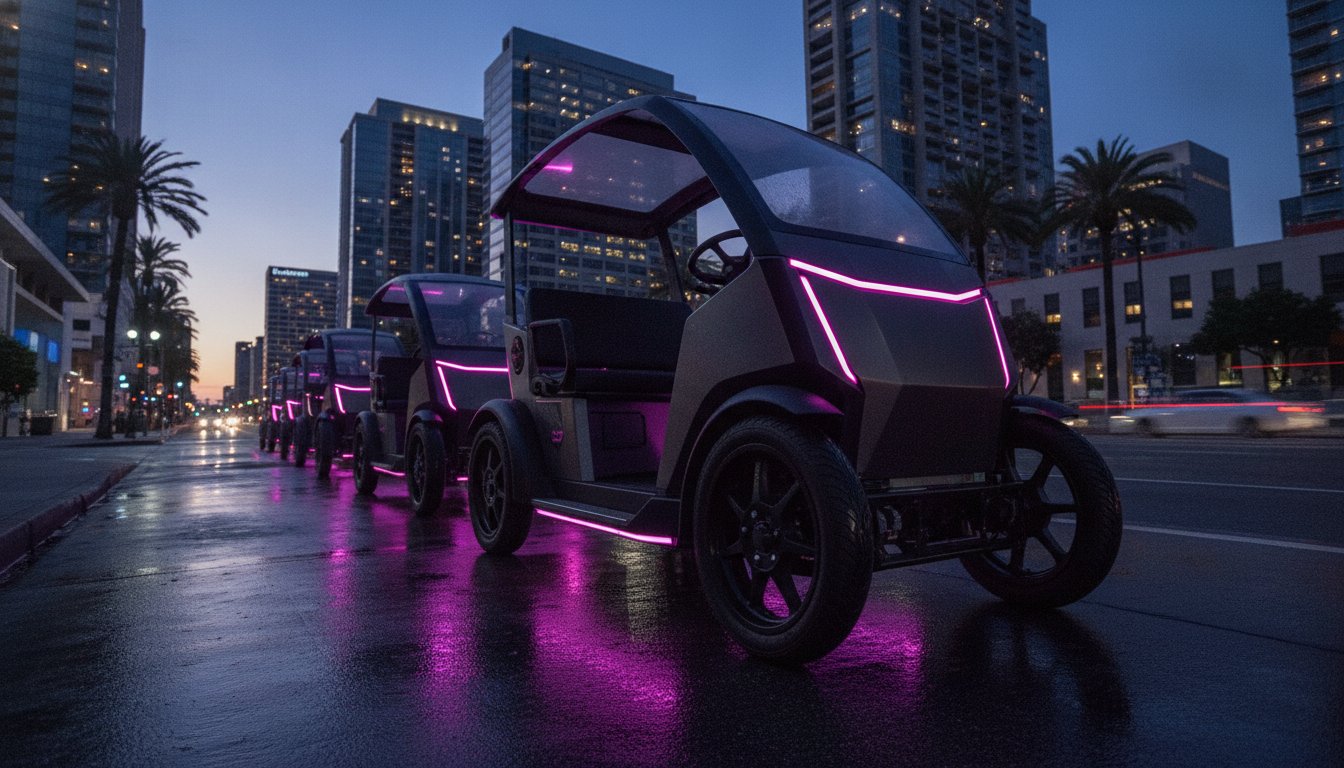
The VorteX is the definitive tool for high-volume resort transport and massive entertainment districts. Priced at $17,500, this 6-seat powerhouse allows you to move entire families or small corporate teams in a single trip. Managing the physics of a 1,000-pound-plus load requires the industrial-grade electric power we've perfected over two decades of fleet experience. You cannot safely or efficiently move this many people with a retrofitted bicycle motor. The VorteX uses a dedicated high-torque system to ensure smooth starts and consistent speeds even at full capacity. By utilizing custom electric trikes for business, you position your brand as a serious transit provider capable of handling large-scale event transportation with ease and reliability.
Structural Integrity and Industrial-Grade Maintenance Standards
Maintaining a fleet of commercial vehicles requires a total departure from the traditional bicycle shop mindset. While legacy trikes often rely on standard bicycle components that fail under heavy-duty stress, a true Main Street Pedicabs alternative is engineered for 24/7 operations. We treat our vehicles like industrial assets, not recreation equipment. This shift in perspective is what separates a profitable venture from a maintenance nightmare. Professional operators can't afford to have a vehicle sidelined by a broken spoke or a bent axle during a high-traffic festival weekend. By prioritizing professional-grade components, you ensure commercial continuity and protect your initial investment from the start.
Material Science: Steel vs. Industrial Alloys
Frame fatigue is the silent killer of fleet profitability. Standard steel frames used by legacy manufacturers often lack the torsional rigidity required to handle the constant torque of a high-output electric motor and the shifting weight of six passengers. Xion Motors utilizes a rugged, industrial-focused chassis design that effectively resists the micro-fractures common in lighter, consumer-grade frames. We've engineered our vehicles to withstand the relentless vibrations of urban cobblestones and uneven pavement. In coastal or high-salt environments, corrosion resistance is equally vital for maintaining a professional image. Our material selection ensures that your vehicles maintain their structural integrity and aesthetic longevity for years, significantly reducing your Total Cost of Ownership through decreased downtime.
Supply Chain and Parts Availability
Legacy supply chains are notoriously unreliable and often leave operators stranded. Waiting weeks for a specific bracket or axle to arrive from overseas can cripple your revenue during your most profitable months. We've eliminated this risk by committing to stocking essential replacement components for all 50 states. Our USA-based manufacturing allows for rapid response times and consistent quality control that foreign competitors simply can't match. By standardizing your fleet with our components, you minimize the need for specialized tools and reduce the training time required for your maintenance staff. To keep your vehicles on the street and earning, it's essential to implement a rigorous electric pedicab maintenance guide that focuses on preventative care rather than reactive repairs. This proactive approach ensures your equipment remains as reliable as the day it left the factory.
Secure your fleet's future by investing in industrial-grade Vehicle Parts that are built to last.
Upgrading Your Fleet with Xion Motors Industrial Solutions
Transitioning from legacy equipment to a modern, high-performance fleet requires a partner who understands the street-level realities of this business. For operators ready to move beyond the limitations of traditional trikes, the CyberX represents the definitive engineering standard for 2026. We don't just build vehicles; we provide the tools for market dominance. Choosing a Main Street Pedicabs alternative means investing in a chassis and powertrain designed for the high-torque demands of industrial transit. We've built 20 years of fleet operational wisdom into every trike, ensuring you avoid the common pitfalls that sideline less experienced operators.
Rapid market expansion is made possible through our electric pedicab fleet packages. These bundles are designed to maximize your initial capital and accelerate your ROI by providing standardized equipment across your entire operation. If you're currently in the planning stages, our starting a pedicab company professional blueprint offers a step-by-step guide to navigating regulations and establishing a profitable presence in high-demand zones. Success in this industry is about more than just a single ride; it's about building a scalable, reliable transit network.
Direct-to-Operator Sales and Fleet Pricing
We eliminate the middleman to ensure you receive the best possible capital equipment margins. By selling directly to the operator, we maintain a close feedback loop that informs our ongoing engineering process. You can customize fleet orders to meet the specific demands of your tourism or entertainment district, whether you need agile 3-seaters or high-capacity 6-seaters. Our national shipping logistics and deployment support ensure your vehicles arrive ready for duty. We offer strategic fleet pricing that begins at a 10% discount for 3 to 9 units, increasing to 15% for orders of 10 or more. This structure allows you to scale rapidly while maintaining healthy margins.
The ROI of Industrial Quality
Investing $13,500 or more in a single vehicle is a decision grounded in financial pragmatism. While the initial cost is higher than hobbyist-grade alternatives, the reduction in downtime and the ability to charge premium rates for a superior passenger experience quickly close the gap. A single commercial pedicab can generate over $30,000 in annual revenue. A 3-cab fleet is estimated to earn between $90,000 and $105,000 per year from rides, advertising, and events. These aren't just projections; they're the results of industrial-grade reliability in the field. Partner with a manufacturer that has spent decades in the trenches. Scale your business with Pedicab Fleet Packages built for the future of urban transit.
Dominating the 2026 Transit Market
Your fleet is either a high-performance asset or a constant operational liability. We've proven that legacy equipment simply can't compete with the torque and capacity required for today's high-volume entertainment districts. High-torque electric propulsion and 6-seat passenger throughput are no longer optional upgrades; they're the new baselines for commercial success. Choosing a professional Main Street Pedicabs alternative means prioritizing industrial-grade durability that keeps your vehicles on the street and earning during your most profitable hours.
Our USA-made quality is forged from over 20 years of operational fleet experience in the most demanding markets. We provide direct-to-operator pricing on our 3-seat and 6-seat models, eliminating middleman markups and maximizing your capital efficiency. With national shipping and professional-grade parts support, we ensure your expansion is rapid and reliable. It's time to stop managing bicycle repairs and start managing a professional transit business. Upgrade your fleet with industrial-grade Xion Motors engineering and secure your market leadership today. The future of urban transit is electric, and it's built to last.
Frequently Asked Questions
What makes Xion Motors a better alternative to Main Street Pedicabs?
Xion Motors is a superior Main Street Pedicabs alternative because we prioritize electric-first engineering and industrial-grade durability over legacy pedal-power designs. While traditional manufacturers rely on retrofitted bicycle technology, we build our chassis to handle the high-torque demands of 2026 commercial transit. Our 20 years of fleet experience ensure that every vehicle is a professional revenue generator designed for maximum uptime and passenger safety.
Can Xion electric pedicabs carry more passengers than legacy models?
Yes, our vehicles significantly exceed legacy capacity limits to maximize your earning potential. While traditional models typically cap at 2 or 3 passengers, the VorteX model carries 6 passengers comfortably. This doubled capacity allows operators to target larger groups and families, effectively doubling the revenue potential per trip in high-traffic entertainment districts or resort environments.
Are Xion Motors vehicles street legal in all 50 states?
Xion Motors vehicles are designed to meet Federal Class 2 e-bike standards, which generally allow for street-legal operation across the United States. These standards include a throttle and a top assisted speed of 20 mph. However, local municipal regulations vary significantly. Operators must verify specific licensing, insurance requirements, and operating zone restrictions in their individual cities to ensure full compliance.
How does the maintenance of an industrial-grade electric pedicab compare to a pedal trike?
Maintenance for an industrial-grade electric pedicab focuses on preventative fleet care rather than the reactive bicycle shop model. Our vehicles utilize professional-grade components that withstand double shifts and heavy loads without frequent failure. This reduces the frequency of repairs compared to standard pedal trikes, lowering your total cost of ownership and ensuring your fleet stays operational during your most profitable hours.
What is the expected ROI for a 6-seat VorteX electric pedicab?
A single 6-seat VorteX can generate over $30,000 in annual revenue, allowing for a potential return on investment within the first year of operation. High-capacity vehicles command premium rates for group tours and event shuttles. By maximizing passenger throughput, fleet owners can see a 3-cab fleet earn between $90,000 and $105,000 annually through a combination of rides, advertising, and private events.
Does Xion Motors offer fleet pricing for new pedicab businesses?
We offer aggressive fleet pricing to support the rapid expansion of new and existing pedicab businesses. Discounts begin at 10% for orders of 3 to 9 units and increase to 15% for fleets of 10 or more. This direct-to-operator pricing model ensures you retain more capital for marketing and operational growth while securing a more reliable Main Street Pedicabs alternative for your fleet.
Where can I source replacement parts for Xion electric trikes?
Replacement parts are sourced directly from our USA-based manufacturing facility, ensuring rapid delivery to all 50 states. We maintain a comprehensive inventory of industrial-grade components to prevent the long wait times common in legacy supply chains. Standardizing your fleet with our parts minimizes specialized tool requirements and simplifies your internal maintenance processes for long-term commercial continuity.
How does the CyberX handle steep inclines compared to standard assist kits?
The CyberX utilizes high-torque electric propulsion to handle steep inclines with smooth, consistent power delivery. Unlike standard bolt-on assist kits that often stutter or overheat under load, our integrated drive system is engineered for heavy-duty starts on hills. This ensures driver confidence and passenger comfort, even when navigating the most challenging urban terrain with a full passenger load.