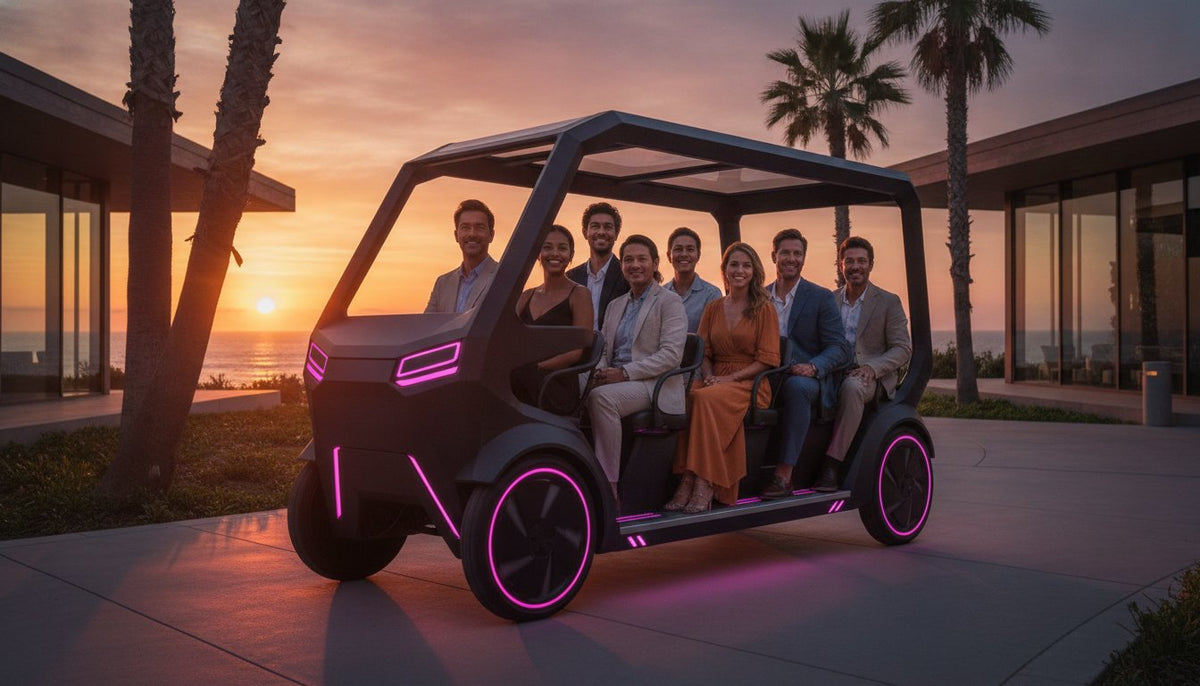
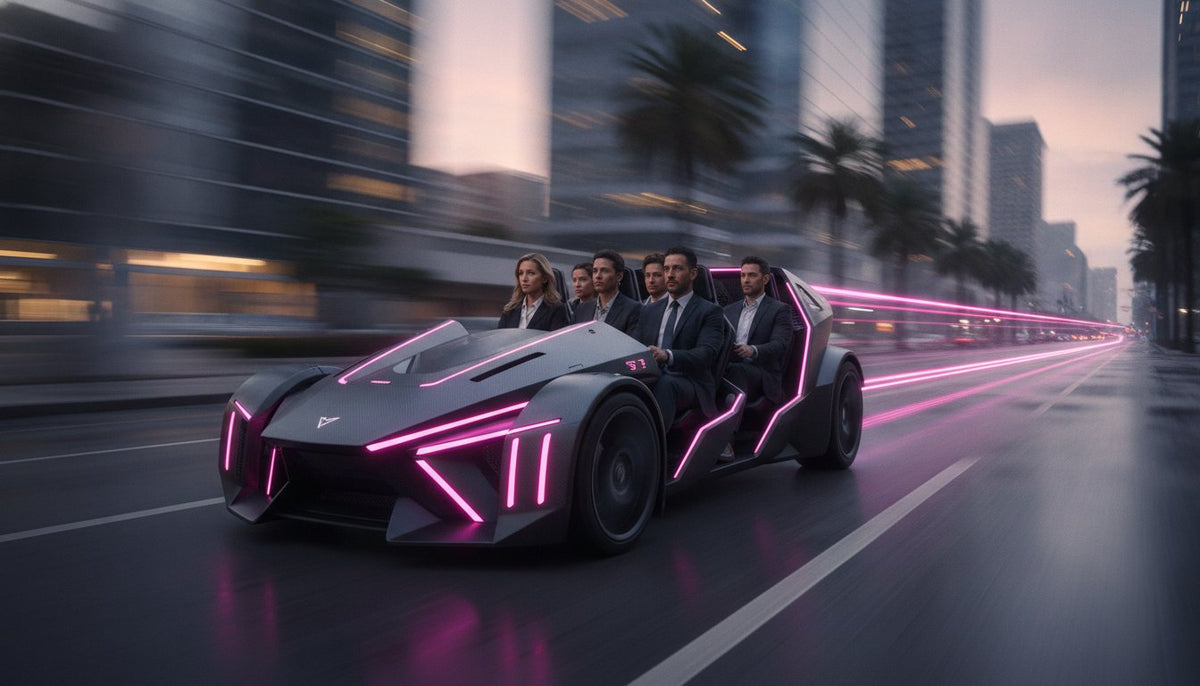
A single industrial-grade electric pedicab can generate over $30,000 in annual gross revenue; that's a yield that outperforms almost every other micro-mobility asset on the market. Many entrepreneurs ask are pedicabs a good investment while looking at low-cost consumer trikes that fail after three months of heavy use. True profitability in 2026 requires moving past the "bike" mindset and treating these vehicles as high-torque, commercial-grade transit assets. Our engineering team has spent decades in the trenches to ensure that your fleet stays on the road when the crowds are thickest and the revenue potential is highest.
We know the pains of rising maintenance costs and the regulatory hurdles that can stall a growing business. This analysis provides the industrial-grade financial blueprint for building a high-yield electric pedicab fleet. You'll get a clear revenue-per-vehicle breakdown, an honest look at the durability of the CyberX versus cheap imports, and a proven roadmap for scaling to a ten-vehicle operation. It's time to stop managing a niche hustle and start running a professional transit powerhouse that delivers consistent, scalable results.
Key Takeaways
- Transition from manual labor to professional fleet management by utilizing high-torque electric drive systems for consistent, high-volume transit delivery.
- Evaluate the 2026 financial blueprint to see why are pedicabs a good investment when comparing high-yield passenger fares against minimal electric charging overhead.
- Learn to distinguish between consumer-grade trikes and industrial-grade assets like the CyberX to prevent catastrophic fleet downtime and maintenance spikes.
- Master the strategic deployment process by identifying transit gaps in high-density districts and navigating the modern municipal permit landscape.
- Discover how to accelerate your commercial growth through scaled fleet packages and direct-to-operator engineering support designed for long-term market leadership.
The 2026 Micromobility Shift: Why Pedicabs are a Premier Investment
The perception of the pedicab is undergoing a radical industrial transformation. While legacy views often dismiss these vehicles as seasonal novelties, the 2026 market proves that modern, electric-assist units are sophisticated transit assets. Investors asking are pedicabs a good investment must look beyond the "bicycle" label. We build these machines for high-volume commercial utility, utilizing reinforced steel chassis and high-torque electric motors that redefine urban mobility. In a landscape where cities prioritize zero-emission corridors, the global pedicab industry has moved from the fringes to the center of the "Experience Economy." This shift is driven by a move from manual labor to professionalized fleet management, where technology handles the heavy lifting.
Electric vs. Manual: The Revenue Multiplier
Relying on pure leg power is a recipe for operational failure in a competitive market. Manual operation caps your revenue by inducing driver fatigue, which often limits shifts to just a few hours. High-torque electric systems solve this by eliminating physical burnout, enabling 12+ hour operational windows that maximize vehicle uptime. Our data shows that electric assistance increases a pedicab operator's daily ride volume by approximately 40%. This performance boost ensures that your investment pays for itself through sheer volume and reduced downtime. When you can comfortably haul 6-passenger loads on a VorteX without performance degradation, your revenue-per-mile skyrockets. Electric assistance doesn't just make the job easier; it fundamentally changes the math of your business.
Market Demand in Entertainment and Tourism Districts
Congestion is the primary enemy of traditional ride-share services. In dense entertainment districts, an Uber or Lyft often spends twenty minutes moving three blocks, while a nimble electric pedicab navigates pedestrian-heavy corridors with ease. This agility makes pedicabs the definitive solution for last-mile logistics during major events. Positioning your fleet as a premium, zero-emission alternative isn't just about environmental stewardship; it's about meeting the strict municipal requirements of 2026 urban planning and capturing the premium fares tourists pay for unique, open-air transit. To dominate these markets, scaling quickly is essential. Utilizing electric pedicab fleet packages allows you to deploy multiple assets simultaneously, capturing the massive demand of high-yield tourism zones. Pedicabs aren't just a transport method; they're a high-visibility marketing platform and a high-yield financial instrument.
Calculating the ROI: Revenue Potential of Electric Pedicab Fleets
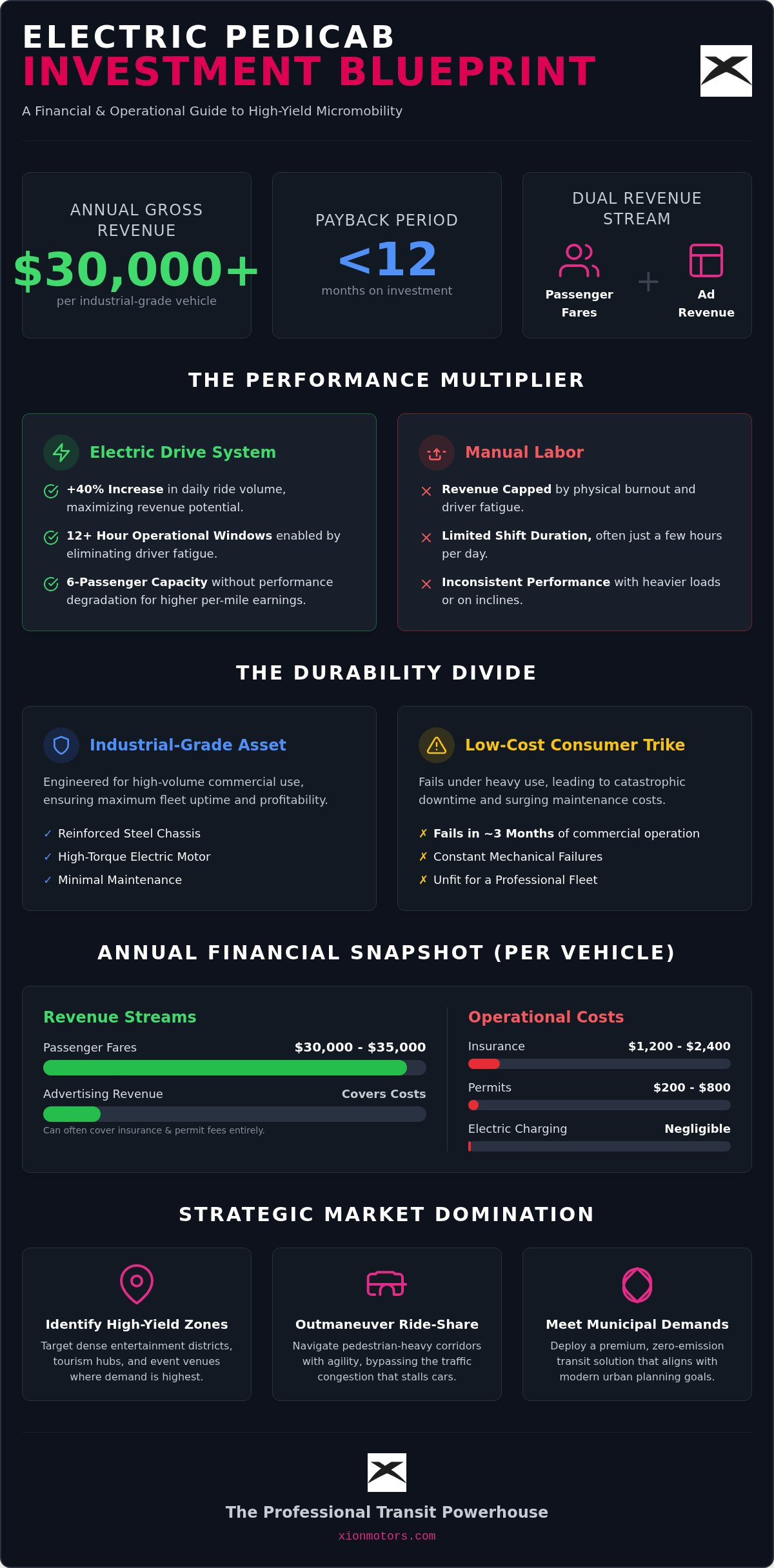
Hard numbers define the market. A single industrial-grade electric pedicab can generate between $30,000 and $35,000 in annual gross revenue, making the math for fleet owners incredibly compelling. When investors ask are pedicabs a good investment, they are looking for a high-yield asset that survives the rigors of daily commercial use. These vehicles offer a dual-revenue stream that traditional transit lacks. You collect passenger fares while simultaneously utilizing the reinforced chassis as a high-visibility mobile billboard. In premium tourism districts, ad revenue alone can often cover your annual commercial liability insurance, which typically ranges from $1,200 to $2,400, and your municipal permit fees of $200 to $800.
Operational costs for electric units are negligible compared to internal combustion alternatives. Charging a high-capacity battery costs pennies, whereas a gas-powered vehicle consumes thousands in fuel and oil changes every year. This low-overhead structure allows for a payback period of less than 12 months for a $13,500 investment. This profitability aligns with current micromobility market trends where nimble, electric-assist vehicles are outperforming heavy infrastructure in dense urban corridors.
Direct Fare Revenue vs. Driver Lease Models
Maximize your profit margins by choosing the right operational model for your market. Owner-operators capture the full $30,000+ annual gross, but the real scale exists in the fleet-lease model. By renting your CyberX or VorteX units to independent drivers for a daily or weekly fee, you generate consistent passive income without being behind the handlebars yourself. Drivers are eager to pay these lease fees because the 40% increase in ride volume provided by electric assistance makes it easy for them to hit their earnings targets quickly. This model allows you to scale to a 10-vehicle fleet while maintaining a manageable workload.
Pedicab vs. Gas Shuttle: An Economic Comparison
Investing in a $17,500 6-seat VorteX is a far more pragmatic move than purchasing a $40,000 gas-powered shuttle van. The VorteX provides equivalent passenger capacity for less than half the initial capital outlay. Maintenance savings are even more dramatic; electric motors have fewer moving parts and don't suffer the mechanical wear that destroys gas engines in stop-and-go traffic. Additionally, pedicabs often qualify as "bicycle-class" commercial vehicles, which significantly reduces registration costs and regulatory friction. If you're ready to secure your market share, exploring our electric pedicab fleet packages is the most direct path to high-yield transit ownership.
Engineering for Profit: Why Industrial-Grade Components Matter
The "Cheap Import" trap is the single greatest threat to a new operator’s capital. When entrepreneurs ask are pedicabs a good investment, they often browse consumer-grade trikes that promise the world for a fraction of the price. These vehicles are designed for occasional recreational use, not the relentless 12-hour shifts required in a professional fleet. Most of these imports fail within 90 days of heavy service. Industrial-grade engineering is the only way to ensure your asset remains on the street instead of rotting in a repair shop. Every hour of downtime is a direct hit to your bottom line, making durability your most important profit-driver.
Chassis and Frame Durability
A professional pedicab frame must handle dynamic loads exceeding 1,000 pounds while navigating uneven urban terrain. Standard bicycle frames aren't built for this; they suffer from rapid frame fatigue and catastrophic structural failure. We utilize specialized structural reinforcement to ensure our chassis can withstand years of high-volume commercial use. This focus on longevity is what makes the CyberX the engineering standard for the 2026 market. Investing in a reinforced foundation prevents the "wobble" and metal fatigue that plague lighter, consumer-focused models. A single frame failure can sideline your vehicle for weeks, costing you thousands in missed fares.
High-Torque Drive Systems and Power Management
Moving a 6-passenger load up a 10% grade requires more than a simple e-bike motor. Consumer-grade motors lack the thermal management systems necessary to dissipate heat during constant, heavy-load operation. They burn out. We deploy high-torque, industrial motors specifically tuned for the stop-and-go demands of urban transit. These systems provide the power needed for consistent hill climbing without risking thermal shutdown. Precision power management ensures your driver can maintain top speeds even when the vehicle is at maximum capacity.
Managing these high-performance systems is straightforward if you follow a rigorous electric pedicab maintenance guide. Proper power management and battery rotation allow for double-shift operations, effectively doubling your revenue potential per vehicle. By prioritizing industrial-grade components, you aren't just buying a vehicle; you're securing a durable financial instrument that will perform reliably for years. When assessing are pedicabs a good investment, remember that the lowest purchase price often leads to the highest lifetime cost.
Strategic Deployment: Identifying High-Yield Markets
Strategic deployment separates the professional fleet owner from the amateur hobbyist. When evaluating if are pedicabs a good investment, your first task is identifying "transit gaps" where traditional ride-share services fail. These are high-density pedestrian corridors where vehicle access is restricted or traffic gridlock makes cars impractical. You must then evaluate the local regulatory landscape; while federal standards classify electric bicycles under 750 watts, municipal permit caps often create limited-entry markets that reward early movers. Identifying captive audience zones, such as stadiums and historic districts, ensures your vehicles are always in demand. Selecting the right equipment for your terrain is the final step. Hilly districts require the high-torque agility of a 3-seat CyberX, while flat resorts are better served by the high-volume capacity of a 6-seat VorteX.
Tourism and Entertainment District Dominance
Historic districts and nightlife hubs are the primary "gold mines" for this industry. These areas feature tight streets and captive audiences who value the open-air experience over a cramped sedan. If you are starting a pedicab company, your success depends on consistent fare flow. Building direct partnerships with hotels and event venues ensures your drivers have a steady stream of premium passengers. By positioning your fleet at the exit of a stadium or a popular theater, you capture the high-demand "surge" pricing that tourists pay to avoid the frustration of city traffic. These corridors allow you to leverage the unique sightseeing appeal of a pedicab, turning a simple ride into a premium experience.
Corporate and Resort Transit Solutions
The market for electric transit extends far beyond city streets. Large corporate campuses and luxury resorts are increasingly deploying custom electric trikes for business to move guests and staff silently. Replacing gas-guzzling shuttle vans with electric alternatives eliminates fuel costs and aligns with modern sustainability mandates. These silent, zero-emission vehicles provide a superior guest experience, allowing for conversation without the drone of a combustion engine. This branding value, combined with the low operational overhead, proves why are pedicabs a good investment for hospitality leaders. Ready to dominate your local market? Explore our industrial-grade fleet options today.
Scaling Your Transit Empire with Xion Motors
Scaling a transit business requires more than just capital; it requires an industrial partner who understands the street-level reality of high-volume fleet operations. Xion Motors brings over 20 years of operational experience to every vehicle we manufacture, ensuring that your expansion is built on a foundation of proven success. When serious investors ask are pedicabs a good investment, the answer lies in the reliability of the supply chain and the quality of the manufacturing. We provide USA-manufactured quality and direct-to-operator support to ensure that your fleet achieves 99% uptime during peak revenue windows. By eliminating the middleman, we pass the engineering expertise and the cost savings directly to your bottom line.
Fleet Packages and Tiered Investment
Accelerating your growth requires a tiered investment strategy that matches your specific market demands. Our electric pedicab fleet packages are designed to move you from a single-unit operator to a dominant regional force. We offer volume pricing that rewards rapid scaling, with a 10% discount for fleets of 3 to 9 units and a 15% discount for 10 or more units. This economic structure allows a well-managed 10-vehicle fleet to achieve a full return on investment in approximately 12 to 18 months. Whether you choose the agile 3-seat CyberX for hilly terrain or the high-capacity 6-seat VorteX for flat tourism districts, our customization options ensure your fleet reflects your specific business branding and aesthetic requirements.
Direct Support and Long-Term Partnership
Maintenance and parts support are the lifeblood of a transit empire. You don't have time to wait for overseas shipping when a vehicle is sidelined during a major event. We maintain a robust supply chain for all vehicle parts, ensuring you have immediate access to the components required to keep your assets moving. This direct-to-operator model ensures you receive professional-grade support without the markup of a third-party distributor. Our legacy is built on the success of our operators, and we treat every fleet sale as a long-term partnership. If you're ready to move past the research phase and start building a high-yield transit business, the evidence is clear. Consult with Xion Motors today to develop your professional fleet blueprint and secure your position as a leader in the 2026 micromobility market.
Dominating the 2026 Transit Market
The shift toward high-torque, zero-emission transit is no longer a future projection; it's a current market reality. Success in this sector depends on moving away from recreational equipment and embracing industrial-grade assets that deliver 99% uptime. You've seen the math behind the $30,000 annual gross revenue potential per vehicle and the necessity of a reinforced chassis for relentless double-shift operations. When you evaluate if are pedicabs a good investment, the answer lies in the durability of your fleet and the strength of your manufacturing partner. We've spent decades perfecting these tools so you can focus on capturing premium fares in high-density corridors.
Secure your competitive advantage by utilizing our industry-leading high-torque motor systems and USA-made industrial-grade chassis. We offer direct-to-operator fleet pricing that eliminates unnecessary markups and accelerates your path to profitability. It's time to stop managing a seasonal hustle and start building a scalable transit empire. Scale your transit ROI with Xion Motors Electric Pedicab Fleet Packages and dominate your local market today. Your growth is our legacy.
Frequently Asked Questions
What is the average daily revenue for an electric pedicab driver?
Drivers in premium markets typically generate between $100 and $300 in daily gross revenue. This figure fluctuates based on event schedules and foot traffic density. Electric assistance increases ride volume by 40%, directly boosting these daily earnings. When fleet owners ask are pedicabs a good investment, they should look at the annual gross potential of $30,000 to $35,000 per vehicle. This consistent cash flow allows for rapid capital recovery.
How long do the batteries last on a commercial electric pedicab?
Commercial-grade lithium batteries generally provide six to eight hours of continuous operation under heavy load. We recommend a dual-battery rotation strategy to enable 12+ hour shifts without downtime. These high-capacity systems are engineered for 800 to 1,000 charge cycles before significant capacity degradation occurs. Using industrial power management ensures that your fleet remains operational during peak tourism windows, maximizing your revenue-per-hour and protecting your long-term battery investment.
Do I need a special license to operate a pedicab fleet?
Licensing requirements vary by municipality, but most cities require a specific operator permit and commercial liability insurance. Federal law classifies electric pedicabs as bicycles if the motor is under 750 watts and the speed is capped at 20 mph. You don't usually need a commercial driver's license, but you must comply with local ordinances and background checks. Always verify your specific city’s permit caps and insurance mandates before deploying your fleet.
What is the difference between a 3-seat and 6-seat pedicab for investment?
The 3-seat CyberX offers superior agility and high-torque performance for hilly terrain or narrow city streets. It's the standard for nimble, fast-paced urban transit. The 6-seat VorteX is designed for high-volume tourism zones and flat resort environments where passenger capacity is the primary revenue driver. A 6-seat model allows you to double your fare potential per trip, making it a powerful tool for maximizing ROI in high-density pedestrian corridors.
How much does maintenance cost for an electric pedicab annually?
Annual maintenance for an industrial-grade electric pedicab typically ranges from $500 to $1,000 per unit. This includes routine brake adjustments, tire replacements, and drive chain lubrication. Because electric motors have fewer moving parts than internal combustion engines, you avoid the heavy costs of oil changes and transmission repairs. Keeping a consistent maintenance schedule ensures 99% uptime. This low overhead is a key reason why many entrepreneurs find are pedicabs a good investment compared to traditional vehicles.
Can electric pedicabs handle steep hills with a full passenger load?
Yes, our high-torque motor systems are specifically engineered to handle steep inclines with a full 6-passenger load. Unlike consumer-grade e-bike motors that suffer from thermal shutdown, our industrial drive systems utilize advanced power management to maintain consistent torque. This capability is essential for operations in hilly urban environments where manual trikes would fail. Reliable hill-climbing performance ensures your drivers can navigate any route, expanding your service area and increasing total fare opportunities.
Are pedicabs more profitable than golf cart shuttles?
Pedicabs often outperform golf carts in dense urban environments due to their superior agility and "bicycle-class" regulatory status. Many cities restrict golf carts from public roads or require expensive registrations and safety equipment. Pedicabs navigate pedestrian-heavy zones and narrow corridors where golf carts are prohibited. Additionally, the open-air, interactive nature of a pedicab commands a premium fare that traditional shuttle carts can't match, resulting in higher revenue-per-seat in tourism districts.
What is the expected lifespan of a Xion Motors CyberX chassis?
The CyberX chassis is built with reinforced steel and is designed for a service life exceeding ten years of heavy commercial use. While consumer trikes often fail within months, our industrial-grade frames withstand the constant stress of 1,000-pound dynamic loads. We utilize precision engineering to prevent frame fatigue and structural failure. This durability ensures that your initial capital investment remains a productive asset for a decade, providing a long-term foundation for your transit empire.