A single revenue-generating pedicab can pay for itself in under a year, yet many operators still gamble their capital on hobbyist-grade hardware that fails under the pressure of 24/7 commercial use. In a market where California now mandates UL 2849 system-level certification and London enforces strict safety frameworks, the era of "good enough" imports is over. Professional scaling in 2026 requires moving beyond simple e-bikes to industrial-grade electric transit platforms designed for high-torque, multi-passenger revenue. Selecting the right electric pedicab fleet packages is the most critical decision you'll make for your long-term bottom line.
You understand that uptime is the only metric that truly matters when managing a high-volume district. We're here to help you bridge the gap between street-level operations and high-level commercial success. This guide provides the blueprint for mastering the economics and engineering of high-output fleets to maximize your urban transit ROI. We'll examine the shift toward integrated fleet tracking, the necessity of industrial-grade durability that survives constant use, and the regulatory landscape that defines the future of professional urban mobility.
Key Takeaways
- Invest in industrial-grade electric pedicab fleet packages to replace unreliable manual trikes and meet the rigorous demands of high-traffic urban tourism markets.
- Prioritize high-torque 72V motor systems and powder-coated steel chassis to ensure your vehicles survive the physical demands of heavy-duty passenger transport.
- Maximize your bottom line by leveraging a three-tier revenue model that combines passenger fares, high-visibility advertising wraps, and exclusive event bookings.
- Eliminate operational downtime by implementing a strict preventative maintenance schedule and maintaining a strategic inventory of essential vehicle parts.
- Secure a competitive edge through factory-direct procurement, gaining access to decades of engineering expertise while maximizing your initial capital investment.
Scaling Urban Transit with Electric Pedicab Fleet Packages
Scaling a transit operation requires more than just buying a few bikes. It's about deploying a systematic, revenue-generating infrastructure. Electric pedicab fleet packages represent a turnkey shift for the 2026 operator. While the history of pedicabs in urban transit is rooted in human-powered labor, the modern market demands industrial-grade power. Manual units fail because they can't sustain the high-frequency, high-output cycles required in dense tourism districts. Today's successful fleet is an industrial transit platform, combining heavy-duty hardware with the tech needed for tracking and fare management. It's the difference between a hobby and a commercial enterprise.
The Business Case for Electric over Manual
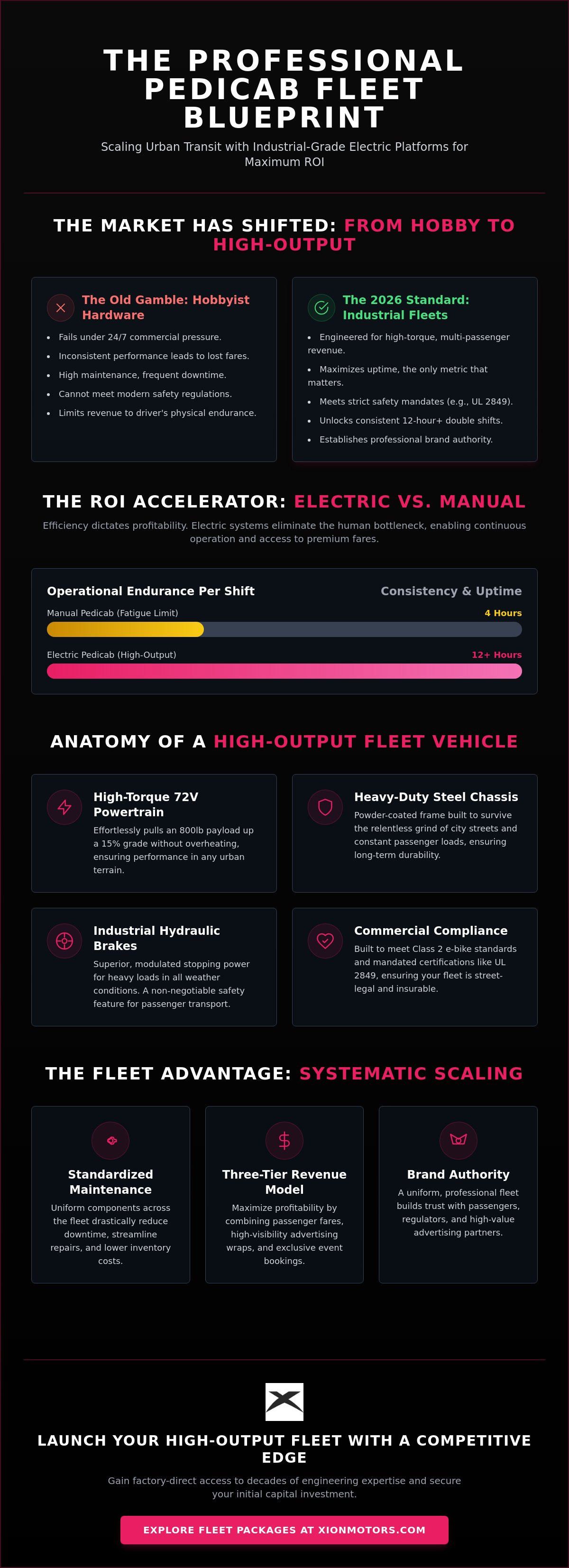
Efficiency dictates profitability. Manual pedicabs limit your revenue potential because your drivers are the engine. Fatigue sets in after four hours, leading to shorter shifts and missed fares. Electric systems eliminate this bottleneck. High-torque 72V motors allow operators to conquer steep urban terrain and transport heavy payloads without breaking a sweat. This isn't just about driver comfort. It's about consistency. You're offering a smoother, faster, and more modern ride experience that attracts premium passengers willing to pay a higher fare. When your vehicles can handle 12-hour double shifts without slowing down, your ROI accelerates.
Fleet Package vs. Individual Unit Purchases
Amateur operators buy one unit at a time; professionals invest in systems. Standardizing your hardware across your entire operation simplifies your maintenance protocols. When every vehicle uses the same motor, controller, and brake pads, your downtime drops to near zero. Investing in electric pedicab fleet packages ensures you aren't managing a mismatched collection of parts. It creates a predictable operational environment where every asset performs to the same high standard.
- Standardized parts: Streamline repairs and reduce inventory costs by using uniform components across the fleet.
- Fleet pricing: Access better margins on deployments of 3+ or 10+ units compared to piecemeal purchases.
- Brand authority: Uniform vehicle specs ensure a cohesive, professional appearance across your transportation district.
Brand consistency builds trust with both passengers and city regulators. When your fleet looks uniform and operates reliably, you aren't just another bike on the street. You're a recognized transit authority. This professional image is essential for securing high-value advertising contracts and municipal operating permits. You're building a legacy, not just a route.
Industrial Engineering: The Anatomy of a High-Output Fleet
High-output operations demand machines that don't flinch under pressure. While some focus on flashy wraps, true commercial viability is found in the mechanical guts. Electric pedicab fleet packages engineered for 2026 prioritize high-torque 72V motor systems. This isn't just about speed. It's about pulling an 800lb payload up a 15% grade without overheating the controller. We build these units to meet Class 2 e-bike standards, ensuring they remain street-legal while delivering the raw power needed for constant stop-and-go transit.
Safety is non-negotiable in a commercial environment. When you're carrying three or six passengers, standard bicycle brakes are a liability. We utilize industrial hydraulic disc braking systems across our entire lineup to provide the modulated stopping power required for heavy loads in all weather conditions. Combined with a powder-coated heavy-duty steel chassis, these trikes are designed to survive the literal grind of the city streets. They don't just look tough; they're built to outlast the competition.
The CyberX and VorteX Engineering Standards
The structural integrity of the CyberX chassis is the gold standard for 3-passenger tours. It's rigid, responsive, and built for precision handling in tight urban corridors. For operators targeting high-capacity resort or event transport, the VorteX is specifically engineered to manage 6-seat payloads with ease. These aren't generic assembly line imports. Every unit is built-to-order with precision manufacturing, ensuring every weld meets our veteran-grade standards. You can explore our current vehicle specifications to see how this engineering translates to your specific route.
Battery Management and Range Optimization
Range anxiety kills profits. Our lithium-ion battery configurations are optimized for 40+ mile commercial duty cycles, providing the stamina needed for full-day operations. The 72V advantage ensures consistent power delivery even as the battery depletes, preventing the sluggish performance common in lower-voltage systems. To keep your fleet running 24/7, we recommend a hot-swap battery rotation strategy. By keeping spare packs on a smart-charging rack, your vehicles stay on the street earning revenue while the batteries cycle through the shop. Precision management of your power supply is the secret to maximizing daily uptime.
Calculating Revenue: The ROI of Multi-Vehicle Deployment
Dominating a transit district isn't just about moving people; it's about capturing multiple revenue streams simultaneously. Professional electric pedicab fleet packages turn a simple ride service into a high-margin commercial enterprise. While individual operators might scrape by on fares alone, fleet owners leverage a three-tier revenue model: direct fares, high-impact advertising wraps, and lucrative event bookings. This diversified approach ensures your capital remains productive even during off-peak hours.
The math is clear and compelling. Industry data from Xion Motors operators shows average earnings of $30,000 to $35,000 per pedicab annually. When you deploy a 5-unit fleet, you're looking at a gross potential exceeding $150,000. With a single industrial-grade unit often paying for itself within the first year of operation, the move from one vehicle to five isn't just growth. It's an exponential increase in market leverage. You aren't just buying trikes; you're acquiring cash-flowing assets with a proven track record of durability.
Maximizing Ad-Wrap Profitability
Your fleet is a collection of mobile billboards. Local businesses and national brands pay a premium for "moving media" that penetrates pedestrian zones where traditional trucks are banned. Price your wraps based on foot traffic and vehicle impressions in high-density districts. A well-executed ad-wrap strategy often covers the monthly operating costs of the vehicle before the driver even picks up their first passenger. We've seen operators streamline this process by partnering with local print shops for rapid client turnaround, ensuring zero downtime between campaigns.
3-Seater vs. 6-Seater Revenue Dynamics
Market positioning depends on your hardware configuration. The 3-seater CyberX is the versatile workhorse for agile urban tours and quick point-to-point transit. It's built for maneuverability in tight corridors. In contrast, the 6-seater VorteX acts as a high-capacity force for resorts, large-scale festivals, and corporate event transportation. A 6-seater allows you to double your fare potential per trip when moving wedding parties or corporate groups, much like the premium service models used by Epic Limousines to dominate high-end transfer markets. Most successful operators maintain a strategic fleet mix, using 3-seaters for daily street work and 6-seaters to dominate the high-ticket event market. Finding the right balance for your specific district is the key to maximizing total fleet yield.
This focus on high-end service mirrors the professional standards seen in the luxury car industry; for instance, you can explore Airport Transfers provided by Sedanz to see how they manage logistics and client expectations for corporate travelers.
Operating costs remain remarkably low for electric platforms. Charging costs are negligible, often totaling less than a dollar per full cycle. Your primary overhead will be driver management and a structured preventative maintenance schedule. By standardizing your fleet through a single package, you reduce the complexity of driver training and keep your parts inventory lean. For a 5-unit deployment, the break-even point typically arrives between month 8 and month 12. This timeline depends on your local market density and your ability to secure consistent advertising contracts.
Operational Logistics: Managing Maintenance and Fleet Continuity
Scaling to a ten or twenty-vehicle operation shifts your focus from individual repairs to systematic fleet management. High-performance fleets don't stay on the road by accident; they stay there through rigorous, predictable oversight. When you invest in electric pedicab fleet packages, you're transitioning from a bike shop mentality to a transit agency model. A single day of downtime for one vehicle is a direct hit to your weekly revenue. You need a protocol that identifies wear before it becomes a failure.
Establish a preventative maintenance schedule that dictates exactly when every bolt is torqued and every chain is tensioned. This system must include daily pre-shift inspections and deeper monthly technical reviews. Beyond the hardware, your drivers are your most valuable assets and your greatest liability. Implement strict training protocols that cover defensive driving in high-traffic zones, vehicle care, and professional customer service. A driver who understands how to manage battery life and braking pressure will extend the lifespan of your fleet by years.
The Chariot App Integration
Modern fleet management requires real-time data. We utilize the Chariot App to give operators total oversight of their deployment. It's more than just a GPS tracker; it's a revenue management engine. You can monitor vehicle locations for security, track digital fare reporting to eliminate revenue leakage, and receive automated maintenance alerts. These alerts are triggered by actual vehicle mileage and duty cycles, ensuring you never miss a critical service interval. This level of tech-forward management is what separates professional transit companies from amateur tour operators.
Sustaining Uptime with Authentic Parts
Reliability is built on the quality of your components. Using OEM replacement parts is critical for maintaining your commercial warranty and ensuring passenger safety. In high-mileage urban environments, your tires and brake pads are high-wear items that require a proactive replacement protocol. Don't wait for a blowout or a squeal to take action. Keep a localized inventory of essential electric pedicab fleet packages components to ensure your shop can perform a hot-swap repair in minutes rather than days. You can order genuine vehicle parts directly from our factory to maintain the industrial integrity of your builds. Technical fleet managers should prioritize motor and controller troubleshooting training to handle minor electrical adjustments in-house, keeping your assets where they belong: on the street earning fares.
Factory-Direct Fleet Sales: Launching with Xion Motors
Xion Motors isn't just a manufacturer. We're seasoned veterans who have spent over 20 years in the trenches of the pedicab industry. This experience is baked into every build we produce. When you choose our electric pedicab fleet packages, you're bypassing the middlemen and importers who don't understand the daily grind of commercial transit. Our direct-to-operator sales model ensures you get the best fleet pricing while maintaining a direct line to the engineers who designed your vehicles. We've eliminated the fluff to focus on what matters: your ROI.
We understand that scaling a business requires precision timing and financial flexibility. That's why we offer custom configurations designed for professional operators who view their fleet as a serious investment. We've perfected our national shipping capabilities, allowing us to deploy fleets to all 50 states with efficiency. Whether you're launching a three-unit pilot in a coastal town or a twenty-unit deployment in a major metro, our logistics team handles the heavy lifting. We build them here, we test them here, and we stand behind them everywhere.
The Order and Deployment Process
Success begins with a strategic consultation. You'll work with our fleet experts to determine the ideal mix of CyberX and VorteX units for your specific district. Once your order is finalized, our factory begins the precision build process. We provide clear, transparent timelines from the initial weld to national delivery and final assembly. Our relationship doesn't end when the truck pulls away. You gain full access to the Xion network for technical guidance and priority vehicle parts. We ensure your mechanics have the knowledge they need to maintain peak performance from day one. It's a partnership built on mutual growth.
Ready to Dominate Your District?
The path to $30,000+ in annual revenue per vehicle is paved with industrial-grade hardware and smart operational planning. You've seen how the economics of multi-passenger transit can transform your bottom line. Don't risk your capital on unproven imports that will leave your drivers stranded and your revenue stalled. Start with the tools designed for the master practitioner. High-performance transit is the future of urban mobility, and the right equipment is the foundation of that future. You can view our fleet packages and request a custom quote here to begin your deployment and secure your market leadership.
Dominate the Future of Urban Mobility
Professionalizing your transit operation is the only viable path to long-term profitability in today's regulated markets. Success requires a transition from reactive repairs to a proactive, data-driven system built on industrial-grade durability. By integrating high-torque engineering with standardized fleet management, you've seen how a single deployment can transform into a high-margin revenue engine. These electric pedicab fleet packages aren't just vehicles; they're the industrial backbone of a scalable commercial enterprise.
Xion Motors provides the rugged authority and 20+ years of industry expertise needed to launch your fleet with confidence. We offer direct-to-operator factory pricing and national shipping to all 50 states, eliminating the middleman to maximize your initial investment. It's time to stop settling for hobbyist hardware and start building a legacy of excellence. Explore Xion Motors Fleet Packages and Pricing to secure the tools that will define your success. The market is yours for the taking.
Frequently Asked Questions
What is included in a standard electric pedicab fleet package?
A standard package includes the vehicle chassis, high-torque 72V motor system, lithium-ion batteries, and industrial-grade chargers. We also provide comprehensive technical documentation and direct access to our parts network. These electric pedicab fleet packages are designed as turnkey solutions to get your commercial operation running immediately without the need for third-party hardware sourcing.
Do I need a special license to operate an electric pedicab fleet?
Licensing requirements depend entirely on your specific municipality and state regulations. Most jurisdictions categorize these vehicles as Class 2 e-bikes, but high-traffic cities often require specific commercial permits or Taxi and Limousine Commission oversight. It's vital to consult your local Department of Transportation to understand the specific operator and driver requirements for your district.
What is the typical lifespan of a commercial electric pedicab battery?
A commercial-grade lithium-ion battery typically maintains peak performance for 800 to 1,000 full charge cycles. For a fleet running consistent daily shifts, this generally translates to two or three years of industrial use. You can extend this lifespan by implementing a smart charging rotation and avoiding deep discharge cycles during heavy-duty operations.
Can I customize the branding on my pedicab fleet?
Yes, every vehicle we manufacture is built to serve as a mobile marketing platform. The body panels and chassis are designed to accommodate full or partial vinyl advertising wraps with ease. This customization allows you to secure lucrative "moving media" contracts with local businesses while maintaining a unified, professional appearance across your entire transportation network.
How much revenue can a single 6-seat electric pedicab generate?
Revenue potential is driven by your market's pedestrian density and your specific booking strategy. High-capacity units like the VorteX allow you to capture larger group fares and premium event bookings that 3-seaters cannot handle. When you combine these passenger fares with consistent advertising revenue, a single 6-seat unit becomes a powerful asset for maximizing your total fleet yield.
Are Xion Motors pedicabs street legal in all 50 states?
Our vehicles are engineered to meet federal Class 2 e-bike standards, which typically allows for operation on public roads where bicycles are permitted. We also stay ahead of rigorous state-level mandates, such as California's UL 2849 system-level certifications. Always verify your local city ordinances, as some districts have specific restrictions on vehicle width or designated operating zones.
Do you offer financing for new pedicab business startups?
We recommend that new operators consult with commercial equipment lenders or small business specialists to secure their startup capital. While we focus on precision manufacturing and direct factory sales, many successful startups utilize equipment leasing or SBA loans to acquire their electric pedicab fleet packages. A professional business plan is your best tool for securing these financial resources.
How do electric pedicabs handle hills and steep terrain?
Our 72V high-torque motor systems are specifically engineered to maintain power on steep urban inclines while carrying maximum passenger payloads. These industrial-grade powertrains deliver consistent torque without the overheating issues common in lower-voltage hobbyist motors. This engineering ensures your drivers can navigate challenging terrain with total confidence and zero loss in service speed.
Thinking about starting or scaling a pedicab operation?
See what a pedicab costs ($13,500–$15,000 direct from the manufacturer), explore fleet pricing on 3+ units, or start with $0-down equipment financing. Xion operators earn $30,000–$35,000 per cab per year across 59+ US markets.