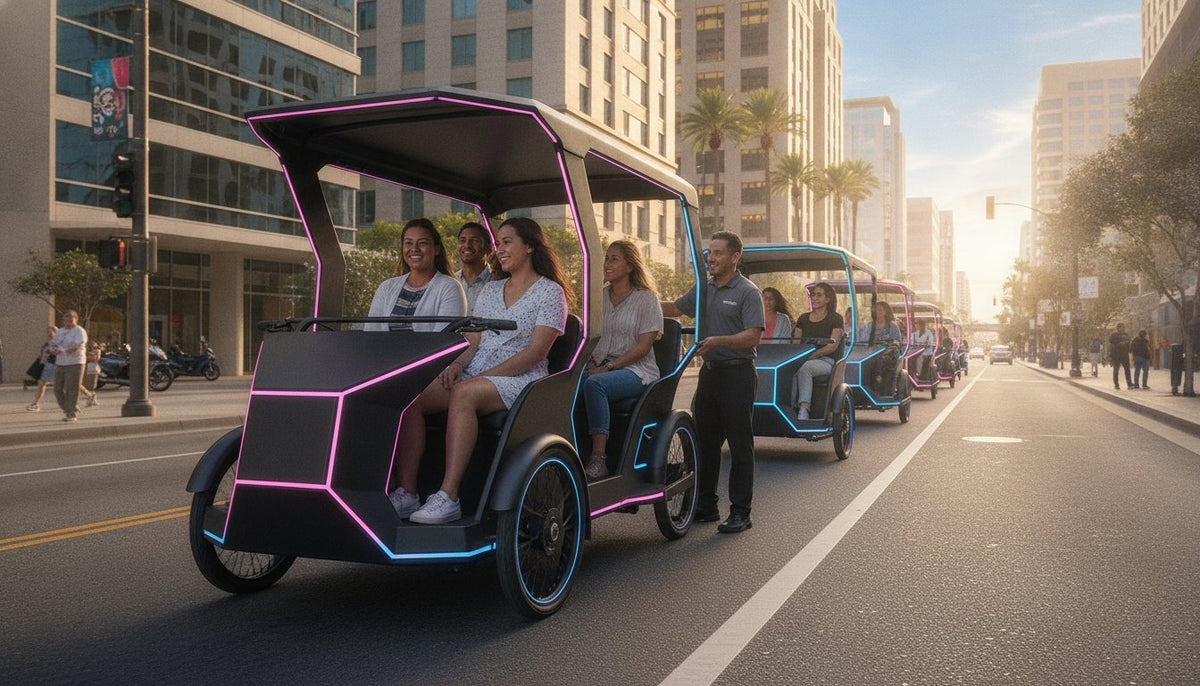
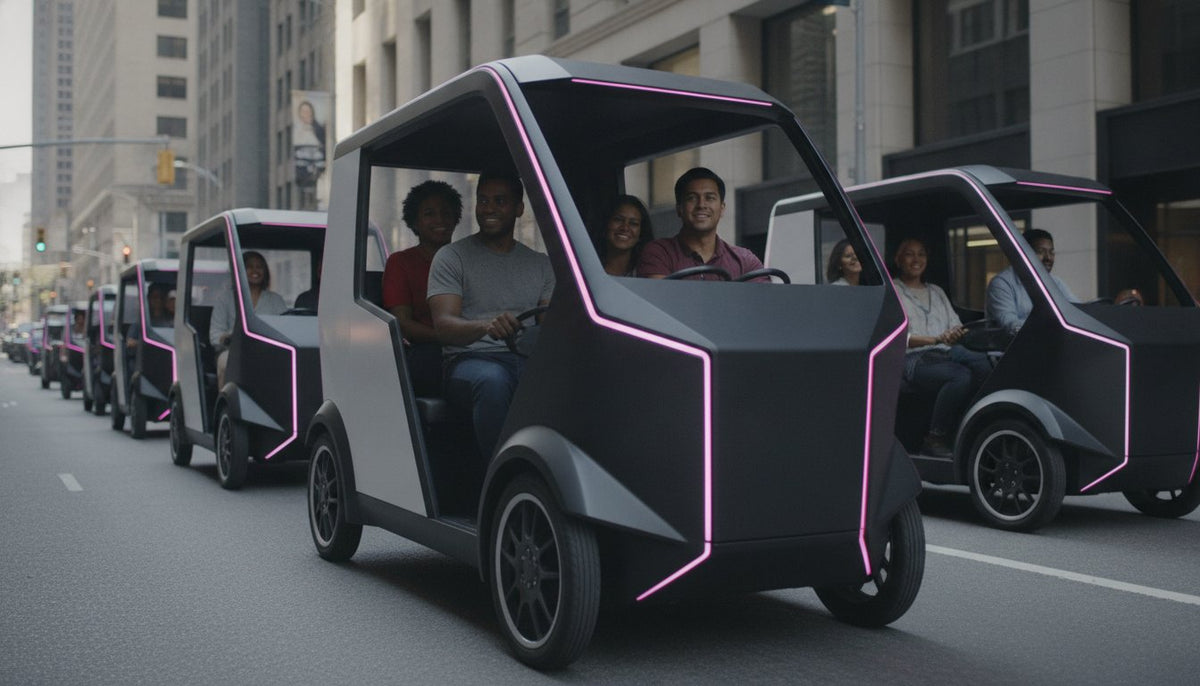
A single professional-grade pedicab can generate $35,000 in annual revenue, yet most operators stay one city council meeting away from losing their equipment to impoundment. The difference between a hobbyist and a dominant fleet owner lies in mastering the bike taxi regulations USA landscape before the first passenger boards. You've likely felt the frustration of vague city ordinances or the sting of high insurance premiums. It's a high-stakes environment where conflicting e-bike classifications can turn a high-performance vehicle into a legal liability.
We know that navigating these legal gray areas feels like a constant gamble. This 2026 guide is your definitive roadmap to securing city council approval, meeting Class 2 e-bike standards, and locking in commercial-grade insurance. We'll break down the federal requirements and local permitting hurdles that define the current market. You'll gain the technical and legal clarity needed to scale a compliant, high-revenue operation with the confidence of an industry veteran.
Key Takeaways
- Decode the hierarchy of federal and state laws to ensure your business classification minimizes tax liability and legal exposure.
- Secure your fleet’s future by mastering bike taxi regulations USA, specifically the 750W motor threshold that keeps your operation within the Class 2 e-bike standard.
- Navigate the complexities of Commercial General Liability insurance to ensure your livery operation is fully protected under "for-hire" transit requirements.
- Build a "Safety and Mobility" proposal that transforms city council members from regulatory hurdles into strategic partners for last-mile transit solutions.
- Leverage industrial engineering standards, such as 4130 Chromoly frames, to guarantee your vehicles exceed the most demanding municipal safety inspections.
The Multi-Layered Framework of US Bike Taxi Regulations
Launching a profitable fleet requires more than just high-torque motors; it demands a surgical understanding of the legal hierarchy. The regulatory environment is a three-tiered system where federal safety standards, state vehicle codes, and local ordinances intersect. Understanding bike taxi regulations USA begins with recognizing that your vehicle is a hybrid of a consumer product and a commercial transit tool. While the global framework of bike taxis often treats these vehicles as simple cycles, the US market is far more rigorous. Proper classification is the pivot point for your entire business model. It dictates whether you pay standard commercial taxes or benefit from the IRS March 2026 proposed rule that makes tips for bike taxi drivers tax-free.
Federal DOT vs. CPSC Standards
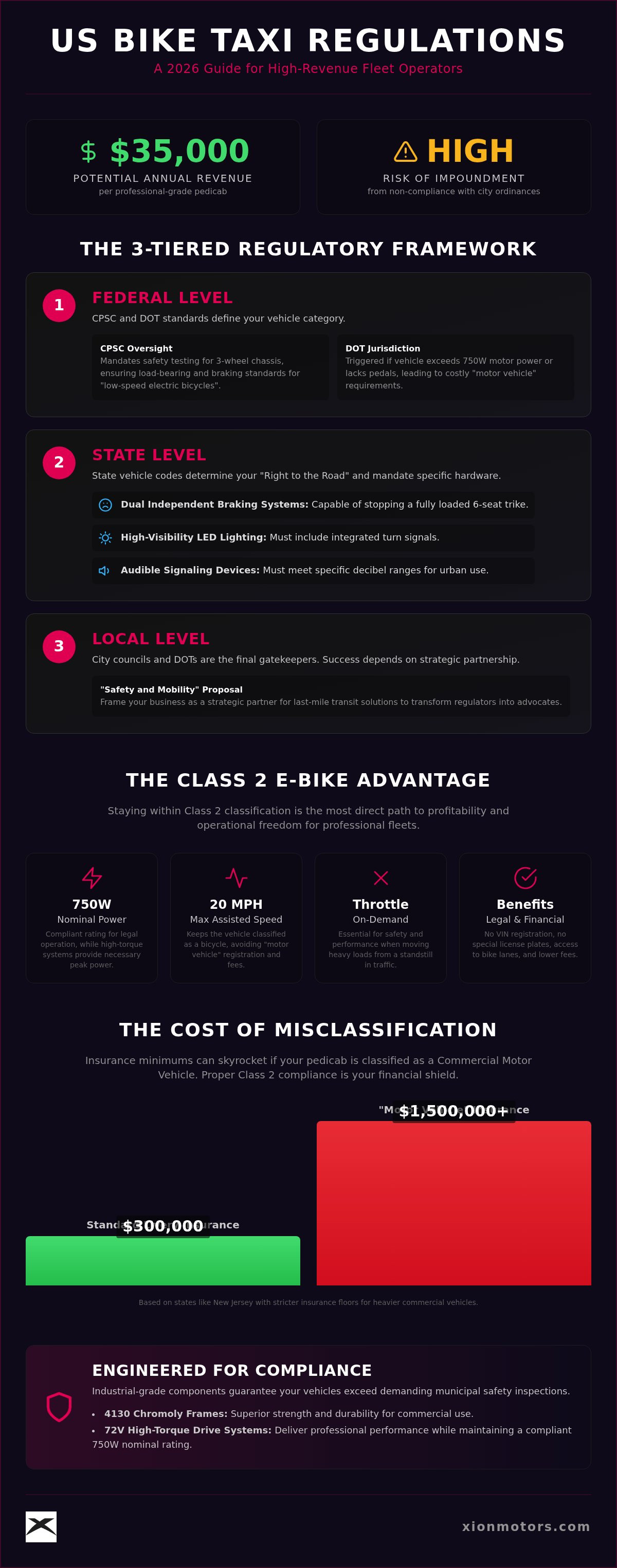
At the federal level, the Consumer Product Safety Commission (CPSC) holds the keys to your equipment's legitimacy. The CPSC oversees the mandatory safety testing and labeling for 3-wheel commercial chassis to ensure they meet load-bearing and braking standards before reaching the consumer market. These standards distinguish "low-speed electric bicycles" from "motor vehicles." If your equipment exceeds the 750W motor threshold or lacks functional pedals, it enters the jurisdiction of the Department of Transportation (DOT), triggering expensive motorcycle-grade requirements. The 15 mph federal limit for certain motor-driven assist categories impacts commercial design by forcing engineers to prioritize torque over top-end speed. This ensures the vehicle remains a bicycle in the eyes of the law while still moving heavy passenger loads efficiently.
State-Level Vehicle Code Variations
Once your equipment clears federal hurdles, state laws determine your "Right to the Road." California and New York currently set the national trend for bike taxi regulations USA. As of January 1, 2026, California law requires all e-bikes and powered mobility devices to be tested by accredited laboratories and labeled for safety compliance. You can't ignore these state-specific nuances. New York City is moving toward standardizing rates and mandating meters under the Taxi and Limousine Commission (TLC). States also dictate the specific hardware you must install to stay legal. Common requirements include:
- Dual independent braking systems capable of stopping a fully loaded 6-seat trike.
- High-visibility LED lighting packages with integrated turn signals.
- Audible signaling devices that meet specific decibel ranges for urban environments.
States like New Jersey have even stricter insurance floors based on vehicle weight. If your trike is classified as a commercial motor vehicle, the insurance minimums can jump from $300,000 to over $1.5 million. Mastery of these codes ensures your fleet stays on the street instead of in an impound lot.
Navigating the Class 2 E-Bike Advantage for Fleets
Class 2 is the definitive industrial standard for professional pedicab fleets. While hobbyists might settle for pedal-assist, the throttle-driven Class 2 model provides the immediate torque required to move a 6-seat passenger load through dense traffic. This classification acts as a strategic legal advantage, allowing high-capacity vehicles to bypass the rigorous licensing and registration fees typically associated with motorized taxis. Mastering bike taxi regulations USA means understanding that staying within this category is the most direct path to profitability and operational freedom.
Speed and Throttle Limitations
Speed and throttle limitations define your operational zone. Throttle-start capability isn't a luxury; it's a necessity for commercial safety. Moving a fully loaded VorteX from a stoplight requires immediate engagement that only a thumb or twist throttle can provide. By strictly limiting assisted speeds to 20 mph, your fleet avoids falling into the "motor vehicle" category, which requires VIN registration and specialized license plates. This keeps your drivers in bike lanes and historic districts, providing the high-value "last-mile" utility that passengers demand. Consulting the State-by-State Electric Bike Laws reveals that Class 2 is the most widely accepted standard for commercial use across the country.
The 750W Power Threshold Myth
The 750W power threshold is often misunderstood by new operators. Inspectors focus on nominal power ratings, not the peak power used during initial acceleration. Professional systems utilize 72V high-torque drive systems to deliver the necessary performance while maintaining a compliant 750W nominal rating. This engineering balance allows the CyberX to handle steep inclines and heavy loads without drawing legal scrutiny during safety audits. You should always maintain a digital folder of your vehicle's technical specifications to present to city officials when requested. Proving your motor's compliance with these standards is the best way to avoid equipment impoundment.
Xion Motors builds for compliance because we've spent two decades in the trenches of fleet operations. We ensure every CyberX and VorteX we manufacture aligns with these federal and state mandates. You get the rugged durability of a 4130 Chromoly frame combined with a drive system that stays on the right side of bike taxi regulations USA. If you're ready to launch a fleet that prioritizes both power and legal security, you should view our commercial electric pedicab packages now.
Commercial Licensing, Insurance, and Livery Requirements
Structuring a legally bulletproof operation requires more than just high-performance trikes. You must secure the administrative infrastructure to protect your assets from the inherent risks of urban transit. The backbone of this protection is Commercial General Liability (CGL) insurance specifically rated for livery operations. Standard bicycle insurance is insufficient for "for-hire" transit. Most major municipalities require a minimum of $1,000,000 in general liability coverage per occurrence. This ensures that you are protected against the unique risks of moving multi-passenger loads. In the eyes of the law, your business often functions as a "Common Carrier," which carries a heightened legal duty to ensure passenger safety at all times.
Securing Livery-Grade Insurance
Insurance premiums for pedicab fleets typically range from $1,200 to $2,400 annually per vehicle. You can influence these rates by prioritizing structural integrity during your procurement phase. Underwriters often favor fleets utilizing 4130 Chromoly steel chassis because they offer superior impact resistance compared to standard aluminum frames. High-torque 72V systems also reduce the risk of stall-related accidents in heavy traffic, which can lead to lower premiums over time. Beyond just coverage, you should structure your business as an LLC or Corporation to provide a layer of asset protection between your personal finances and your fleet's operational liabilities.
Driver and Fleet Operational Permits
Navigating bike taxi regulations USA requires a clear strategy for municipal permitting. Some cities, like New York, utilize a capped medallion system where only 850 licenses are available. Others operate an "Open Permit" model where any operator meeting safety criteria can apply for a decal. Regardless of the model, you must implement standardized driver training protocols that include background checks and minimum age requirements. Maintain a meticulous maintenance log for every CyberX or VorteX in your fleet. This documentation serves as your primary legal defense in the event of an audit or liability claim, proving that your equipment was in peak operational condition at the time of service.
Professionalism in licensing is what separates high-revenue fleets from seasonal hobbyists. By meeting these insurance and permitting standards, you position your business as a legitimate transit partner for the city. This level of compliance is essential for securing high-value contracts with hotels, stadiums, and event organizers who require proof of livery-grade coverage before allowing you on their property.
Strategic Advocacy: Working with City Councils and DOTs
Market leaders don't wait for bike taxi regulations USA to change in their favor; they drive the conversation by positioning their fleets as essential urban infrastructure. If you want to secure a permit in a contested district, you must stop selling a "bike ride" and start selling a solution for last-mile transit and crowd management. Municipal leaders are under constant pressure to reduce congestion and meet carbon reduction goals. Your proposal should highlight how a fleet of electric pedicabs occupies less street space than gas-powered shuttles while moving passengers more efficiently through high-traffic zones. By leveraging carbon reduction data, you can often tap into municipal green energy grants that offset your initial capital expenditure.
Crafting a Safety-First Proposal
Your pitch to the City Council must lead with industrial-grade engineering to dismantle safety concerns before they are even voiced. Highlight the structural integrity of 4130 Chromoly frames and the precision of hydraulic disc brakes as the standard for your operation. Compare the safety records of modern electric trikes to traditional rickshaws to demonstrate the evolution of the industry. Implementing electric pedicabs as a last-mile solution reduces urban traffic congestion while providing a high return on investment for municipalities looking to optimize limited street space. This technical focus proves that your fleet is built for the rigors of commercial use rather than casual recreation.
Partnering with Business Improvement Districts (BIDs)
Gaining political leverage is often a matter of finding the right allies in the local business community. Partnering with Business Improvement Districts (BIDs) and tourism boards allows you to present a united front to the Department of Transportation. If a city is hesitant, suggest a pilot program limited to three vehicles. This "foot in the door" strategy allows you to demonstrate your operational professionalism and safety protocols in a controlled environment. Once you prove you can manage staging areas and taxi stands without disrupting traffic flow, scaling to a full fleet becomes a matter of data rather than debate. This proactive approach transforms you from a vendor into a strategic partner for the city's mobility goals.
Xion Motors provides the documentation and engineering proof you need to win these municipal battles. Our vehicles are designed to exceed the most stringent safety audits, giving you the confidence to stand before any city council. If you're ready to dominate your local market with a compliance-ready fleet, you can explore our high-performance electric pedicab packages today.
Engineering for Compliance: The Xion Motors Advantage
Engineering excellence is the final barrier between a fleet that thrives and one that remains grounded by local authorities. To master bike taxi regulations USA, you must deploy equipment that treats safety as a core engineering requirement rather than a secondary feature. We use 4130 Chromoly steel for every chassis because it provides the structural integrity required for 24/7 commercial operations. While aluminum frames often fatigue under the constant stress of multi-passenger loads, Chromoly offers the rugged durability needed to pass rigorous annual safety audits. This industrial-grade foundation is paired with the CyberX 72V drive system, which delivers high-torque performance while remaining strictly within Class 2 power limitations.
Safety is delivered as a comprehensive service through integrated LED lighting, wide-angle mirrors, and hydraulic braking systems that exceed municipal stopping-distance requirements. When you are ready to expand, our Electric Pedicab Fleet Packages provide a standardized hardware profile that simplifies the approval process for new permits. This consistency proves to city inspectors that your entire fleet meets a uniform safety standard, accelerating your time to market and ensuring your ROI isn't delayed by technical red tape.
CyberX and VorteX: Built for the Audit
Xion Motors brings a 20-year legacy of fleet experience to the drawing board. This history ensures that every CyberX and VorteX is built with standardized parts, making long-term maintenance and street legality a predictable science. We understand that a broken vehicle is a liability, not an asset. Professional aesthetics also play a critical role in city council perceptions. A clean, industrial design signals to officials that you are a serious transit operator rather than a temporary novelty, which is often the deciding factor in multi-year permit renewals.
Future-Proofing Your Fleet for 2026 and Beyond
The regulatory landscape continues to evolve, with a growing focus on battery safety and UL certification for commercial chargers. We stay ahead of these trends by engineering vehicles that can adapt to potential ADA requirements and stricter fire safety codes. This proactive design philosophy ensures your fleet remains operational even as cities update their transit ordinances. Building a future-proof fleet starts with a solid operational foundation. For a deeper dive into the logistics of your launch, consult our guide on How to Start a Pedicab Company. By choosing compliance-ready engineering today, you protect your capital investment against the legislative shifts of tomorrow.
Dominate the Urban Transit Landscape with Compliance-Ready Engineering
Mastering the bike taxi regulations USA environment is the definitive step toward building a high-revenue, scalable fleet. You've seen how Class 2 e-bike standards and livery-grade insurance provide the legal framework for professional success. Now, it's time to back that regulatory knowledge with the industry's most durable hardware. Compliance isn't just about avoiding fines; it's about building a reputation for safety and reliability that city councils can't ignore.
Xion Motors brings over 20 years of fleet experience to every build. We engineer our vehicles with 4130 Chromoly industrial frames to ensure they exceed municipal safety audits and withstand the rigors of the street. We ship to all 50 states, providing the tactical support you need to dominate your local market. It's time to stop worrying about equipment impoundment and start focusing on growth.
Explore Industrial-Grade Pedicab Fleet Packages and secure your position as a leader in the micro-transit revolution. The road to a profitable, compliant fleet starts with the right partner.
Frequently Asked Questions
Are electric pedicabs street legal in all 50 states?
Electric pedicabs are generally legal when they meet the three-class e-bike system standards, but street access is determined by a patchwork of state and local ordinances. While federal law defines low-speed electric bicycles, individual states dictate where these vehicles can operate. You must verify local bike taxi regulations USA before launching. Most states treat Class 2 vehicles as bicycles, allowing access to standard roads unless specifically prohibited by municipal traffic codes.
Do I need a commercial driver's license (CDL) to operate a pedicab?
You typically don't need a CDL to operate an electric pedicab if the vehicle remains classified as a bicycle. This classification requires the motor to be 750W or less and the assisted speed to top out at 20 mph. If your equipment exceeds these thresholds, it may be reclassified as a motor vehicle, triggering registration and specialized licensing requirements. Always check your municipal permit rules for specific driver age and background check mandates.
What is the maximum passenger capacity allowed for a bike taxi?
Passenger capacity is governed by both vehicle engineering and local municipal limits. Xion Motors manufactures 3-seat and 6-seat models, such as the CyberX and VorteX, designed for high-capacity commercial use. However, cities like New York may cap occupancy at three passengers regardless of the vehicle's structural capability. Operators must align their fleet selection with local weight limits and seating ordinances to ensure they pass safety audits and maintain their operating permits.
How do Class 2 e-bike laws affect pedicab insurance?
Class 2 classification is the industrial standard that makes your fleet insurable under commercial livery policies. Because these vehicles are restricted to 20 mph and 750W, insurers view them as lower-risk compared to motor vehicles. To secure coverage, you must obtain a Commercial General Liability policy that specifically covers "for-hire" passenger transit. Maintaining Class 2 status ensures your premiums remain manageable while satisfying the bike taxi regulations USA liability minimums required by most cities.
Can I operate a 6-seat pedicab on city bike paths?
Access to city bike paths depends on the vehicle's width and local path designations. While Class 2 e-bikes often have legal access to paths, a 6-seat commercial trike is significantly wider than a standard bicycle. Many municipalities restrict these larger vehicles to the roadway to prevent path congestion and ensure pedestrian safety. You should consult your local Department of Transportation to identify specific high-traffic corridors and designated staging areas where your fleet is permitted.
What are the common lighting and safety requirements for night operations?
Night operations require a comprehensive visibility package to meet municipal safety standards. Standard requirements include high-output LED headlights, tail lights, and integrated turn signals. Most cities also mandate reflective tape on the chassis and audible signaling devices like horns or bells. Xion Motors integrates these features into the CyberX and VorteX lines to ensure your fleet meets the most rigorous safety inspections. Proper lighting is essential for defending against liability claims during after-hours service.
How do I convince my city council to allow electric pedicabs?
Convincing a city council requires positioning your fleet as a solution for urban congestion and last-mile connectivity. Present a proposal that highlights the use of zero-emission vehicles to meet local carbon reduction goals. Use data to show how pedicabs move crowds more efficiently than gas-powered shuttles during major events. Highlighting industrial-grade engineering, such as 4130 Chromoly frames, helps alleviate safety concerns and demonstrates your commitment to professional, long-term transit operations.
Are there federal tax credits for commercial electric pedicabs in 2026?
As of 2026, the primary federal incentive is the proposed IRS rule that would make tips for bike taxi drivers tax-free, significantly increasing driver retention. While specific federal e-bike tax credits for commercial fleets are subject to annual budget approvals, many operators leverage state-level green energy grants for zero-emission vehicles. You should consult with a tax professional to determine if your fleet qualifies for equipment depreciation or local environmental subsidies aimed at reducing urban traffic.