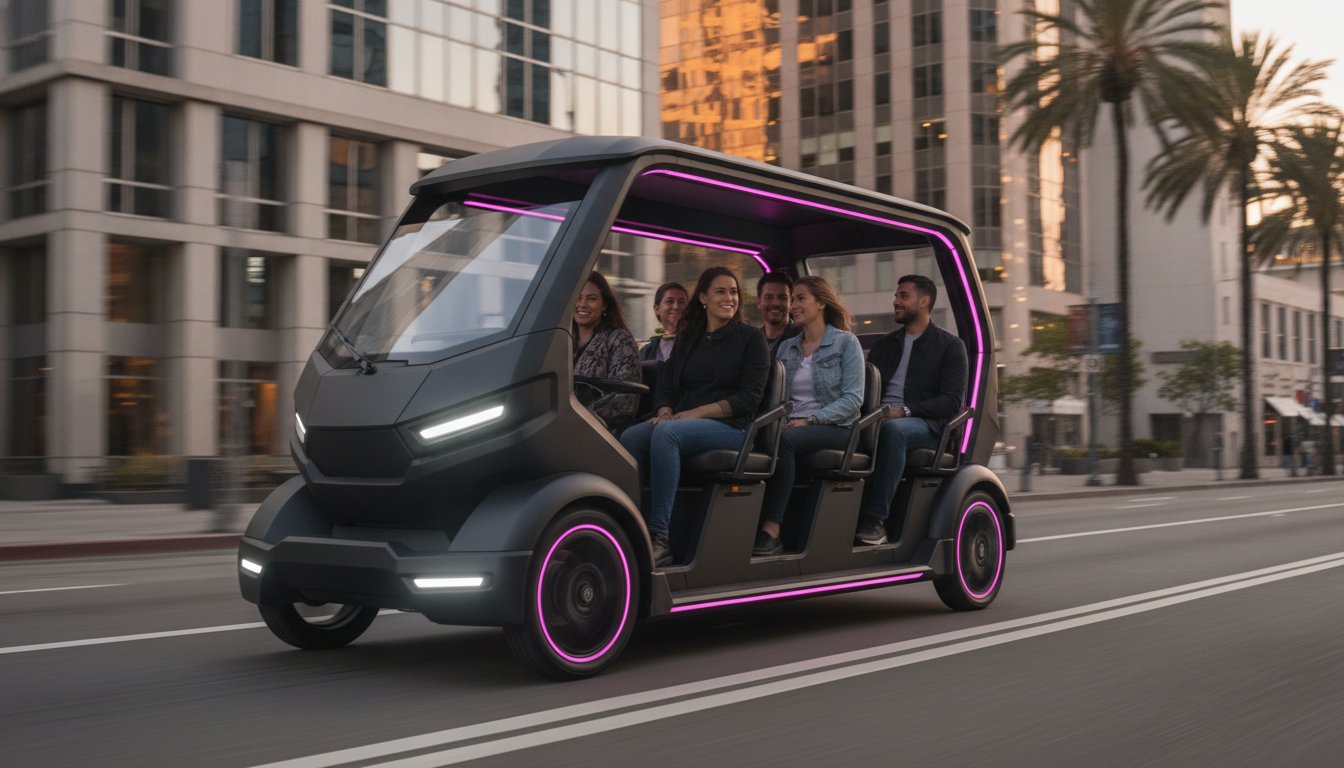
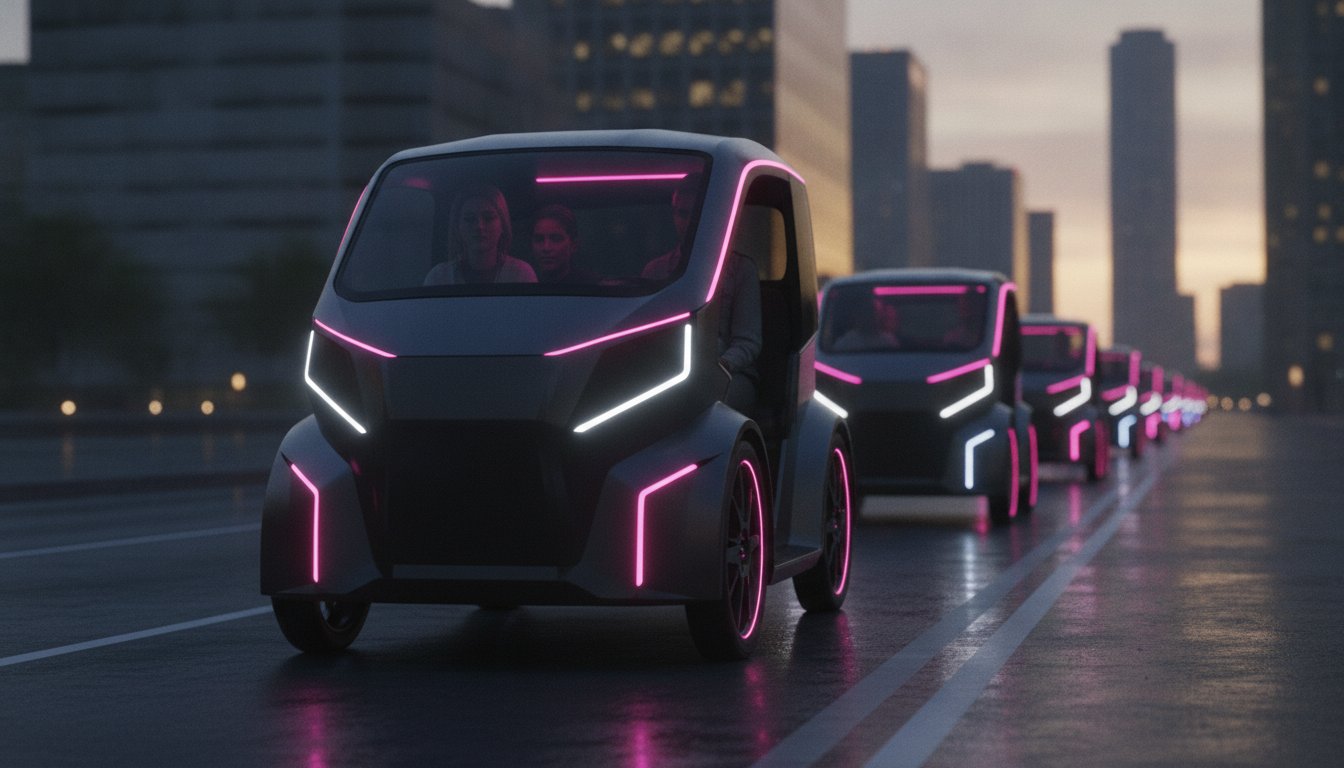
Why are university transit budgets still dominated by oversized shuttle buses that spend half their routes nearly empty? For the modern fleet manager, this inefficiency is a constant source of friction. You already know that traditional gas vehicles are becoming a liability due to rising maintenance costs and the mounting pressure to reach carbon-neutrality goals. Integrating electric pedicabs for university campuses offers a high-performance solution that bridges the gap between walking and heavy transit. These aren't glorified bicycles. They are precision-engineered machines designed for commercial continuity and high-torque performance in demanding environments.
You need a transit solution that's as ambitious as your institution's growth. This 2026 guide reveals how industrial-grade electric pedicabs like the CyberX and VorteX lines deliver a superior ROI while ensuring student safety through mandatory UL 2849 certification. We'll break down the financial viability of these fleets, from slashing operational overhead to providing safe, reliable last-mile connectivity. Discover how to transform your campus logistics into a visible commitment to green technology that actually works for your bottom line.
Key Takeaways
- Identify the specific engineering standards, such as high-torque motors, required to maintain commercial continuity during 12-hour shifts on hilly terrain.
- Bridge the last-mile connectivity gap by replacing inefficient shuttle bus routes with high-frequency, short-range transit solutions.
- Compare the total cost of ownership between traditional golf carts and electric pedicabs for university campuses to maximize your fleet's ROI.
- Establish a scalable operational blueprint that covers everything from strategic route mapping to the logistics of centralized charging hubs.
- Leverage the revenue-generating potential of student-run services and on-vehicle advertising to offset initial capital investments.
The Evolution of University Transit: Solving the Last-Mile Campus Connectivity Gap
University campuses operate as high-density ecosystems. They face a unique logistical hurdle known as the last-mile gap. This gap is the critical distance between major transit hubs, like parking structures or regional rail stations, and the specific classroom or dormitory where a student needs to be. Walking is often too slow for tight schedules. Heavy transit is too cumbersome for narrow campus pathways. Deploying electric pedicabs for university campuses is the definitive answer to this logistical friction. These vehicles provide a nimble, high-frequency alternative that keeps the student body moving without the footprint of a traditional vehicle.
The concept isn't new, but the execution has changed. While the traditional cycle rickshaw has served urban centers for decades, modern campus transit requires an industrial-grade evolution. We've moved beyond simple human-powered trikes into the era of high-torque, electric-assist platforms. This shift isn't just about ease of use; it's about commercial continuity. A professional fleet must be capable of 24/7 operation, navigating steep campus inclines while carrying full passenger loads. It's a task that demands precision engineering and rugged durability.
Why Traditional Campus Shuttles Fall Short
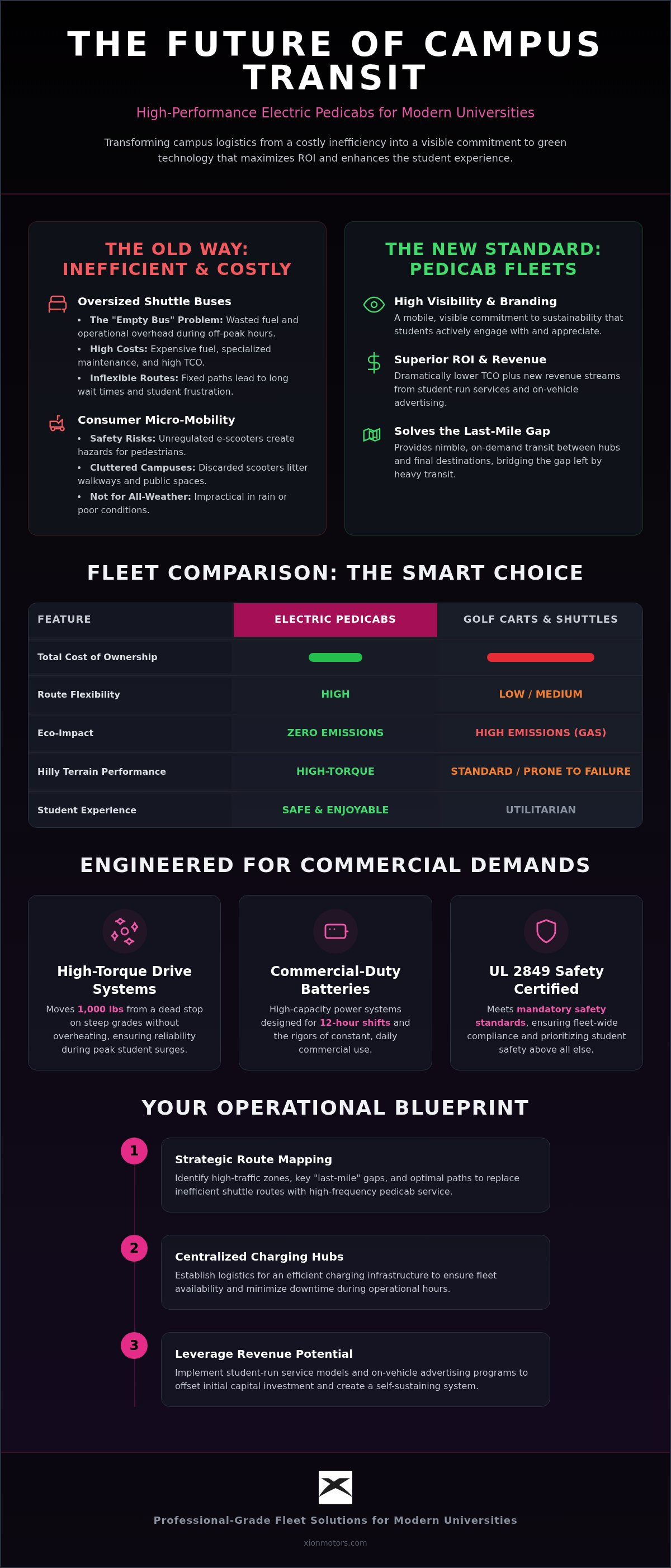
Standard internal combustion engine shuttles are becoming a financial liability. They are heavy and expensive to fuel. They require specialized mechanical attention that drives up maintenance costs. Then there's the empty bus problem. During off-peak hours, 40-foot buses often circulate with only two or three passengers, wasting massive amounts of operational overhead. Fixed-route systems also lack flexibility. They can't adapt to real-time student demand or sudden changes in campus traffic patterns. This rigidity leads to long wait times and a frustrated student body.
The Rise of Student-Centric Micro-Mobility
Modern campus planning is shifting toward pedestrian-first designs. Many institutions are closing off central arteries to cars to prioritize safety and air quality. This creates a transit vacuum. While e-scooters attempted to fill this space, they introduced unregulated safety risks and cluttered walkways. Electric pedicabs offer a regulated, professional alternative. They provide a high-visibility platform for university sustainability branding that students actually enjoy using. Our Custom VorteX Trike engineering ensures these vehicles aren't just eco-friendly novelties. They are rugged tools built for reliability. They offer a safe, seated experience that enhances the student journey while meeting aggressive carbon-neutrality targets.
Industrial-Grade Engineering: Why High-Torque Pedicabs Outperform Standard EVs
University campuses aren't flat, empty parking lots. They feature varied terrain, steep inclines, and constant stop-and-go traffic. Standard electric vehicles (EVs) or consumer-grade e-bikes often buckle under these punishing conditions. When you deploy electric pedicabs for university campuses, the primary engineering requirement is torque, not top speed. You need a vehicle that can move 1,000 pounds of passenger and cargo from a dead stop on a steep grade without overheating the motor. This is where industrial engineering separates itself from recreational hardware. To see how these complex engineering principles are translated into modular learning tools for students, visit Maker & Coder.
The Power of High-Torque Drive Systems
High-torque refers to the rotational force that initiates movement. In passenger transport, speed is secondary to the ability to maintain momentum under heavy loads. The CyberX is engineered specifically for this industrial-grade demand. Unlike consumer hubs that burn out under stress, our drive systems utilize specialized gearing to manage heat and power delivery. This ensures the vehicle handles peak-hour student surges without mechanical failure. To support these 12-hour shifts, we integrate high-capacity battery systems designed for commercial duty cycles. These aren't standard lithium packs. They are robust power units built for the rigors of constant daily recharging and discharge.
Chassis Durability and Passenger Safety
Structural integrity is the difference between a one-year lifespan and a ten-year legacy. A university fleet operates in a punishing environment. Our VorteX line utilizes heavy-duty steel frames and reinforced joints to withstand thousands of hours of operation. Every component, from the oversized axles to the hydraulic braking systems, is selected for its ability to perform under pressure. Safety isn't optional. We include high-visibility LED lighting and responsive braking to protect both passengers and pedestrians in crowded campus corridors. When managing electric pedicabs for university campuses, the chassis must act as a rigid foundation for both safety and performance.
Maintenance shouldn't be a mystery. Using consumer-grade parts leads to a "throwaway" culture that drains your budget. Proper electric pedicab maintenance relies on standardized industrial parts that are easy to source and replace. This USA-manufactured quality ensures that your fleet stays on the road instead of sitting in the shop. If you're ready to upgrade your transit infrastructure, you can consult with our fleet specialists to find the right configuration for your campus.
The Business Case for Campus Fleets: Pedicabs vs. Golf Carts and Shuttles
University fleet managers often view golf carts as the default choice for micro-mobility. This oversight leads to wasted capital. While golf carts are familiar, they're often too wide for campus sidewalks and too slow for road traffic. Electric pedicabs for university campuses outperform traditional carts in both maneuverability and financial return. They aren't just vehicles; they're high-visibility assets that solve specific logistical problems while generating new revenue streams.
Maneuverability in Pedestrian-Heavy Zones
Golf carts are frequently restricted to perimeter roads due to their width and weight. They struggle in crowded plazas and can't access narrow pathways between older campus buildings. A slim-profile pedicab navigates central campus arteries with ease. The 3-seat electric pedicab features a superior turning radius that allows it to weave through pedestrian traffic without causing congestion. This isn't just about convenience. It's about safety. Pedicabs are designed for pedestrian-speed interaction. They don't intimidate walkers; they complement the pedestrian-first design of modern universities. This accessibility ensures that students and faculty reach their destination directly, eliminating the "last-block" walk often required by larger shuttles.
ROI and Operational Efficiency
The math is clear. An investment between $13,500 and $17,500 secures an industrial-grade asset built for commercial continuity. With a $30,000 annual profit potential per unit, the payback period is exceptionally short. You can't achieve those numbers with a standard shuttle bus or a light-duty golf cart. Advertising on these high-visibility vehicles creates a secondary revenue stream that offsets the initial cost. Because these are class-regulated e-vehicles, they often carry lower insurance premiums than gas-powered alternatives. The ROI of a 6-seat electric pedicab is significantly higher than a gas shuttle because it eliminates fuel overhead and reduces maintenance downtime while providing high-frequency transit for short-range trips. You're trading high-cost, underutilized buses for a fleet that is sized perfectly for the demand.
Industrial trikes also offer a longer life-cycle than light-duty electric carts. Golf carts are designed for leisure, not 12-hour shifts. When you choose industrial engineering, you're choosing a vehicle that stays on the road. This durability ensures your campus transit program remains reliable year after year, protecting your institution's capital and its reputation for innovation.
Operational Blueprint: Deploying and Managing an Efficient Campus Pedicab Program
Successful deployment of electric pedicabs for university campuses isn't a matter of chance. It requires a structured blueprint that aligns industrial-grade hardware with the specific geography of your institution. You must treat this as a professional logistics operation. Transitioning from traditional shuttles to a micro-mobility fleet demands a tactical shift in how you view student movement. It's about precision, uptime, and the seamless integration of technology into the campus fabric.
Route Optimization and Demand Mapping
Data drives efficiency. You should begin by identifying high-traffic "choke points" where traditional transit fails. Locations like central libraries, student unions, and perimeter parking structures are primary hubs for last-mile demand. Integrating pedicab tracking into your existing campus transit apps is a critical step for reducing student friction. This transparency allows for a hybrid deployment model. Use fixed-route systems during high-volume class changeover surges; switch to on-demand service for late-night safety escorts. This flexibility ensures your fleet is always where the demand is highest, maximizing your operational impact.
Fleet Management and Maintenance Protocols
Operational uptime is the only metric that guarantees ROI. Effective pedicab fleet management starts with a rigorous daily inspection checklist. Your team must verify brake responsiveness, tire integrity, and battery health before any vehicle leaves the central hub. Establishing a dedicated charging station is essential for maintaining commercial continuity across multiple shifts. You cannot afford downtime due to simple mechanical failures. Stocking commercial trike replacement parts on-site allows your maintenance crew to perform rapid repairs, keeping your assets on the road and out of the shop. This proactive approach protects your capital investment and ensures a reliable experience for the student body.
The student-driver model provides a unique operational advantage. It creates high-visibility campus employment while ensuring that operators are intimately familiar with the local terrain. Safety protocols must be absolute. Every operator should undergo training that covers defensive driving in dense pedestrian zones and emergency maneuvering. In 2026, compliance with UL 2849 certification is mandatory for electrical system safety. Adhering to these standards manages university liability and builds long-term institutional trust. If you're ready to modernize your transit infrastructure, you can contact our team to build your custom fleet blueprint.
Xion Motors: Providing Professional-Grade Fleet Solutions for Modern Universities
University administrators need more than just a equipment vendor; they need a partner with a deep understanding of fleet dynamics and industrial engineering. Xion Motors provides this through a decades-long legacy of excellence in the passenger transport sector. We don't just sell vehicles; we provide the rugged backbone for your institution's transit infrastructure. Our CyberX and Custom VorteX Trike models have become the engineering standard for electric pedicabs for university campuses. They represent a fusion of high-torque performance and street-level reliability that consumer-grade alternatives simply can't match in a professional environment.
Custom Configurations for Campus Needs
Visibility is a core component of campus branding and student safety. Every VorteX unit can be custom-matched to your university's specific color palette and logos, turning a transit solution into a high-visibility mobile marketing asset. The versatility of these platforms extends beyond standard student transport. Our custom electric trikes for business are easily adapted for campus security patrols, mail delivery, or facilities maintenance teams. Whether you need the high-capacity 6-seat passenger configuration for campus tours or a specialized utility build for heavy-duty maintenance, we deliver a vehicle tailored to your institutional requirements. This adaptability ensures that your fleet remains a multi-purpose tool for campus-wide efficiency.
The Xion Motors Advantage: 20 Years of Fleet Expertise
Reliability is built into our DNA. With over 20 years of fleet experience, we've spent decades in the trenches perfecting our designs and anticipating operator needs. We maintain a strict commitment to USA-based manufacturing, ensuring that every weld and wire meets our rigorous quality control standards before it leaves our facility. This direct-to-operator model eliminates the middleman, providing you with specialized fleet pricing and a direct line to our engineering team for technical support. We support your investment with nationwide shipping for both new vehicles and essential replacement parts, ensuring your fleet stays operational regardless of your location. Our logistics network is designed for speed, minimizing downtime and protecting your bottom line.
Investing in electric pedicabs for university campuses is a commitment to a legacy-grade future. You're choosing a partner that understands the demands of 2026 and the years that follow. Don't settle for unproven hardware that will fail under the weight of campus demand. Choose the industrial standard that delivers measurable ROI and uncompromising safety. Explore Xion Motors Fleet Packages for University Campuses today and secure the future of your institution's transit infrastructure.
Secure Your Institution’s Transit Legacy for 2026 and Beyond
Modernizing university transit isn't just about following a trend; it's an operational necessity for the modern campus. We've explored how industrial engineering solves the last-mile gap where heavy buses fail and golf carts fall short. You've seen the data supporting a transition to high-torque, high-frequency fleets. Integrating electric pedicabs for university campuses is a calculated move toward commercial continuity and significantly reduced operational overhead. It's a visible commitment to efficiency that students and faculty will notice every day.
Xion Motors stands as the seasoned master practitioner in this field. We bring 20+ years of fleet operational experience to every build. Our USA-manufactured industrial-grade components ensure your fleet stays on the road while delivering a proven ROI of $30,000+ annually per vehicle. It's time to move beyond the status quo of inefficient, oversized shuttles. Request a Professional Fleet Consultation for Your Campus today. Let's build a transit system that reflects the excellence and ambition of your institution.
Frequently Asked Questions
Are electric pedicabs street-legal for campus use?
Electric pedicabs are generally classified as electric-assist bicycles, making them street-legal on most campus roads and designated bike paths. In 2026, all vehicles must meet mandatory UL 2849 certification to ensure total electrical system safety. This classification allows operators to navigate campus arteries without a commercial driver's license, providing a flexible and legal alternative to traditional heavy transit.
How long does the battery last on an industrial electric pedicab during a campus shift?
Industrial-grade models like the CyberX are engineered to sustain a full 12-hour operational shift on a single charge. This longevity is achieved through high-capacity battery systems designed for heavy-duty commercial cycles rather than recreational use. For 24/7 operations, universities often utilize swappable battery protocols to keep the fleet moving without any mid-shift downtime for charging.
Can electric pedicabs handle steep hills with a full passenger load?
High-torque drive systems allow electric pedicabs for university campuses to navigate steep inclines even with a full 6-passenger load. While consumer e-bikes might stall under pressure, industrial trikes utilize specialized gearing to manage heavy rotational force. This ensures consistent performance when moving 1,000 pounds of weight from a dead stop on a campus hill.
What is the maintenance schedule for a commercial pedicab fleet?
A professional maintenance schedule involves daily safety checks and quarterly mechanical deep dives. Daily inspections focus on brake responsiveness and tire pressure, while quarterly service ensures the integrity of high-torque motors and electrical connections. Using standardized industrial parts simplifies this process, allowing campus maintenance teams to perform most repairs on-site without specialized equipment.
How do electric pedicabs compare to golf carts in terms of safety?
Pedicabs offer superior safety in pedestrian zones compared to golf carts due to their slimmer profile and pedestrian-speed design. They provide better 360-degree visibility for the operator, which is critical in dense campus corridors. Integrated hydraulic braking systems and high-visibility LED lighting further protect both passengers and pedestrians during high-traffic surges between classes.
What are the charging requirements for a fleet of electric pedicabs?
A fleet requires a centralized hub equipped with standard 110V or 220V charging ports. Most industrial models reach a full charge in 4 to 6 hours, depending on the battery capacity and charger configuration. Establishing a dedicated charging station ensures commercial continuity and protects the long-term health of the power units through regulated power delivery.
Are there financing or fleet pricing options for universities?
Specialized fleet pricing is available for university orders of three or more units to help institutions scale their transit solutions efficiently. Administrators can also explore various financing packages designed to align with university budget cycles and capital expenditure requirements. These options lower the barrier to entry, allowing for a faster transition to a zero-emission campus fleet.
How do pedicabs improve campus sustainability metrics?
Transitioning to electric pedicabs for university campuses directly supports carbon-neutrality goals by replacing internal combustion engine shuttles on short-range routes. These vehicles offer a high-visibility commitment to green technology that resonates with the student body. By eliminating idling emissions and reducing campus noise pollution, pedicabs significantly improve overall sustainability metrics and campus air quality.