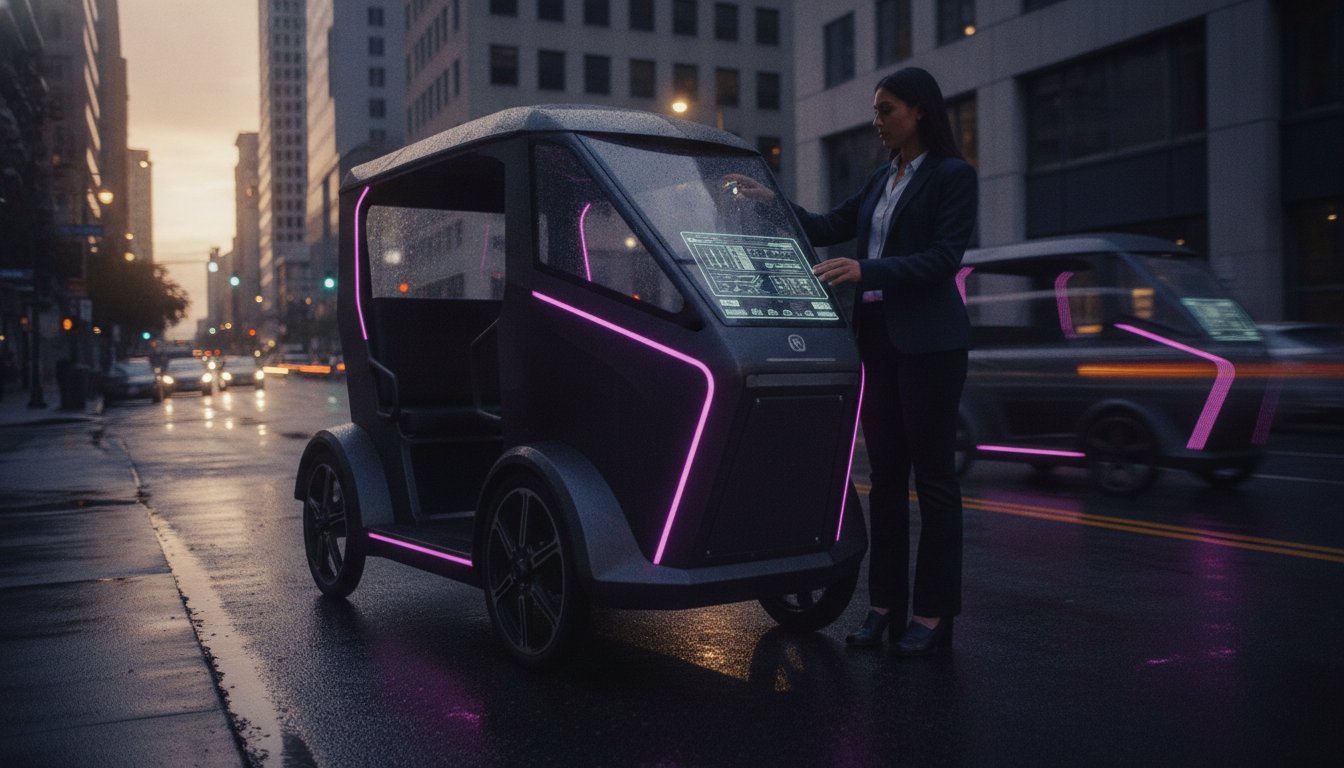
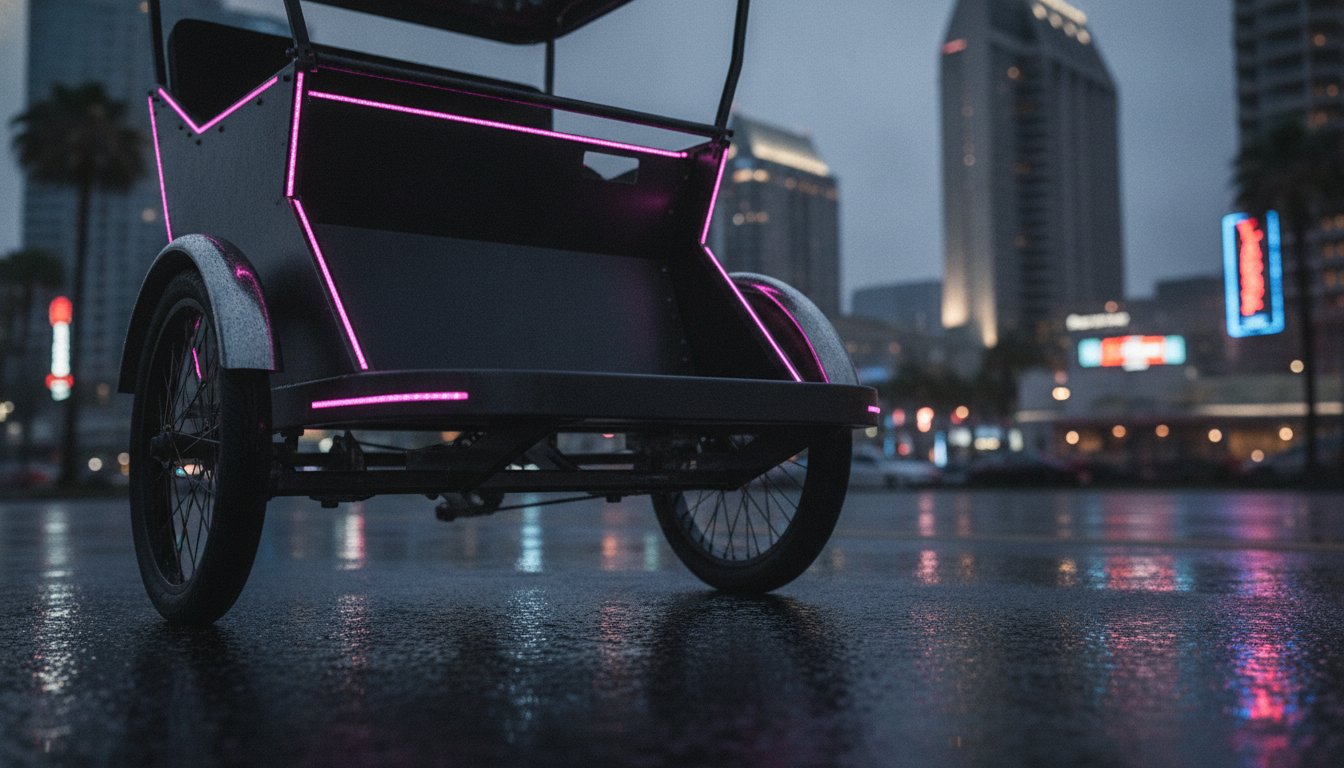
A 6 seat electric pedicab is not a bicycle with extra seating. It is an industrial-grade transit asset engineered to replace the shuttle bus in dense urban corridors. If you treat it like a standard trike, your fleet will spend more time in the repair shop than on the street. You have likely seen the aftermath of light-duty frames buckling under heavy passenger loads or heard the silence of a battery that gave up mid-shift. It is a costly lesson that most operators simply cannot afford to learn twice.
You need equipment that matches your ambition and survives the grind of commercial transit. This guide provides the blueprint to master the engineering requirements, navigate the 2026 regulatory landscape, and maximize your ROI. We will analyze the transition to Class 2 e-bike standards, explore how to scale your capacity without increasing your headcount, and reveal the operational secrets to generating significant annual revenue per vehicle. It is time to stop managing a hobby and start running a high-performance fleet.
Key Takeaways
- Understand the financial impact of doubling your passenger capacity per operator to maximize fleet revenue in competitive urban markets.
- Identify the specific industrial engineering requirements that allow a 6 seat electric pedicab to maintain structural integrity under maximum passenger loads.
- Master the 2026 regulatory landscape by ensuring your vehicles comply with Class 2 e-bike classifications and critical safety certifications.
- Compare the maneuverability and operational costs of high-capacity electric trikes against traditional golf carts to determine the most efficient asset for your district.
- Learn how to scale your operations using the CyberX and VorteX chassis, engineered specifically to handle the rigors of high-volume commercial transit.
The Rise of the 6 Seat Electric Pedicab in Urban Transit
Urban transit is undergoing a fundamental shift. The traditional cycle rickshaw, once a simple tool for solo operators, has evolved into a high-capacity shuttle designed for industrial-scale efficiency. In 2026, the transition from 3-seat configurations to the 6 seat electric pedicab is no longer a trend; it is a necessity for survival in high-traffic entertainment districts. These districts demand higher passenger throughput to manage the sheer volume of pedestrians. Operators who continue to rely on smaller units find themselves outpaced by competitors who can move twice the crowd with the same labor footprint. This shift represents a move away from "novelty" rides toward legitimate, high-performance commercial transit.
High-capacity trikes are now the primary solution for bridging "last mile" transportation gaps. Large-scale venues like stadiums and resorts face a persistent challenge: moving thousands of people from parking structures to gates without the noise or footprint of a bus. A 6 seat electric pedicab offers the perfect balance of maneuverability and capacity. It navigates tight pedestrian zones where traditional shuttles are prohibited. This agility, combined with the power of modern electric drivetrains, makes it the standard for professional fleet managers who prioritize reliability and speed.
Economic Advantages of High-Capacity Trikes
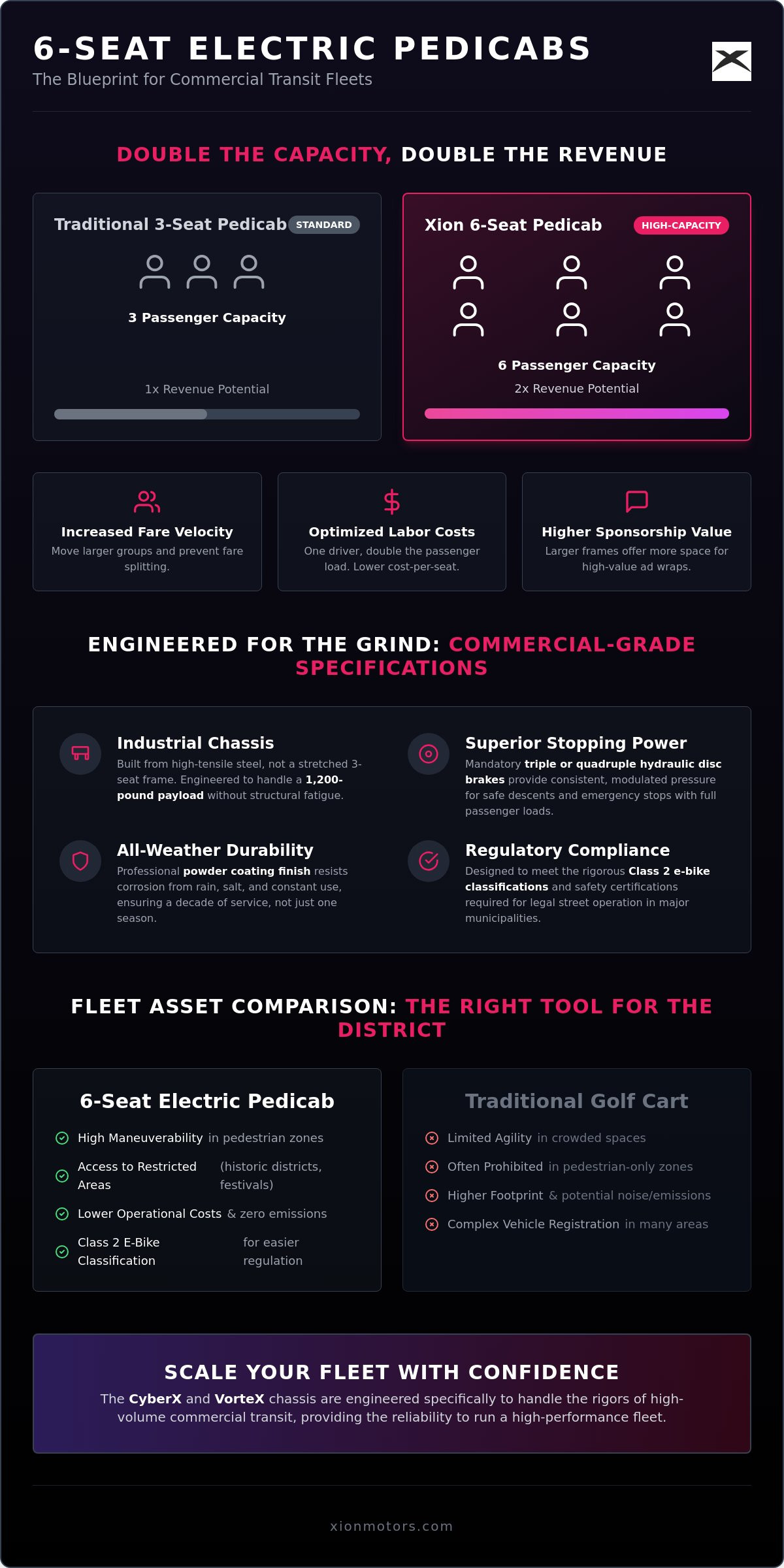
Maximizing revenue per trip is the cornerstone of fleet growth. A 3-seat model caps your earnings at three fares per cycle. By deploying a 6 seat electric pedicab, you effectively double your gross potential per operator hour. Labor remains the highest overhead for any fleet owner. Reducing the ratio of drivers to passengers is the most direct path to sustainable profitability. Consider the following economic drivers:
- Increased Fare Velocity: Moving larger groups, such as families or wedding parties, prevents "fare splitting" across multiple vehicles.
- Optimized Labor: One driver manages double the passenger load, significantly lowering the cost-per-seat.
- Sponsorship Value: Larger vehicle bodies provide more square footage for high-value advertising wraps.
The ROI potential of a 6-seat unit is driven by its ability to generate 100% more passenger revenue per hour without increasing the primary operational cost of driver wages.
Applications in Modern Tourism and Logistics
Modern tourism requires agility and precision. Historic districts often restrict large, gas-powered vehicles due to noise and emission standards. Implementing last mile passenger transport solutions allows operators to penetrate these restricted zones. These units are replacing outdated shuttle systems at festivals and private events where silence and safety are paramount. The demand for eco-friendly alternatives is growing, but business owners don't want to sacrifice performance. A professional-grade 6-seater provides the rugged authority of a traditional vehicle with the clean, quiet operation of a modern electric trike. It's a pragmatic choice for a market that values both the environment and the bottom line.
Industrial Engineering: What Makes a 6-Seater Truly Commercial Grade?
Building a 6 seat electric pedicab requires a total rejection of standard bicycle logic. You cannot simply weld an extension onto a three-seat chassis and expect it to survive a 1,200-pound payload. Structural fatigue is the silent killer of fleet profitability. Industrial-grade frames are engineered from the ground up using high-tensile steel and finished with professional powder coating to resist the corrosion of all-weather operations. This is the difference between a vehicle that lasts one season and one that anchors your business for a decade. A stretched frame is a failure point; a dedicated 6-passenger chassis is a revenue engine.
Stopping power is just as critical as starting power. When you are moving six adults through a crowded downtown, standard mechanical brakes are a liability. Triple or quadruple hydraulic disc brakes are mandatory. These systems provide the consistent, modulated pressure needed to manage heavy descents and emergency stops. Many municipalities now recognize these technical requirements as essential safety standards. For instance, the Electric-Assist Pedicab Regulation in cities like Austin highlights the need for rigorous safety equipment to maintain street legality. Precision engineering is not just about performance; it's about staying compliant and keeping your passengers safe.
Drivetrain and Motor Specifications
Direct drive motors often fail under the torque requirements of a fully loaded 6-seater. A high-torque transaxle motor is the industrial answer. These systems provide the mechanical advantage necessary for dead-stop starts on steep inclines. A 72V battery architecture is now the industry standard, providing the voltage headroom to support adjustable outputs from 750W to 3,000W. This flexibility allows operators to tune performance to their specific terrain while maintaining peak efficiency. It's about having power when you need it and conservation when you don't.
Structural Integrity and Passenger Comfort
Designing a heavy duty electric passenger trike involves managing extreme weight distribution. Standard bicycle rims will buckle. We utilize 64mm wide rims to provide a stable footprint and prevent spoke failure under load. This foundation is supported by advanced suspension systems that isolate the chassis from road shock. This protects the mechanical components and ensures a premium experience for your passengers. If you are ready to invest in hardware that won't quit, explore the industrial-grade options available for modern fleets. High-capacity operations demand high-capacity engineering.
6-Seat Pedicabs vs. Electric Golf Carts: The Fleet Operator’s Comparison
Choosing the right asset for your fleet is a decision that dictates your territory. While a golf cart might seem like a logical choice for high-capacity transport, it brings automotive-level restrictions that stifle urban profitability. The 6 seat electric pedicab operates in a different regulatory class. It bridges the gap between a bicycle's agility and a shuttle's capacity. In dense entertainment districts, the ability to bypass gridlock via bike lanes is the difference between five fares an hour and two. You aren't just buying a vehicle; you're buying access to zones where traditional shuttles are legally prohibited.
Operational costs also tell a starkly different story. Golf carts, often classified as Low Speed Vehicles (LSVs), require VIN registration, specialized insurance, and more stringent driver licensing. A professional-grade trike maintains its status as a Class 2 e-bike. This keeps your administrative overhead low and your operator pool wide. When you factor in the interactive nature of the ride, the choice becomes clear. Passengers don't pay for a plastic box; they pay for the immersive, open-air engagement that defines a premium urban tour.
Maneuverability and Urban Access
Urban environments are not designed for four-wheeled shuttles. A granular electric pedicab vs golf cart analysis reveals that the three-wheel configuration allows for a pivot point that four-wheelers can't replicate. This tighter turning radius is essential for navigating narrow alleyways and crowded festival grounds. While a golf cart is forced to hunt for standard parking, a 6 seat electric pedicab can be staged in smaller, high-visibility spots. This flexibility ensures your fleet is always where the demand is highest, maximizing your revenue velocity during peak event hours.
Maintenance and Long-Term TCO
Maintenance complexity is the enemy of fleet scaling. Golf carts utilize complex automotive-style transaxles and steering racks that require specialized technicians. In contrast, industrial pedicabs rely on modular electric components that are easier to service and replace. Technical insights from resources like the Solar based E-Rickshaw: A Technical Review show that modular battery and controller systems significantly improve energy efficiency and uptime. Our frames are built for a lifetime of service, offering a higher resale value than mass-produced carts. You spend less time in the shop and more time on the street. It's a pragmatic approach to long-term total cost of ownership that prioritizes durability over disposable design.
Navigating Regulations and Operational Logistics
The regulatory landscape for the 6 seat electric pedicab is built on a specific legal advantage. By adhering to Class 2 e-bike standards, these vehicles operate under federal guidelines that classify them as bicycles rather than motor vehicles. This distinction is vital. It means you don't need DMV registration or a commercial driver's license to put a high-capacity shuttle on the street. A 20 mph speed cap is the non-negotiable threshold for this status. Exceed it, and you enter the complex world of Low Speed Vehicle (LSV) regulations. Maintaining this bicycle status allows your fleet to utilize bike lanes and pedestrian-heavy zones where traditional transit is banned. It's a pragmatic solution for moving large groups without the administrative weight of a bus company.
Safety protocols must scale with your passenger count. Managing six adults in mixed traffic requires more than just a sturdy frame; it requires disciplined operational logistics. During major events, your drivers must be trained to manage weight distribution and stopping distances that differ significantly from 3-seat models. This is where veteran experience pays off. Precision in driver training ensures your fleet remains an asset to the city rather than a liability.
The Legal Edge of Class 2 Compliance
Understanding street legal electric pedicabs is the first step in protecting your investment. While federal law provides a baseline, local ordinances often dictate specific vehicle widths and passenger limits. You must verify these details in your specific jurisdiction before deployment. Insurance is another pillar of a professional operation. High-capacity trikes require commercial liability policies that account for the increased passenger risk. Don't settle for standard bike insurance. You need coverage that recognizes the industrial nature of your transit assets.
Fleet Management and Maintenance
Scaling requires a robust pedicab fleet management system. You can't manage five or ten 6-seat units with a spreadsheet and a prayer. Daily inspection checklists are essential for identifying wear on high-torque drivetrains and hydraulic braking systems. A 6 seat electric pedicab works harder than any other vehicle in your fleet. You need a reliable pipeline for commercial trike replacement parts to ensure that a minor mechanical issue doesn't sideline a major revenue generator. Downtime is the enemy of ROI. Keep your fleet moving with a proactive maintenance schedule that prioritizes component longevity over quick fixes.
If you're ready to dominate your local market with compliant, high-performance transit, consult with our fleet specialists today to build your custom 2026 package.
Scaling Your Fleet with Xion Motors’ High-Capacity Solutions
Scaling a commercial fleet requires more than just capital. It requires a manufacturer that understands the daily grind of urban transit. Xion Motors builds the 6 seat electric pedicab for the professional operator who refuses to compromise on uptime. Our American-engineered frames are the direct result of over 20 years of fleet operation experience. We have seen where standard builds fail, and we have engineered those failure points out of our chassis. When you invest in a Xion vehicle, you are investing in a legacy of durability and industrial excellence. We don't just sell trikes; we provide the heavy-duty infrastructure required to dominate a market.
Customization is the key to establishing a dominant market presence. Whether you choose the rugged CyberX or the streamlined VorteX, your fleet should be a rolling billboard for your brand. We offer extensive customization options to ensure your vehicles match your professional identity. From high-visibility LED lighting to integrated canopy mounting points, every detail is managed with precision. We also provide fleet pricing strategies designed for operators who are ready to expand into new territories. Volume incentives allow you to scale your capacity while maintaining a lean overhead. It is a pragmatic approach to growth that prioritizes your bottom-line results.
The CyberX and VorteX Advantage
The heart of our 6 seat electric pedicab is the 72V 58AH lithium-ion battery system. This power plant is engineered for high-cycle reliability, ensuring your fleet stays on the street during peak event hours. Our frames are constructed from commercial-grade steel and finished with a durable powder coating that resists the elements. Standard features across our lines include high-performance hydraulic brakes for maximum stopping power and integrated LED safety lighting. These aren't optional extras. They are the baseline for a professional-grade transit asset built for 2026 standards.
Partnering for Growth
We are more than a manufacturer; we are a veteran partner in your success. Xion Motors supports entrepreneurs starting a pedicab company by providing the equipment and insights needed to navigate the early stages of growth. Our team offers direct-to-operator support and national parts shipping across all 50 states. This ensures that you have access to authentic replacement components whenever you need them. We also provide fleet insights and operational data to help you optimize your district performance. If you are ready to build a high-capacity transit business that lasts, contact us today for a custom fleet quote and take the first step toward market leadership.
Dominate the Urban Transit Market
The transition to high-capacity transit is a calculated move for serious fleet owners. You now understand that a true 6 seat electric pedicab is an industrial asset, not a modified bicycle. By doubling your passenger capacity and adhering to Class 2 regulations, you maximize revenue per operator while maintaining the agility of a trike. Success in 2026 requires hardware that survives the daily grind of the street.
Xion Motors provides the definitive tools for this expansion. Our American-engineered, U.S.-made frames handle the heaviest loads without structural fatigue. We equip every unit with adjustable 750W to 3000W high-torque transaxle motors to conquer any terrain. With lifetime U.S.-based support, your fleet stays operational and profitable. It's time to stop managing limitations and start scaling your district.
Take command of your market today. Request a Fleet Quote for Xion 6-Seater Pedicabs and deploy the industry's most durable transit solutions. Your growth is our mission.
Frequently Asked Questions
Is a 6 seat electric pedicab street legal in the United States?
Yes, a 6 seat electric pedicab is street legal across most of the United States if it complies with the federal Class 2 e-bike classification. This requires a top assisted speed of 20 mph and a functioning throttle. While federal law provides the framework, you must consult local municipal codes. Some cities have specific width restrictions or require additional operator permits to manage high-capacity passenger loads in dense traffic zones.
What is the average range of a 6-seat pedicab with a full passenger load?
Range varies based on terrain and total payload, but a 6 seat electric pedicab equipped with a 72V 58AH lithium-ion battery typically achieves 20 to 40 miles on a single charge. Operating at full capacity during peak event hours will increase the draw on your system. We recommend managing your fleet with swappable battery packs to ensure uptime during high-traffic festivals or stadium contracts where charging stops aren't feasible.
Do I need a special license to operate a 6-passenger electric trike?
You generally don't need a commercial driver's license (CDL) to operate a 6-passenger electric trike that meets Class 2 e-bike standards. These vehicles are legally classified as bicycles in most jurisdictions. However, many cities require a specific pedicab operator permit and business license. For example, some markets require a small annual fee and a background check for every driver in your fleet to ensure public safety.
How does the motor wattage affect performance on hills with 6 people?
Motor wattage is the primary driver of torque and starting power for heavy loads. A 750W motor is the legal baseline for e-bikes, but high-capacity units often utilize adjustable systems capable of reaching 3,000W for specific hill-climb requirements. This extra power is critical for starting a 1,200-pound passenger load from a dead stop on an incline. It ensures your drivetrain doesn't overheat under the constant stress of commercial use.
What is the maintenance schedule for a commercial high-capacity pedicab?
Commercial high-capacity pedicabs require a daily and weekly maintenance rhythm to ensure safety and longevity. Drivers should perform a pre-shift inspection of the hydraulic braking system and tire pressure every morning. We recommend a deep mechanical audit every 250 miles to check spoke tension and drivetrain alignment. Using authentic replacement parts ensures that your industrial-grade frame maintains its structural integrity over a lifetime of heavy-duty service.
Can a 6-seat pedicab be converted back to a 3-seat model?
No, a professional 6-seat electric trike cannot be converted into a 3-seat model. These vehicles are built on dedicated, long-wheelbase frames engineered specifically for the weight distribution of six passengers. Sticking to a purpose-built chassis prevents the structural fatigue often found in "stretched" consumer trikes. If you need a smaller vehicle for different routes, we recommend adding a dedicated 3-seat unit to your fleet package instead.
How long does it take to fully charge a 72V lithium-ion battery?
Fully charging a 72V lithium-ion battery typically takes between 6 and 8 hours using a standard commercial charger. Charge times can be reduced with high-output fast chargers, though we recommend overnight slow charging to maximize the long-term health of your cells. For high-volume operations, keeping a secondary set of charged batteries at your base of operations is the most efficient way to scale your daily mileage without downtime.
What safety features are mandatory for 6-passenger commercial use?
Mandatory safety features for 6-passenger commercial use include UL 2849 certified battery systems and multi-point hydraulic disc brakes. You must also equip your vehicle with high-visibility LED headlamps, tail lights, and turn signals to operate safely in mixed traffic. Many jurisdictions also require a canopy for passenger weather protection and clearly visible fare disclosure signage to comply with local consumer protection laws and fleet insurance requirements.