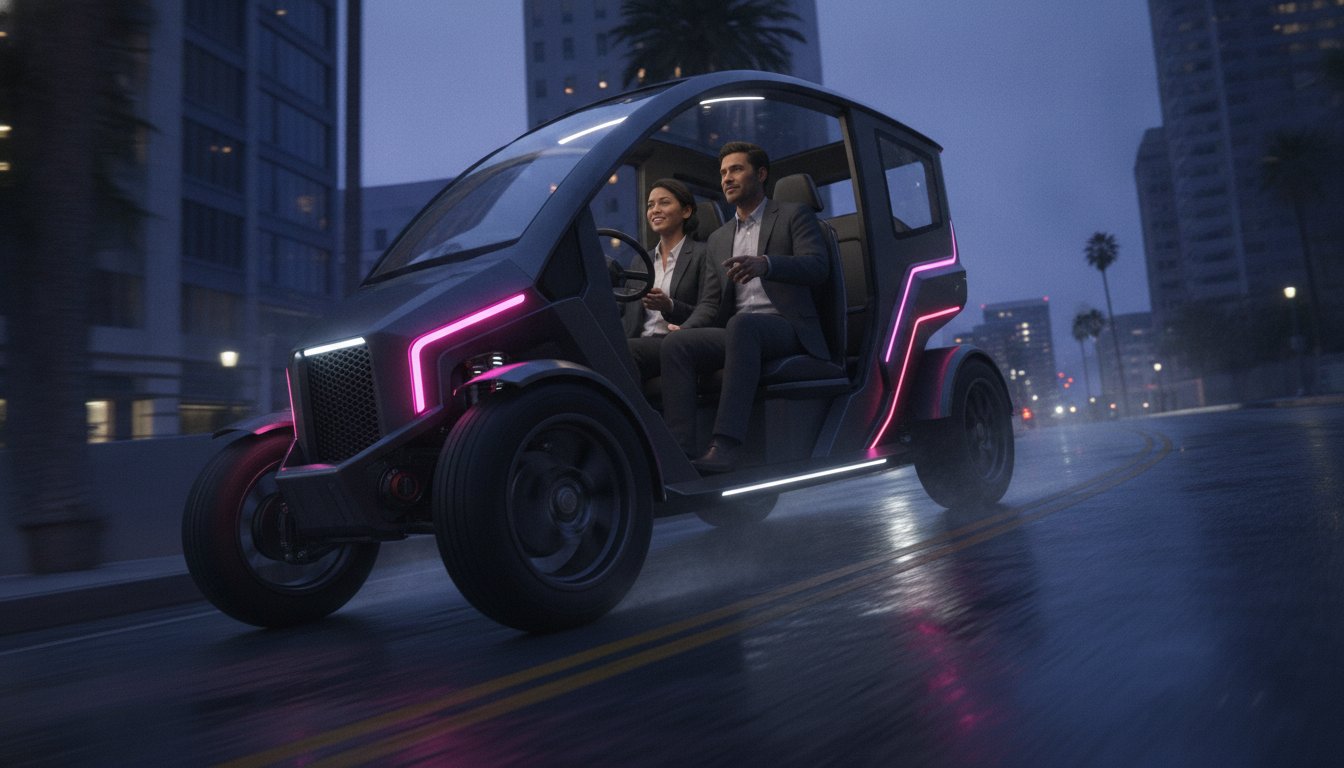
What if the "heavy duty" rating on your current fleet is actually a marketing lie designed for recreational riders? Most operators discover too late that consumer-grade trikes fail under the relentless pressure of professional transit, resulting in snapped axles and overheated motors. For a serious business owner, a heavy duty electric passenger trike must be a strategic capital asset, not a liability that erodes your bottom line with constant mechanical failures. We understand that in the high-stakes US transit market, an idle vehicle is a drain on your profitability.
This guide cuts through the noise to define the 2026 industrial standard for American multi-passenger mobility. You will discover the critical engineering benchmarks, from mandatory UL 2849 safety certifications to reinforced chassis designs capable of supporting 1,500 lb payloads. We move beyond recreational specs to focus on high-torque motor systems and commercial-grade components that keep your fleet running for five years or more. From navigating federal low-speed vehicle regulations to implementing advanced fleet management software, we'll show you exactly how to dominate your local market with a platform built for professional profit.
Key Takeaways
- Learn the 2026 benchmark for a true heavy duty electric passenger trike, where a 500lb+ payload capacity is the non-negotiable minimum for industrial operations.
- Understand why a high-torque 750W direct-drive transaxle and reinforced steel chassis are essential for maintaining uptime in high-demand commercial environments.
- Discover how investing in commercial-grade hardware reduces maintenance intervals by up to 70%, securing your long-term profitability.
- Identify the ideal configuration between 3-seat and 6-seat models to match your specific business goals while ensuring full street-legal compliance.
- Explore the engineering legacy behind the CyberX and VorteX lines, designed specifically to meet the rigorous demands of professional fleet management.
Defining the 2026 Standard for Heavy Duty Electric Passenger Trikes
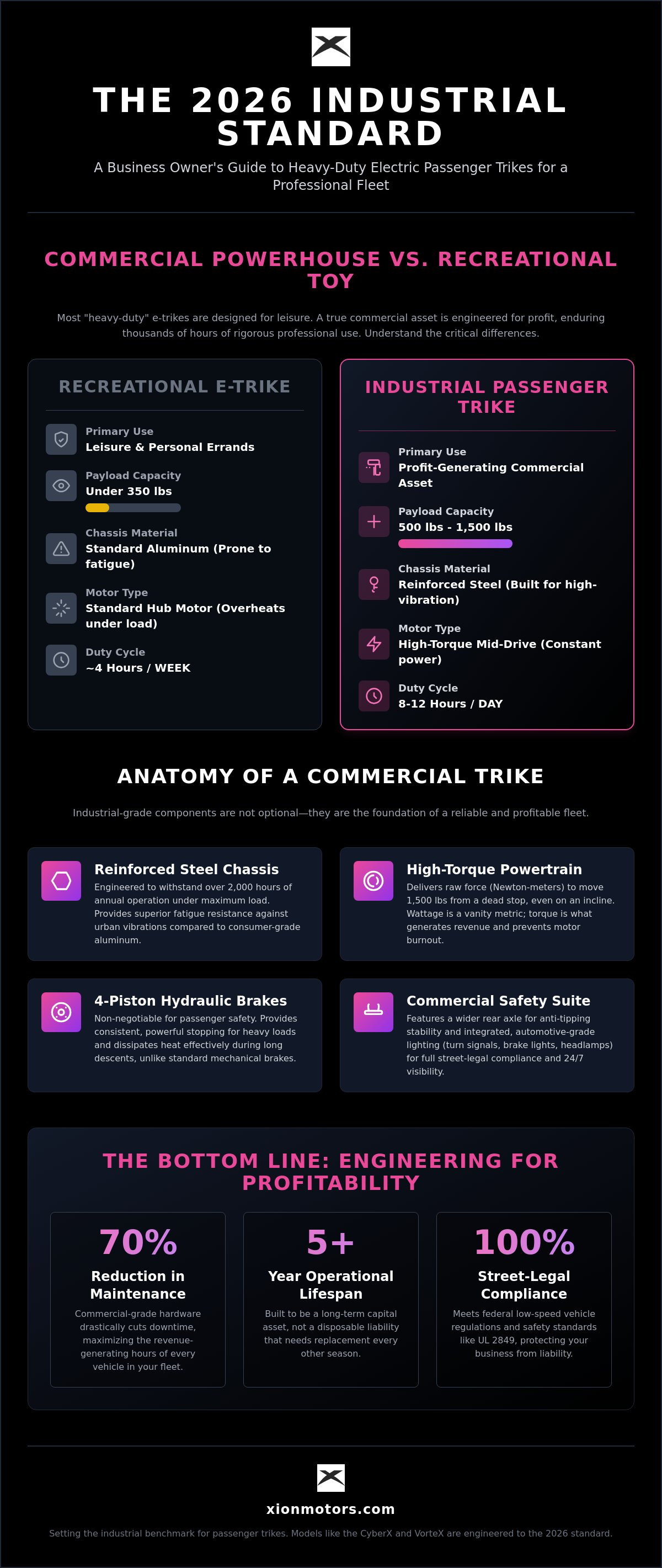
The American market for three-wheeled electric transport has officially fractured into two distinct tiers. On one side, you have consumer-grade "fat-tire" trikes designed for weekend leisure; on the other, you have the industrial-grade heavy duty electric passenger trike engineered for 2,000 hours of annual operation. In 2026, the benchmark for a true commercial vehicle starts at a 500lb payload capacity. Anything less is a recreational vehicle masquerading as a business asset. Professional operators across the US require machines that handle the cumulative weight of multiple adults plus the vehicle's own mass without compromising structural integrity.
These high-capacity trikes are now the primary solution for last-mile urban logistics and high-margin tourism in major metropolitan hubs. They navigate congested city centers where traditional vans cannot go, offering a unique blend of efficiency and visibility. By integrating advanced electric vehicle technology, these trikes have evolved from simple pedal-assist cycles into sophisticated revenue generators. Success in this sector isn't about finding the cheapest frame; it's about procuring a platform that survives the relentless grind of American streets.
Beyond Weight Limits: The Commercial Duty Cycle
Commercial success depends entirely on the duty cycle of your fleet. While a consumer trike might see four hours of use per week, a commercial passenger hauler must endure 8 to 12 hours of daily operation under maximum load. Consumer-grade aluminum frames frequently fail in these environments because they lack the fatigue resistance required to handle constant vibration and high-torque stress. We opt for reinforced steel or chromoly because these materials provide the necessary elasticity to absorb road shock without developing hairline fractures. Industrial duty cycles for commercial electric trikes are defined as the ability to maintain peak performance through continuous 12-hour shifts under maximum rated payload without component failure.
Safety Standards for Multi-Passenger Transport
Stopping power is a non-negotiable engineering requirement. When you're hauling 600 pounds of passengers, standard mechanical brakes are a liability that puts your business at risk. You need four-piston hydraulic disc brakes to ensure rapid heat dissipation and consistent performance during downhill descents or emergency stops. Passenger stability also requires a specialized geometry. A wider rear axle prevents tipping during low-speed maneuvers, providing the passenger confidence necessary for high-volume tourism. Street-legal operations in 2026 also demand integrated lighting systems including turn signals, brake lights, and high-output LED headlamps to ensure 24/7 visibility in dense traffic.
- Hydraulic Braking: Essential for managing the momentum of heavy-duty loads.
- Axle Width: Wider footprints create a lower center of gravity for passenger safety.
- Frame Material: Reinforced steel outperforms aluminum in high-vibration urban environments.
- Visibility: Full automotive-grade lighting is the standard for street-legal commercial use.
The Industrial Anatomy: High-Torque Motors and Reinforced Chassis
A heavy duty electric passenger trike is only as reliable as its weakest weld or its hottest motor coil. While consumer brands often boast about 750W peak power, professional operators know that wattage is a vanity metric. True industrial performance is measured in Newton-meters (Nm) of torque. The IEA's Global EV Outlook 2026 highlights a massive shift toward high-performance commercial electrification, yet many manufacturers still under-spec their drive systems. For a vehicle rated to carry 1,500 lbs, a standard hub motor will inevitably overheat during a mid-day shift. You need a powertrain designed for high-discharge cycles and constant low-end grunt.
Powering the Payload: Torque vs. Wattage
Torque is the metric of success in the pedicab industry. You need the raw force required to move a 6-passenger load from a dead stop on an incline without taxing the electrical system to the point of failure. High-torque motors, often adjustable from 750W up to 3,000W, utilize planetary gear systems to multiply mechanical advantage. These gears allow the motor to spin at efficient RPMs while providing the massive low-end pull necessary for heavy-duty applications. Effective thermal management is equally critical. Professional-grade motors feature integrated heat sinks and advanced controllers that prevent burnout during high-volume summer tours, ensuring your fleet stays on the road when demand is highest.
Battery management systems (BMS) in these vehicles must be equally robust. A commercial BMS handles higher discharge rates than consumer models, preventing "voltage sag" when the driver throttles up with a full load. This ensures consistent power delivery and protects the long-term health of the cells. Operators looking for this level of electrical and structural security often start with the CyberX platform to ensure their fleet survives the urban grind.
Structural Integrity and the CyberX Standard
Chassis engineering separates the veterans from the newcomers. Standard aluminum alloys are lightweight but prone to fatigue under the constant vibration of city streets. We utilize 4130 chromoly or reinforced high-tensile steel because these materials offer the superior strength-to-weight ratio required for a stable 3-seat or 6-seat platform. The "Cyber" approach to engineering integrates this industrial-grade rigidity with a modern, aggressive aesthetic that commands attention on the street. Identifying weak points is simple: look for single-tube downframes or lack of cross-bracing near the rear axle. A true heavy-duty chassis uses triangulated reinforcement to distribute passenger weight evenly across the frame.
Suspension engineering must balance this rigidity with passenger comfort. Dual-stage coil-over shocks or heavy-duty leaf springs are necessary to absorb potholes without bottoming out under a 1,500lb+ load. This protects not only the passengers' experience but also the vehicle's electronic components from excessive shock. When the chassis, motor, and suspension work in harmony, you achieve the maximum uptime required for a profitable fleet operation.
Consumer e-Trikes vs. Commercial Passenger Powerhouses
Procuring a heavy duty electric passenger trike based on the lowest sticker price is a common trap for new operators. Consumer-grade models often retail for significantly less than industrial versions, which looks attractive on a balance sheet until the first month of operation. These machines aren't built for 40-mile daily routes or the constant stop-and-go of urban transit. Within six months, the cost of replacement parts and lost revenue from downtime often exceeds the initial savings. We build commercial powerhouses because reliability is the only metric that matters for a scaling business. A professional vehicle is an asset; a consumer toy is a liability.
Calculating the Real Cost of Ownership
Industrial models require a higher initial outlay because they're engineered for a five-year service life. A consumer trike is lucky to survive a single season of heavy use before the frame or motor gives out. When you factor in the labor costs of frequent repairs, cheap hardware becomes a massive financial drain on your daily operational profits. Investing in electric pedicab fleet packages provides a predictable path to profitability by eliminating the volatility of unreliable equipment. These systems are designed to meet Federal Low-Speed Vehicle Safety Standards, ensuring your fleet meets the legal requirements for commercial operation while protecting your passengers. High-quality hardware retains its resale value, allowing you to cycle your fleet every few years with minimal capital loss.
Operational Dynamics and Fleet Longevity
Maintenance intervals for industrial trikes are significantly longer than their recreational counterparts. While a standard bike-grade wheel might need truing every week under heavy load, our commercial wheels and tires are designed to handle 70% less frequent servicing. This isn't just about saving on grease and brake pads; it's about keeping your vehicles on the street earning fares during peak hours. Following a comprehensive electric pedicab maintenance guide ensures your fleet remains in peak condition for years. This sustained performance is vital for maintaining your brand reputation in the professional pedicab industry.
High-end equipment also has a direct psychological impact on your revenue. Passengers are more likely to tip generously and book repeat tours when they feel secure in a reinforced, professional-looking vehicle. Beyond fares, industrial trikes offer superior customization options for revenue-generating advertising wraps. These wraps turn your trike into a mobile billboard, creating a secondary revenue stream that consumer models simply cannot support due to their flimsy bodywork. When your equipment looks and performs like a professional transit solution, your business grows accordingly.
Strategic Selection: Matching Vehicle Capacity to Operational Goals
Selecting the right heavy duty electric passenger trike requires a cold, analytical look at your specific operational terrain and revenue targets. You aren't just buying a vehicle; you're deploying a mobile asset that must match the flow of your city. A miscalculation in capacity or range can leave revenue on the table or result in a fleet that's too cumbersome for the local infrastructure. Precision in selection is the difference between a struggling startup and a dominant local transit force.
The 3-Seat vs. 6-Seat Dilemma
The 3-seat configuration is the scalpel of the industry. It provides the agility needed to navigate narrow historic districts or crowded boardwalks where every inch of clearance matters. These models allow for faster turnarounds and higher maneuverability in dense traffic, making them ideal for quick point-to-point transit. Conversely, the 6-seat model is your high-volume revenue powerhouse. In entertainment districts or stadium zones, the ability to haul large groups in a single trip maximizes your earnings per hour. Successful operators often deploy a mixed fleet. This strategy allows them to optimize for varying tour group demands while ensuring they never turn away a large party due to equipment limitations.
Operational efficiency also hinges on battery range and ergonomics. A commercial trike must survive a full 8-hour shift without the need for mid-day charging. We utilize high-capacity lithium-ion packs that provide the endurance required for continuous operation under maximum load. Driver comfort is equally vital. Ergonomic seating and intuitive controls reduce operator fatigue, which directly lowers driver turnover and training costs. When your drivers are comfortable, they stay on the road longer and provide better service to your passengers.
Navigating Regulatory Landscapes
Compliance is the foundation of a long-term business. Federal definitions of low-speed electric vehicles vary, and your equipment must meet specific safety requirements to operate in urban transit zones. You need a partner who understands the legal nuances of different jurisdictions to avoid costly impounds or fines. Working with a manufacturer that understands the complexities of starting a pedicab company ensures your fleet is street-legal across all 50 states from day one. This regulatory foresight protects your investment from shifting local ordinances.
Building a profitable fleet starts with the right hardware. Don't leave your ROI to chance by choosing under-powered or non-compliant vehicles. Consult with our engineering team to find the perfect configuration for your specific market.
Xion Motors: Setting the Industrial Benchmark for Passenger Trikes
Twenty years of operational data isn't just a milestone; it's our blueprint for excellence. We've spent two decades in the trenches of the urban transit industry, learning exactly where standard trikes fail and why. This legacy is baked into every heavy duty electric passenger trike we manufacture. We don't guess at structural loads or motor heat dissipation. We engineer for the reality of 12-hour shifts and maximum payloads, ensuring that every vehicle we deliver is a proven asset for your business. Our history as seasoned veterans allows us to position your company for success from day one.
CyberX and VorteX: Built for the Trenches
The CyberX represents our 3-seat powerhouse, providing a compact footprint with the torque of an industrial hauler. It's the ideal solution for operators navigating tight city corridors where agility is paramount. For those looking to maximize revenue in high-volume entertainment districts, the VorteX commercial platform offers a 6-seat configuration that significantly increases your earning potential per trip. Every vehicle in our lineup benefits from USA-based engineering and rigorous quality control. This proximity to the manufacturing process ensures that every weld and component meets our uncompromising standards before it reaches your fleet.
Our engineering process specifically targets the vulnerabilities found in consumer-grade conversions. We've eliminated common failure points like axle shear and controller burnout by over-engineering every critical system. By utilizing reinforced hub assemblies and advanced thermal management, we ensure your vehicles remain operational during the most demanding peak seasons. This isn't just about durability; it's about the security of your financial viability. When you invest in a Xion platform, you're buying a machine that's built to withstand the relentless grind of professional use.
Scaling with Professional Fleet Support
Reliability is nothing without a supporting infrastructure. We provide direct-to-operator assistance and maintain a robust national supply chain for replacement parts. This ensures that if a component needs service, your downtime is measured in hours, not weeks. We understand that in fleet management, maximum uptime is the only metric that truly matters. Our team is invested in your growth, providing the technical depth and historical expertise needed to keep your operation running at peak efficiency.
We also offer specialized fleet pricing for high-volume orders, making it easier for you to scale your business with a partner who understands your long-term goals. Whether you're launching a new startup or expanding an existing transit network, we provide the tools and support necessary to dominate your market. Our national shipping capabilities mean that professional-grade equipment is always within reach. Scale your transit operation with Xion Motors industrial trikes today.
Dominate the Urban Transit Market with Industrial-Grade Precision
Transitioning from recreational equipment to a true heavy duty electric passenger trike is the most critical decision a fleet operator will make in 2026. Success requires moving beyond simple weight limits and embracing industrial-grade standards like high-torque drive systems and reinforced chromoly steel chassis. We've established that the distinction between a consumer toy and a commercial asset is measured in years of uptime and thousands of dollars in saved maintenance costs. Reliability isn't a luxury; it's the foundation of your profitability.
With 20+ years of operational fleet experience, our team has perfected the tools you need to build a resilient, high-margin business. We back our engineering with national shipping to all 50 states, ensuring your operation has the support it needs regardless of location. It's time to stop managing mechanical failures and start managing growth. Scale your revenue with Xion Motors commercial trikes and secure your position as a market leader. Your future in urban mobility starts with equipment that's built to outlast the competition and deliver results shift after shift.
Frequently Asked Questions
What is the maximum weight capacity for a heavy-duty electric passenger trike?
A true heavy duty electric passenger trike is engineered to support a maximum payload of 1,500 lbs. This capacity includes the combined weight of the operator, up to six passengers, and any additional cargo. Achieving this benchmark requires a reinforced steel chassis and high-tensile axle components designed to withstand constant stress. We don't compromise on these industrial standards because overloading a standard frame leads to catastrophic failure in professional environments.
Are heavy-duty electric trikes street legal in all 50 states?
Most commercial trikes are street legal when they comply with the federal three-class e-bike system, specifically Class 2 regulations which cap motor assistance at 20 mph. However, requirements vary by municipality, particularly regarding lighting and safety certifications like UL 2849. You must verify local ordinances regarding low-speed vehicle operation in your specific city. We ensure our platforms meet federal safety benchmarks to streamline the compliance process for your fleet.
How long does the battery last on a commercial passenger trike under full load?
You can expect a range of up to 40 miles on a single charge while operating under full passenger loads. Battery performance depends heavily on the terrain and the frequency of stop-and-go maneuvers during a shift. We utilize high-capacity lithium-ion systems designed for high-discharge cycles to ensure your fleet maintains consistent power throughout a full 8-hour operation. This eliminates the need for mid-day charging during your most profitable revenue hours.
What is the difference between a consumer 750W motor and an industrial-grade pedicab transaxle?
A standard 750W motor is typically designed for recreational use and lacks the torque required for multi-passenger loads. An industrial-grade 750W direct-drive transaxle adjusts up to 3,000W of peak output and drives the rear axle through a differential. This configuration multiplies mechanical advantage and distributes traction across both rear wheels, providing the massive low-end pull needed to move 1,500 lbs from a dead stop on an incline.
How much maintenance does a commercial electric pedicab require?
Commercial trikes are engineered to require 70% less frequent servicing compared to consumer-grade models. While regular inspections of brake pads, chain tension, and tire pressure are necessary, the use of industrial-grade components significantly extends the intervals between major repairs. Following a structured maintenance schedule is the only way to sustain peak performance and ensure your vehicles generate revenue for five years or more without experiencing unexpected downtime.
Can these trikes handle steep hills with 6 passengers on board?
Yes, our high-torque drive systems are specifically engineered to handle steep inclines even with six passengers on board. The combination of a 750W direct-drive transaxle and its differential ensures you have the necessary torque to ascend hills without overheating the electrical system. This capability is essential for operations in hilly urban centers or resort areas where terrain varies significantly. Power without torque is useless in a demanding commercial setting.
What kind of brakes are necessary for a heavy-duty passenger trike?
Four-piston hydraulic disc brakes are a non-negotiable requirement for any heavy-duty passenger operation. Mechanical brakes lack the stopping power and heat dissipation necessary to safely manage the momentum of a fully loaded trike. Hydraulic systems provide consistent, reliable performance during emergency stops and long descents. We prioritize these automotive-grade components to protect your passengers and minimize your long-term liability risks while ensuring smooth, controlled deceleration in all weather conditions.
How do I start a commercial pedicab business using these vehicles?
Starting a commercial operation requires a strategic mix of high-performance equipment and a solid operational blueprint. You must first secure the appropriate municipal permits and insurance before procuring a fleet of industrial-grade vehicles. Most successful operators generate revenue through a combination of passenger fares, private bookings, and high-visibility advertising wraps. Choosing the right hardware is the first step in ensuring your business remains profitable and scalable from your very first shift.
Thinking about starting or scaling a pedicab operation?
See what a pedicab costs ($13,500–$15,000 direct from the manufacturer), explore fleet pricing on 3+ units, or start with $0-down equipment financing. Xion operators earn $30,000–$35,000 per cab per year across 59+ US markets.