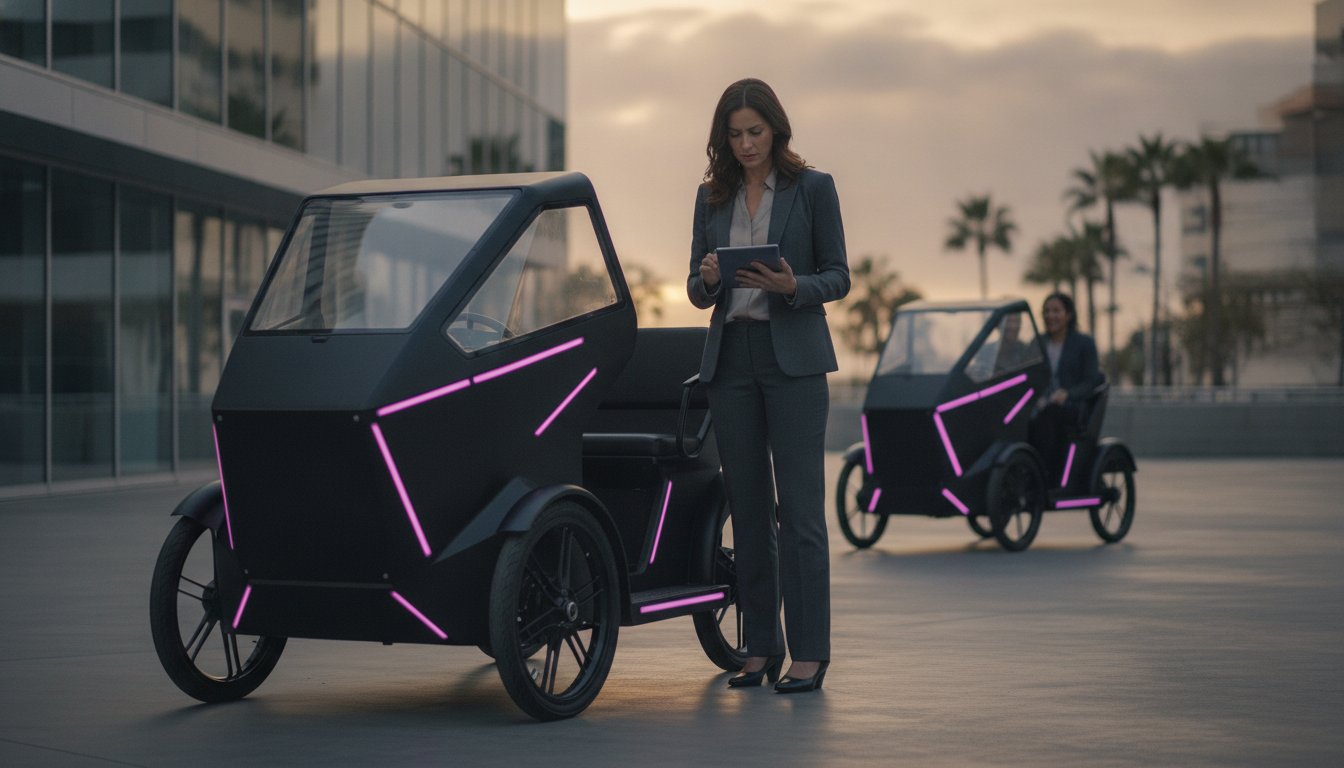
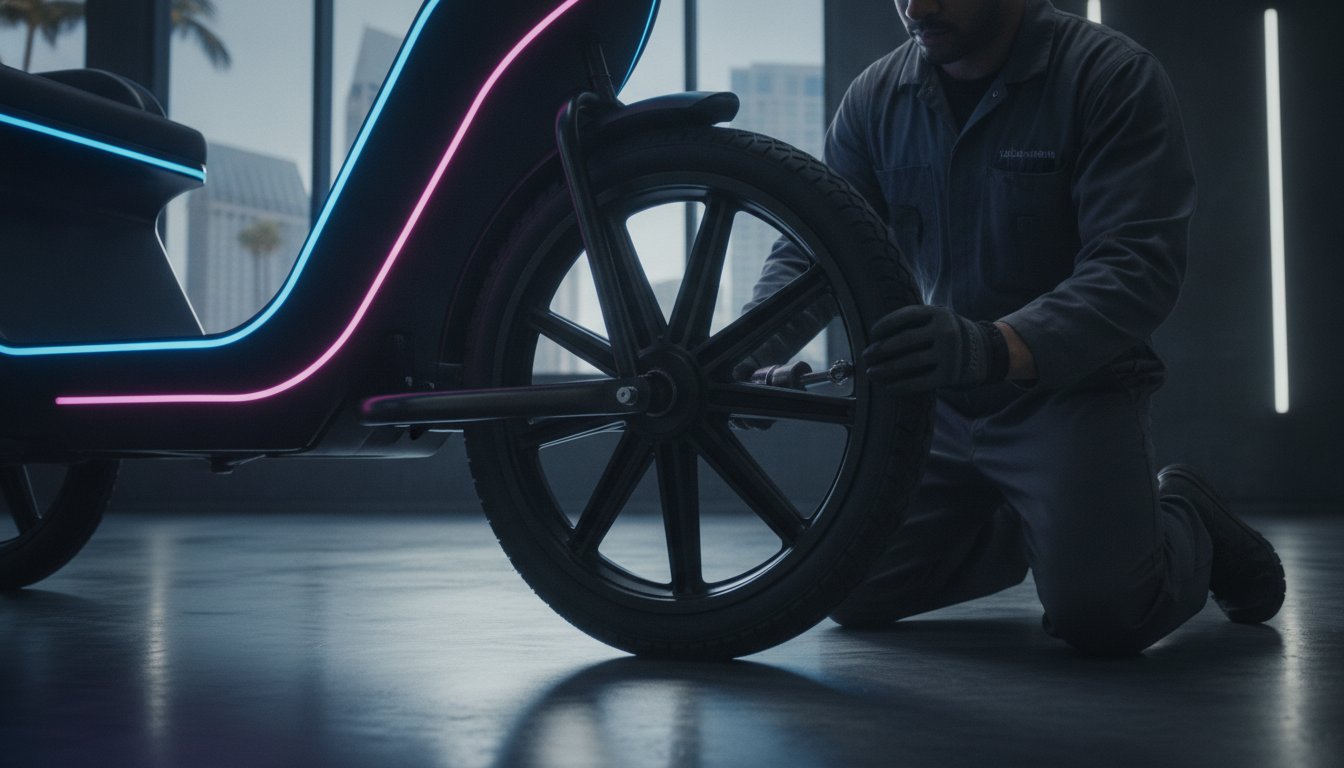
The "disposable" era of urban mobility is over. If your fleet isn't engineered for industrial abuse, it is a liability rather than an asset. You have likely experienced the frustration of watching consumer-grade e-bikes and flimsy imported trikes crumble under the relentless demands of daily commercial service. This cycle of high maintenance and limited passenger capacity is exactly what kills profitability in last mile passenger transport. We know that real-world results require hardware that is built for the trenches, not the toy aisle.
This trend analysis reveals how industrial-grade electric vehicles are finally solving the last mile problem for commercial operators and urban transit networks. You will discover the engineering standards that define the 2026 market, from the mandatory adoption of UL 2849 safety certifications to the surge in high-torque 72V power systems. We provide a clear roadmap to identifying durable vehicles that handle high-volume use while maximizing your long-term ROI. We will break down the shift toward heavy-duty shuttles and show you why professional-grade equipment is the only way to dominate your local market.
Key Takeaways
- Bridge the critical disconnect in urban transit by shifting from traditional rail to high-capacity electric tricycles.
- Identify the specific engineering standards required to maintain profitable last mile passenger transport in high-volume commercial environments.
- Compare the durability and street-legal advantages of industrial pedicabs against standard scooters and non-regulated golf carts.
- Analyze the revenue potential of high-torque shuttles, including high-capacity passenger throughput and exterior advertising opportunities.
- Discover how the CyberX and VorteX models set the 2026 industry standard for 3-seat and 6-seat industrial vehicle design.
The Evolution of Last Mile Passenger Transport in 2026
The urban landscape has reached a breaking point. For decades, city planners relied on massive infrastructure that ignored the final leg of the journey. This disconnect represents the most expensive and inefficient segment of any transit network. Last mile passenger transport is the commercial bridge between transit hubs and final destinations. By identifying this gap, operators can unlock massive revenue streams that traditional municipal systems simply cannot touch.
Traditional bus and rail systems are inherently rigid. They follow fixed routes that often leave passengers stranded in "transit deserts" where the walk to the station is too long to be viable. Large, heavy vehicles simply cannot navigate narrow urban corridors or crowded entertainment districts. By 2026, the market has made a decisive pivot. We're seeing a massive shift from individual mobility toward shared micro-shuttles that move groups with precision and speed. This evolution isn't just about moving people; it's about doing so with equipment that can survive the street.
The "Last Mile Problem" in Modern Urban Planning
Transit deserts don't just frustrate commuters; they actively starve local businesses. When potential customers can't easily reach a commercial district, foot traffic drops and local economies stagnate. Replacing gas-powered short-trip vehicles is now an environmental necessity. Many cities have implemented strict zero-emission mandates for downtown cores. This has created a surge in demand for on-demand passenger shuttles in high-density areas. Professional operators are now filling the gaps that municipal transit cannot reach, capturing the high-volume flow of both tourists and daily commuters seeking reliable last mile passenger transport.
Why Consumer-Grade Solutions Are Failing Operators
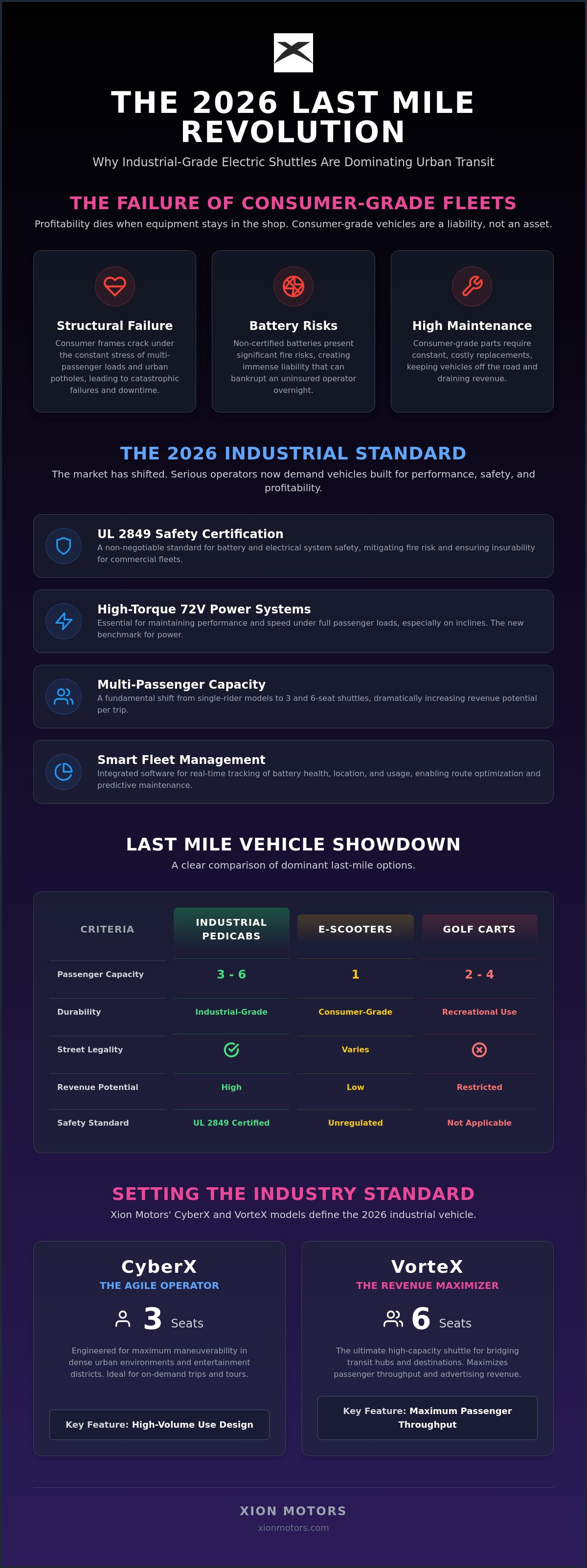
Profitability dies when equipment stays in the shop. Many operators initially launched fleets using consumer-grade electric bikes or scooters, only to see them fail under the weight of commercial use. These light-duty frames aren't engineered for 12-hour shifts or heavy passenger loads. Beyond the mechanical failures, the liability risks of using non-industrial vehicles for public transport are immense. In 2026, "industrial-grade" has become the mandatory standard for serious players. It ensures that every vehicle in the fleet is an asset rather than a maintenance liability.
- Structural Integrity: Consumer frames crack under the constant stress of multi-passenger loads and urban potholes.
- Battery Safety: Non-certified batteries present a fire risk that can bankrupt an uninsured operator.
- Maintenance Cycles: Industrial vehicles are built for quick component swaps, not total replacements, keeping the fleet on the road.
Professional operators now prioritize vehicles that meet the last mile (transportation) requirements of durability and safety. High-performance fleets require hardware that can handle 3,000+ miles of urban abuse annually without a chassis failure. This shift toward rugged engineering is the only way to ensure long-term financial viability in this competitive sector. If the vehicle isn't built for the job, it shouldn't be on the street.
Emerging Trends in Last Mile Transportation Vehicles
The market has moved past the novelty of single-rider scooters. High-capacity electric tricycles now dominate the last mile passenger transport sector because they offer superior stability and revenue potential. Professional operators now demand high-torque drive systems, specifically 72V architectures, to maintain consistent performance under full passenger loads. These aren't just larger bikes; they are heavy-duty machines. Precision matters. Relying on USA-based manufacturing ensures that engineering meets strict quality control standards. It also guarantees that parts are available when you need them, preventing the weeks of downtime common with generic imports.
Smart-fleet management has transitioned from a luxury to an operational requirement. Modern vehicles integrate software that tracks battery health, location, and usage patterns in real-time. This data allows owners to optimize routes and predict maintenance before a failure occurs. It's about maximizing the uptime of every unit in your fleet. Our engineering process integrates these digital tools directly into the hardware to provide granular insights for a profitable operation.
The Rise of Multi-Passenger Electric Shuttles
Choosing the right configuration depends entirely on your operational environment. A 3-seat configuration offers maximum maneuverability in tight urban alleys, while a 6-seat configuration provides the high-capacity throughput needed for major events or transit hub connections. The passenger experience is another critical factor. Open-air, high-visibility trikes offer a sensory connection to the city that enclosed vans cannot match. This "experience economy" drives higher tips and repeat business. For a deeper dive into the technical specifications of these builds, consult our Engineering Excellence: The 2026 Guide to Heavy Duty Electric Passenger Trikes.
Electrification and Sustainability as Business Drivers
Zero-emission mandates are no longer a distant threat; they're a current reality in most major metropolitan "green zones." Operating electric vehicles isn't just about environmental stewardship. It's a strategic move to secure exclusive contracts where internal combustion engines are banned. The reduction in operational overhead is immediate. You eliminate fuel costs and drastically reduce the number of moving parts that require service. Beyond the balance sheet, the marketing value is immense for any last mile passenger transport provider. Tourism brands and hotels actively seek out eco-friendly transport partners to align with their own sustainability goals. If you're ready to modernize your operations, exploring professional electric pedicab fleet packages is the next logical step.
Comparing Last Mile Solutions: Pedicabs vs. Golf Carts vs. Scooters
Choosing the wrong hardware for last mile passenger transport is the fastest way to drain your capital. Operators often find themselves caught between three distinct vehicle categories: light-duty scooters, traditional golf carts, and industrial electric trikes. While scooters are ubiquitous in the "micromobility" app space, they are strictly individual solutions. They lack the capacity and durability required for professional passenger services. Golf carts offer capacity, but they are frequently restricted by "street-legal" regulations that limit their access to bike lanes and pedestrian-heavy zones. High-capacity electric trikes represent the optimal balance, providing the ruggedness of a commercial vehicle with the agility of a bicycle.
Industrial trikes outlast consumer-grade alternatives by a factor of ten. Our engineering team utilizes high-tensile steel frames to ensure the chassis remains rigid after thousands of hours of vibration. Unlike complex gas engines found in older shuttle models, electric drive systems eliminate the need for oil changes, belt replacements, and exhaust maintenance. This simplicity translates directly to higher uptime. When your vehicles are on the street rather than in the shop, your ROI accelerates. We build these machines for the "Master Practitioner" who understands that a cheaper initial price tag usually leads to a more expensive long-term failure.
Maneuverability in Dense Entertainment Districts
Trikes outperform golf carts the moment the street narrows. The three-wheel geometry allows for a pivot-turn radius that four-wheel carts simply cannot match. In congested urban corridors or historic districts with tight alleyways, this maneuverability is a tactical advantage. Drivers also benefit from a higher seating position and unobstructed 360-degree visibility. This is critical for safety in high-pedestrian areas where split-second awareness prevents accidents. A trike can slip through traffic gaps that would leave a golf cart stranded for blocks, ensuring your passengers reach their destination faster.
Durability: Engineering for 2,000+ Running Hours
Profit is made after the vehicle crosses the 2,000-hour mark. Most consumer electric bikes use aluminum frames that fatigue and crack under the constant stress of multi-passenger loads. Industrial trikes utilize reinforced steel chassis designed to handle the weight of three to six adults without flexing. Heavy-duty wheels and motorcycle-grade motor systems are non-negotiable components for a serious fleet. If you want to maintain peak performance, you must follow a rigorous service schedule. For detailed operational insights, refer to our Electric Pedicab Maintenance Guide. Reliability isn't an accident; it is the result of deliberate engineering and disciplined upkeep.
The Commercial Case for High-Torque Electric Shuttles
Profitable last mile passenger transport requires more than just a vehicle; it requires a high-performance revenue engine. Operators must look beyond simple fare collection to understand the true commercial potential of their fleet. High-torque electric motors are the foundation of this profitability. Our 72V drive systems deliver the raw power necessary to maintain consistent speeds even when ascending steep inclines with a full payload of six adults. This performance ensures that your service remains reliable in every geographic condition, from the flat streets of Florida to the challenging hills of San Francisco. Reliability attracts repeat contracts and high-value partnerships.
Secondary revenue streams often determine the long-term success of a transit business. Vehicle exteriors serve as high-impact moving billboards in the most crowded districts of the city. Because these trikes operate at eye level and move at a pace that allows for brand engagement, they command premium advertising rates from local businesses and national brands alike. This dual-income model—fares plus advertising—drastically shortens the timeline for reaching a full return on investment. Our two decades of intensive fleet experience directly informs every engineering decision we make, ensuring that our vehicles are optimized for both passenger comfort and operator profit.
Maximizing ROI in Tourism and Event Transit
Scaling your operation requires a strategic mix of vehicle capacities. While 3-seat models offer agility for premium private tours, 6-seat configurations maximize passenger throughput during high-traffic events like music festivals or sporting matches. The "per-seat" profitability increases significantly when you can move larger groups with a single driver. Uptime is the other critical variable in the ROI equation. Battery swap technology allows your fleet to run 24/7 without waiting for a charge cycle. By keeping your vehicles on the street during peak demand hours, you capture every available dollar of revenue. If you are looking to scale, our Electric Pedicab Fleet Packages provide the standardized hardware needed for rapid expansion.
Operational Continuity and Replacement Parts
Maintenance complexity is the silent killer of commercial fleets. A standardized fleet of industrial trikes reduces the need for a massive inventory of diverse parts and specialized tools. When a component does wear out, having a direct line to the manufacturer is vital for operational continuity. We prioritize USA-shippable components to ensure that national operators aren't sidelined by international shipping delays or customs issues. This focus on logistics ensures that your fleet stays active and earning. Professional operators don't have time for the "out of stock" excuses common with generic imported brands. Invest in a fleet that is supported by a veteran team that understands the urgency of your business. If you're ready to upgrade your hardware, explore our current vehicle inventory to see the industrial difference for yourself.
Xion Motors: Setting the Last Mile Standard with CyberX and VorteX
Dominating the market requires hardware that matches your ambition. Xion Motors provides the definitive answer to the challenges of last mile passenger transport by offering vehicles engineered for the street, not the showroom. We don't just build trikes; we manufacture high-performance revenue platforms. By purchasing direct-to-operator, you bypass the inefficiencies and markups of traditional dealerships. This direct relationship ensures you receive veteran-level technical support and the most competitive fleet pricing available. Whether you're launching a single-city pilot or scaling a national transit network, our industrial-grade solutions provide the reliability your balance sheet demands.
The CyberX stands as the pinnacle of 3-seat industrial design. It's the precision tool for operators who prioritize maneuverability and premium passenger experiences in dense urban cores. For those focused on high-volume throughput, the VorteX is the high-capacity 6-seat solution built for heavy-duty commercial service. These vehicles aren't generic imports. They're the result of decades of operational data and rigorous engineering. We offer tiered fleet pricing that allows national operators to scale with predictable costs and standardized quality across every territory.
Engineering the CyberX and VorteX Platforms
Durability is baked into the chassis. Both the CyberX and VorteX platforms utilize high-torque 72V motor systems that provide the necessary power for full passenger loads and steep gradients. Structural integrity is non-negotiable; we use high-tensile steel to prevent the frame fatigue common in lighter aluminum builds. Our modular design philosophy simplifies maintenance by allowing for rapid part replacement. If a component wears out, you swap it and get back on the road immediately. For a granular look at the technical specifications that drive our builds, read our CyberX Engineering Guide.
Partnering for Success: From Startup to Fleet Scale
We don't just ship vehicles; we build businesses. Xion Motors supports new operators with professional blueprints that cover everything from route optimization to revenue modeling. We understand that every market has unique demands, which is why we offer custom trike options to meet specific commercial needs. Our goal is to be more than a vendor; we're a strategic partner invested in your long-term growth. If you're ready to build a legacy in the transit sector, consult our How to Start a Pedicab Company: The 2026 Professional Blueprint. The tools for success are here. It's time to put them to work.
Dominating the Urban Transit Frontier
The future of urban mobility belongs to those who invest in durability over disposable hardware. You have seen how the shift toward industrial-grade vehicles is redefining the standards for last mile passenger transport. Success in this sector requires a rejection of consumer-grade failures in favor of high-torque engineering that can handle the relentless demands of the street. By prioritizing structural integrity and modular design, you secure a fleet that remains an asset for years, not just months.
Xion Motors brings over 20 years of fleet operation experience to every chassis we build. Our USA-based manufacturing and shipping ensure that you receive professional-grade equipment without the delays of international logistics. We have perfected the tools; now it's your turn to deploy them. Whether you are operating in dense entertainment districts or scaling a national transit network, the right hardware is your most powerful competitive advantage.
Take the first step toward building a high-performance operation today. Explore Xion Motors High-Performance Fleet Packages and discover the difference that industrial engineering makes. Your market is waiting for a leader. It's time to claim your territory.
Frequently Asked Questions
What are the best last mile transportation vehicles for commercial fleets?
Industrial-grade electric trikes are the superior choice for modern commercial fleets. They provide the necessary balance of passenger capacity and urban maneuverability that standard scooters lack. For high-volume last mile passenger transport, vehicles must feature reinforced steel frames and high-torque electric drive systems to survive the rigors of daily street use.
Are electric pedicabs street legal for passenger transport?
Electric pedicabs are street legal in the vast majority of urban markets, typically classified under bicycle or low-speed electric vehicle laws. Operators must ensure their vehicles meet specific safety standards, such as the UL 2849 certification now mandatory in regions like California. Always verify local municipal codes, as some cities require specific liability insurance or vehicle registration for commercial operation.
How much does a commercial electric pedicab cost in 2026?
The investment for a commercial electric vehicle varies significantly based on battery technology and seating capacity. While budget consumer models are cheaper upfront, they often lead to higher long-term costs due to frequent mechanical failures. Professional operators prioritize the total cost of ownership, investing in lithium-powered systems that offer a longer lifespan and better ROI than standard lead-acid alternatives.
What is the difference between a 3-seat and 6-seat electric pedicab?
The primary difference lies in the balance between maneuverability and passenger throughput. A 3-seat model like the CyberX is designed for agile navigation through tight entertainment districts and narrow corridors. In contrast, a 6-seat model like the VorteX is a heavy-duty shuttle optimized for moving large groups during high-traffic events, maximizing revenue per trip.
How long do the batteries last in an industrial-grade electric trike?
Battery longevity depends on the chemistry and voltage of the system utilized. Modern industrial trikes favor 72V lithium systems, which provide more discharge cycles and consistent power compared to older 48V setups. With proper maintenance and the use of battery swap technology, operators can keep their fleets running 24/7 without the downtime associated with long charging cycles.
Can electric pedicabs handle steep hills with a full passenger load?
Yes, provided the vehicle is equipped with a high-torque 72V motor system. These advanced drive systems are engineered specifically to handle the weight of up to six adult passengers while ascending steep urban inclines. Standard 48V motors often struggle or overheat in these conditions, which is why industrial-grade power is essential for hilly geographic markets.
What maintenance is required for a commercial electric shuttle fleet?
Maintaining a commercial fleet requires a disciplined schedule focused on high-wear components. Operators should conduct regular inspections of hydraulic braking systems, tire pressure, and electrical connections. Using vehicles with standardized parts and integrated fleet management software allows for predictive maintenance, ensuring that small adjustments are made before they turn into expensive repairs.
Why should I choose a USA-manufactured pedicab over an import?
Choosing a USA-manufactured vehicle ensures superior quality control and immediate access to replacement parts. Imports often suffer from long lead times and inconsistent engineering standards that can sideline your fleet for weeks. A domestic manufacturer provides the reliability and logistical support necessary for national operators to maintain a consistent service schedule without international shipping delays.
Thinking about starting or scaling a pedicab operation?
See what a pedicab costs ($13,500–$15,000 direct from the manufacturer), explore fleet pricing on 3+ units, or start with $0-down equipment financing. Xion operators earn $30,000–$35,000 per cab per year across 59+ US markets.