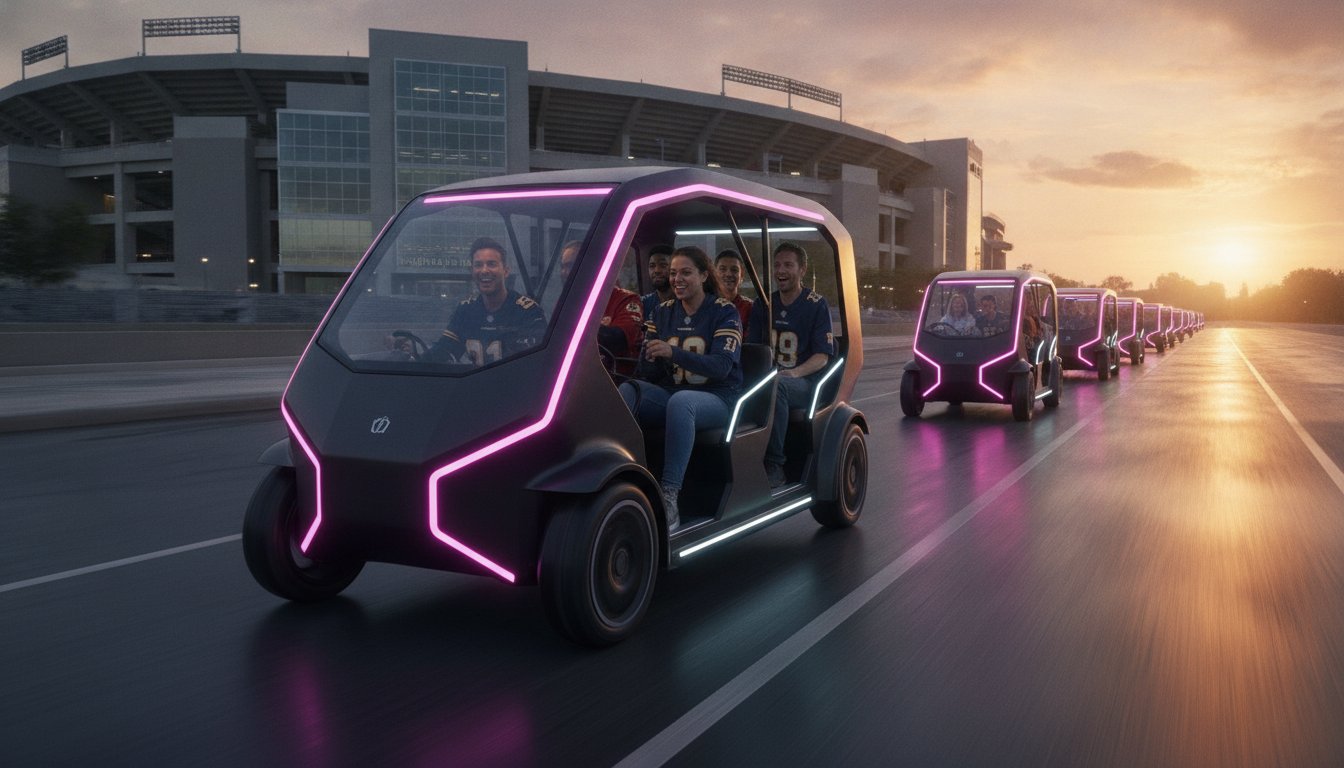
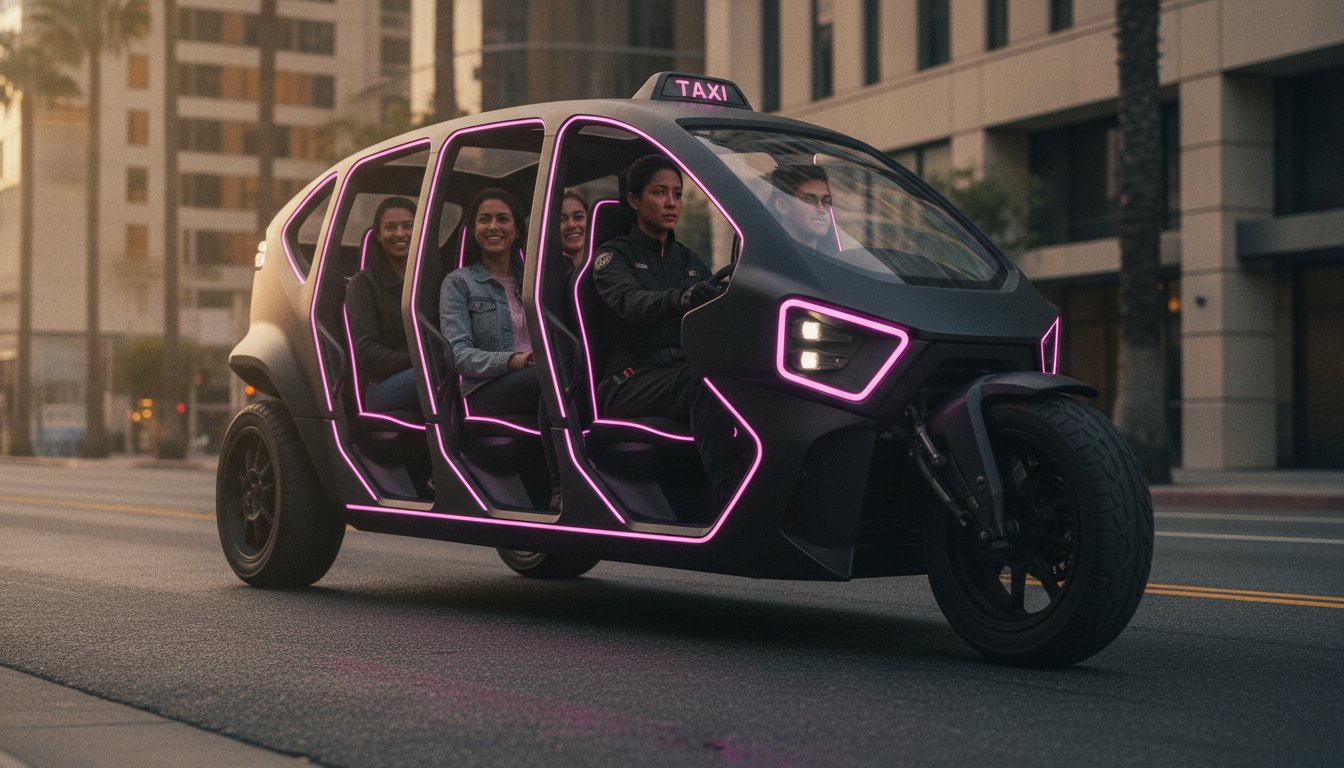
Did you know a single industrial-grade electric pedicab can generate $30,000 to $35,000 in annual revenue — with top operators earning more — while typically paying for itself in under 12 months? You've likely felt the sting of traditional shuttle operations, where high fuel costs and maintenance fees turn guest transit into a permanent line item of loss. It's frustrating to watch guests wait for a van that's stuck in traffic or struggle with limited parking at local attractions. This guide demonstrates how to optimize hotel pedicab service revenue by replacing those clunky, generic experiences with high-performance mobility solutions.
We'll show you how to bridge the last-mile transit gap and transform guest mobility into a high-margin revenue engine using industrial-grade electric pedicabs. You'll learn the exact framework for integrating vehicle fleet packages that drive five-star reviews and unlock new sponsorship streams through experiential marketing. We'll cover everything from navigating 2026 regulations to deploying high-capacity models like the VorteX to ensure your property dominates the local entertainment district.
Key Takeaways
- Bridge the friction gap between your lobby and local attractions with industrial-grade electric hardware that eliminates the operational drag of traditional shuttle vans.
- Discover how to maximize hotel pedicab service revenue using high-capacity 6-seat configurations and high-impact sponsorship opportunities.
- Streamline your operations by replacing high-maintenance vehicles with electric trikes that don't require CDLs or expensive fuel contracts.
- Enhance your property's visibility and guest reviews by deploying mobile billboards that navigate congested pedestrian zones and historic districts with ease.
- Implement a high-performance mobility strategy that delivers proven financial viability and a reduced carbon footprint for your 2026 fleet.
The Last-Mile Hospitality Gap: Why Traditional Shuttles are Failing Your Guests
The distance between your lobby and a local attraction is the "dead zone" of modern hospitality. It's often too far for a guest in formal wear to walk comfortably, yet too short to justify the logistical friction of a ride-share or a traditional shuttle van. This last-mile friction is where guest satisfaction often stalls. Traditional shuttles are failing because they were engineered for airport transfers, not the high-frequency, short-burst mobility required in busy urban centers and luxury resorts. When you rely on outdated transit models, you aren't just losing guest favor; you're missing a prime opportunity to capture hotel pedicab service revenue.
Diesel-idling vans create an aesthetic mismatch that can't be ignored. A luxury brand is built on sensory details, and the smell of exhaust or the roar of a heavy engine at the front door detracts from that premium atmosphere. Agile Transit offers a surgical solution to this problem. It's about moving guests on-demand with precision and style, utilizing vehicles that can navigate narrow historic corridors and congested pedestrian zones where traditional vans are physically prohibited. This level of maneuverability is why professional tour operators like brooklyngiro.com rely on cycle-based transport to provide high-quality urban experiences.
The True Cost of Traditional Shuttle Operations
Traditional shuttle fleets are a consistent drain on the balance sheet. Beyond the obvious fuel costs, you're dealing with specialized driver labor and skyrocketing insurance premiums for heavy passenger vehicles. Most operators struggle with the "Empty Seat" problem, where a 15-passenger van is idled and staffed just to move two guests three blocks. It's an inefficient use of capital and human resources. Operational drag is the cumulative financial and logistical weight of utilizing oversized, high-maintenance machinery for simple, short-distance transit tasks. This drag erodes your margins and complicates your daily logistics without providing a proportional increase in guest value.
Guest Psychology: The Shift Toward On-Demand Mobility
Modern guests prioritize immediacy and experience. They don't want to study a printed shuttle schedule or wait 20 minutes in a humid lobby for a van to complete its loop. Travelers today prefer open-air, engaging transit that feels like an extension of their vacation rather than a chore. There is a direct correlation between transit wait times and negative TripAdvisor reviews; a guest who feels "trapped" on-property is a guest who is likely to complain. The cycle rickshaw has evolved from a simple transport method into a sophisticated, industrial-grade tool for this exact type of agile transit. When guests can move effortlessly to nearby local partner businesses, their overall spending increases, and their perception of your hotel's convenience reaches new heights.
Engineering the Guest Experience: The Case for Electric Pedicabs
Stop viewing the pedicab as a mere boardwalk novelty. In a professional hospitality context, these vehicles are high-performance, industrial-grade commercial transit hardware designed for heavy-duty cycles. While competitors often claim that heavy SUVs or Sprinter vans are the only safe choice for guests, they ignore the logistical reality of dense urban centers. Vans are bulky; they get stuck in gridlock and are frequently banned from historic corridors or pedestrian-only zones. Electric pedicabs exploit a much smaller footprint, allowing your team to navigate tight spaces with surgical precision. This agility isn't just a convenience; it is a strategic advantage that directly bolsters hotel pedicab service revenue by ensuring guests reach their destinations faster than a van idling in traffic.
Guest satisfaction relies heavily on what we call the "Intimacy Factor." A tinted van window creates a barrier between the traveler and the city. An open-air trike provides an immersive, 360-degree view that transforms a simple ride into a memorable event. You're also meeting the "Green" mandate without the usual performance trade-offs. Modern electric trikes offer zero-emission transport that matches the rugged durability of traditional vehicles. It's a pragmatic solution for brands that need to hit sustainability targets while maintaining a high-performance guest experience. Explore our Pedicab Fleet Packages to see how these vehicles integrate into your existing guest service workflow.
Pedicab vs. Golf Cart vs. Shuttle Van
Maneuverability is the deciding factor in resort and urban logistics. Golf carts are often restricted to private paths or specific low-speed zones, limiting their utility. Pedicabs often enjoy a "Street Legal" advantage in many jurisdictions, providing more route flexibility and access to public thoroughfares. You should consult research like the University of Arizona's work on Municipal Regulation of an Emerging Industry to understand how these vehicles fit into local frameworks. The maintenance delta is equally significant. By moving to electric trikes, you eliminate the complex maintenance cycles of internal combustion engines, such as oil changes and transmission repairs, drastically reducing your total cost of ownership.
The Power of Electric Assist in Commercial Use
Commercial operations require high-torque motor systems. You don't want a vehicle that struggles under a full passenger load or fails on a steep incline. Industrial-grade electric assist — a 750W direct-drive transaxle delivering up to 3,000W peak through a rear differential — keeps your operators at consistent speeds for 5 to 6 hours of full-load runtime per charge, with hot-swap batteries covering the rest of the shift. Battery longevity is the backbone of fleet uptime; if the trike is charging, it isn't earning. For a deeper dive into the technical specifications required for 24/7 reliability, see the CyberX: The Industrial-Grade Electric Pedicab Engineering Standard for 2026. These standards ensure your fleet remains operational and profitable in the most demanding hospitality environments.
Selecting Your Fleet: 3-Seat CyberX vs. 6-Seat VorteX Configurations
Selection is a matter of tactical deployment. You don't just order vehicles; you engineer a transit solution that scales with your guest volume. While generic competitors suggest that one-size-fits-all van fleets are simpler, they overlook the profitability of specialized hardware. A modular fleet approach allows you to deploy the right asset for the right mission. This precision is what maximizes hotel pedicab service revenue by ensuring you never turn away a large group or waste resources on a single passenger. Every unit we build features a USA-manufactured industrial-grade chassis, providing the rugged reliability required for 2026 hospitality standards.
The CyberX: Industrial-Grade Agility for VIPs
The CyberX is built for the high-frequency, precision demands of urban concierge services. Its 3-seat configuration provides an intimate, premium environment for VIP arrivals or couple-focused city tours. We've engineered the chassis to withstand 12+ hours of daily commercial operation without structural fatigue. Reliability is non-negotiable in fleet management. By utilizing a standardized part ecosystem, we ensure that maintenance is fast and predictable, keeping your vehicles on the street where they belong. This model is the definitive choice for properties that prioritize personalized guest movement in dense urban environments.
The VorteX: High-Capacity Revenue Generation
When guest volume spikes during weddings or corporate retreats, the 6 seat electric pedicab (VorteX) becomes your most valuable asset. It transforms high-capacity transit from a logistical headache into a high-margin profit center. The ROI on a 6-seat configuration is significant because it allows you to move twice the passengers with a single operator. This efficiency is critical for resort environments where moving large groups between amenities is a constant requirement. High-volume transit should be a profit center, and the VorteX is the tool that secures your hotel pedicab service revenue during peak hours.
For a deeper look at how these machines handle maximum passenger loads, review our Custom Electric Trikes for Business: A Case Study in Industrial-Grade VorteX Engineering. We build these trikes with the structural integrity needed for heavy-duty commercial use, ensuring your investment pays dividends for years to come. Don't settle for underpowered novelty carts when your business demands industrial-grade performance.
5 Steps to Adding Pedicabs to Hotel Guest Services
Implementation requires a tactical blueprint. While some competitors suggest outsourcing transit to avoid compliance headaches, owning your internal fleet gives you total control over the guest experience and hotel pedicab service revenue. Success in 2026 demands a shift from passive service to active mobility management. Follow these five steps to integrate electric trikes into your property's daily operations with industrial-grade precision.
Step 1: Route Optimization. Identify high-value "Last-Mile" loops between your lobby and local entertainment districts. The goal is to maximize vehicle utility by focusing on short, high-frequency trips that guests find too far to walk. Step 2: Infrastructure Setup. Designate dedicated charging zones and secure storage protocols. Electric trikes require minimal space compared to vans, but proximity to power is essential for rapid turnaround. Step 3: Staffing and Training. Transition your bellhops into Guest Mobility Ambassadors. They must be experts in both vehicle handling and local concierge knowledge. Step 4: Branding and Customization. Turn each vehicle into a mobile extension of your hotel's visual identity with custom wraps and high-impact graphics. Step 5: Launch and Feedback. Use guest data and ride frequency to refine your timing. If you're ready to take control of your guest transit, explore our industrial-grade fleet packages today.
Charging and Maintenance Protocols
Operational uptime is the lifeblood of your fleet. You must implement a daily maintenance checklist that includes tire pressure monitoring, brake system inspections, and battery health diagnostics. For properties running 24/7 resort operations, a "Hot-Swap" battery strategy is non-negotiable. This allows your ambassadors to replace a depleted battery with a fully charged unit in under two minutes, eliminating downtime. For a granular look at technical specifics, consult our Electric Pedicab Maintenance Guide: Sustaining Industrial-Grade Fleet Performance. Consistent maintenance ensures that your investment continues to drive hotel pedicab service revenue without unexpected mechanical failures.
Risk Management and Safety Standards
Safety is engineered into the hardware, not just the training manual. Every vehicle in your fleet must feature essential safety hardware, such as high-visibility integrated lighting, hydraulic disc brakes, and secure passenger restraints. Training for your ambassadors should focus on a "Hospitality First" safety protocol that prioritizes smooth acceleration and defensive driving in congested areas. We build our chassis to handle the rigors of heavy-duty commercial use, providing a stable platform for every passenger. Securing commercial-grade insurance for your hotel-owned trike fleet is a critical final step to protect your assets and maintain long-term operational viability.
Maximizing ROI: Turning Last-Mile Transit into a Revenue Engine
Transit is too often dismissed as a necessary expense. In the hands of a pragmatic operator, however, last-mile mobility becomes a high-margin profit center that outperforms traditional amenities. While logistics competitors focus purely on cost reduction, they miss the massive potential for brand activation and direct income that a visible, agile fleet provides. Your vehicles aren't just tools for movement; they're high-performance assets designed to capture hotel pedicab service revenue through multiple streams. This is about moving beyond the "shuttle as a utility" mindset and embracing transit as a strategic revenue engine.
The "Mobile Billboard" effect is a primary driver of this profitability. Branded trikes circulating through high-traffic tourist areas offer a level of visibility that stationary signage can't match. This isn't just about brand awareness for the hotel; it's about creating a valuable platform for local partnerships. To scale this effectively, you need to move from individual vehicle management to integrated fleet solutions. Review our Electric Pedicab Fleet Packages: The 2026 Guide to Scaling Commercial Transit ROI to understand how bulk acquisition lowers your entry cost and accelerates your break-even point. When you control the transit, you control the guest's path to local F&B and entertainment, ensuring they stay engaged with your property's ecosystem longer.
The Sponsorship Model: Partnering with Local Businesses
Selling "wrapping" rights on your pedicab fleet is the most direct path to passive income. Local restaurants, galleries, and attractions are often desperate for a way to reach your guests before they book elsewhere. You can create "Preferred Partner" routes that drive guests toward these sponsored destinations, creating a closed-loop economy. This model allows you to monetize the hotel pedicab service revenue potential by calculating annual ad revenue per vehicle, which often covers the entire cost of maintenance and operator labor. It's a pragmatic way to turn a guest service into a self-funding marketing machine.
Scaling the Fleet: When to Expand
Expansion should be data-driven. You must identify the "Wait-Time Threshold"-the specific point where guest demand outpaces your current vehicle count. If guests are waiting more than five or seven minutes for a loop, you're losing potential rides and sponsorship impressions. Standardizing your fleet with identical industrial-grade hardware ensures your maintenance cycles remain predictable and your driver cross-training is seamless. For a professional look at internal fleet scaling and operational standards, consult our How to Start a Pedicab Company: The 2026 Professional Blueprint. Decisive scaling ensures you maintain market leadership in your local district while maximizing the utility of every charging cycle.
Dominating the Last-Mile: Secure Your Property’s Competitive Advantage
The hospitality landscape in 2026 demands more than just standard service; it requires operational precision and the courage to disrupt failing transit models. You've seen how traditional shuttles drain resources while failing to bridge the critical last-mile gap between your lobby and local attractions. By deploying industrial-grade electric trikes, you aren't just moving guests. You're engineering a premium experience that drives five-star reviews and captures significant hotel pedicab service revenue through mobile advertising and strategic local partnerships.
We provide the tools you need to lead your local market. Our CyberX and VorteX models are built with industrial-grade engineering to withstand the most demanding commercial environments. With over 20 years of operational expertise in fleet management, we understand the exact mechanics of transit success. We provide direct-to-operator sales and national shipping to all 50 states, ensuring your property is equipped with the best hardware in the industry. It's time to replace the high overhead of traditional vans with a high-performance mobility solution that pays for itself. Take the decisive step toward modernizing your guest logistics today.
Scale your hotel's guest services with Xion Motors Fleet Packages
Frequently Asked Questions
Do I need a special license to operate electric pedicabs for my hotel?
Licensing requirements depend entirely on your local municipal code. Some jurisdictions may require an annual vehicle license and a chauffeur license, while others have specific driver fees. It's essential to check with your local department of transportation to confirm background check mandates and insurance minimums before launching your fleet.
How do electric pedicabs handle steep hills or heavy guest loads?
High-torque electric motors are engineered specifically to manage steep inclines and maximum passenger weight without performance drops. These industrial-grade systems provide the necessary power to maintain consistent speeds, ensuring your operators don't struggle during full-capacity trips. This reliable power delivery is critical for maintaining professional service standards in challenging urban or resort terrains.
What is the typical battery range for a commercial pedicab on a single charge?
Xion pedicabs run on a 72V 58Ah battery that delivers 5 to 6 hours of runtime under full passenger load and recharges in about 5 hours. To maintain 24/7 uptime for busy hospitality shifts, we recommend a hot-swap battery strategy. This allows your team to replace a depleted battery with a fresh one in seconds, ensuring the vehicle stays on the road rather than sitting at a charging station.
Are electric pedicabs street legal for use on public roads?
As Class 2 e-bikes limited to 20 mph, electric pedicabs are generally classified as bicycles and are legal on most public streets with speed limits of 35 mph or less. However, some local authorities implement specific "no-go" zones or restricted corridors to manage traffic flow in high-density areas. You should consult your local transit authority to identify the specific routes where your fleet can operate legally and safely.
How do pedicabs compare to golf carts for guest transportation?
Pedicabs offer significantly better maneuverability and broader legal access to public thoroughfares than golf carts. While carts are often restricted to private paths, pedicabs can navigate public streets and narrow pedestrian zones with ease. This flexibility is a major driver for hotel pedicab service revenue because it allows you to offer door-to-door service to off-site attractions that carts can't reach.
What kind of maintenance do electric pedicabs require for commercial use?
Daily maintenance focuses on safety-critical components like hydraulic disc brakes, tire pressure, and chain tension. Because these vehicles lack the complex transmissions and exhaust systems of traditional vans, the overall maintenance burden is much lower. Regular battery health checks and frame inspections ensure your fleet remains operational for years of heavy-duty commercial service.
Can the pedicabs be customized with our hotel's branding and colors?
Yes, full-body vinyl wraps allow you to transform every vehicle into a mobile extension of your property's visual identity. This level of customization is vital for hotels looking to increase hotel pedicab service revenue through local business sponsorships. By selling ad space on your branded fleet, you turn a guest amenity into a high-visibility marketing asset for your partners.
How many passengers can the VorteX and CyberX models carry?
The CyberX is designed for intimate VIP transit and carries up to 3 passengers comfortably. For high-volume resort needs, the VorteX features a 6-seat configuration that is the industrial-grade standard for moving large groups or wedding parties. Selecting the right mix of these models allows you to scale your fleet capacity based on your property's specific guest demographics.