A low entry price on a 3 wheel electric taxi is often the most expensive mistake a fleet operator can make. While a cheap import looks good on a balance sheet today, it usually ends up as scrap metal when the first motor fails or the frame buckles under a commercial load. You need a vehicle that works as hard as you do. We understand the frustration of losing revenue because of insufficient torque on hilly terrain or a lack of basic replacement parts. It's impossible to build a legacy on equipment that wasn't built to last.
This 2026 commercial buying guide will show you how to evaluate industrial-grade electric taxis to maximize ROI and operational longevity in the modern transit market. You'll learn how to distinguish between hobbyist toys and professional-grade machinery like the CyberX or VorteX. We'll examine the critical engineering benchmarks for high-torque drive systems, battery life cycles, and structural integrity. By the end of this article, you'll have a clear roadmap to building a reliable fleet that generates consistent profit and projects a dominant brand image in your city.
Key Takeaways
- Identify the engineering benchmarks required for an industrial-grade 3 wheel electric taxi to survive 12-hour duty cycles without mechanical failure.
- Learn why professional-grade components outperform cheap imports in high-demand environments, protecting your long-term profit margins.
- Evaluate the specific revenue advantages of 3-seat and 6-seat configurations to ensure your fleet capacity aligns with local passenger volume.
- Discover how USA-based manufacturing and immediate parts availability eliminate the costly downtime associated with overseas supply chains.
- Master the selection of high-torque drive systems designed to maintain performance under heavy commercial loads and challenging urban terrain.
The Rise of 3 Wheel Electric Taxis in Modern Urban Transit
The era of the loud, vibrating gas shuttle is over. Fleet operators are pivoting toward high-efficiency electric platforms that combine low operational overhead with high passenger demand. The 3 wheel electric taxi has emerged as the definitive tool for this transition. It isn't just about going green; it's about the cold, hard logic of profit margins. Gas engines require constant maintenance and expensive fuel. Electric drive systems offer nearly instant torque and cents-per-mile operating costs. This shift is driven by a need for vehicles that perform reliably under the pressure of daily commercial use.
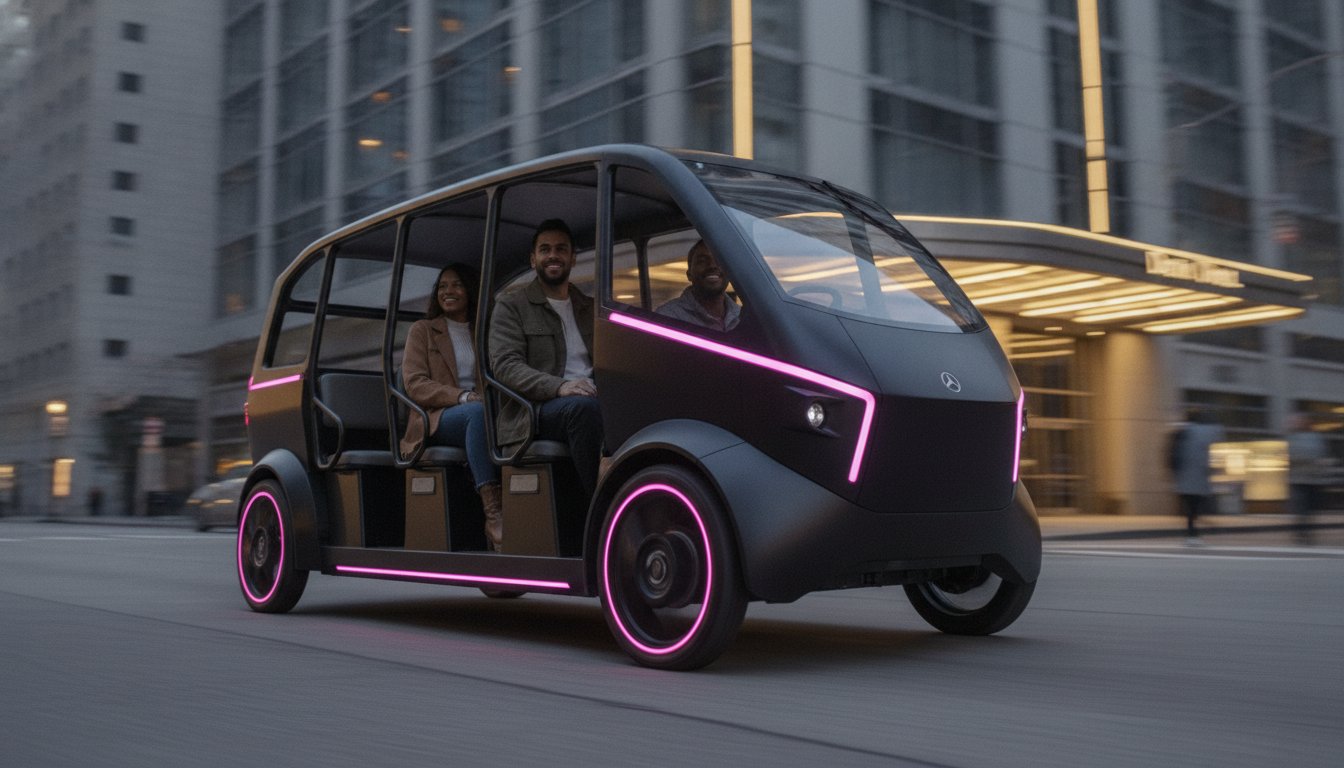
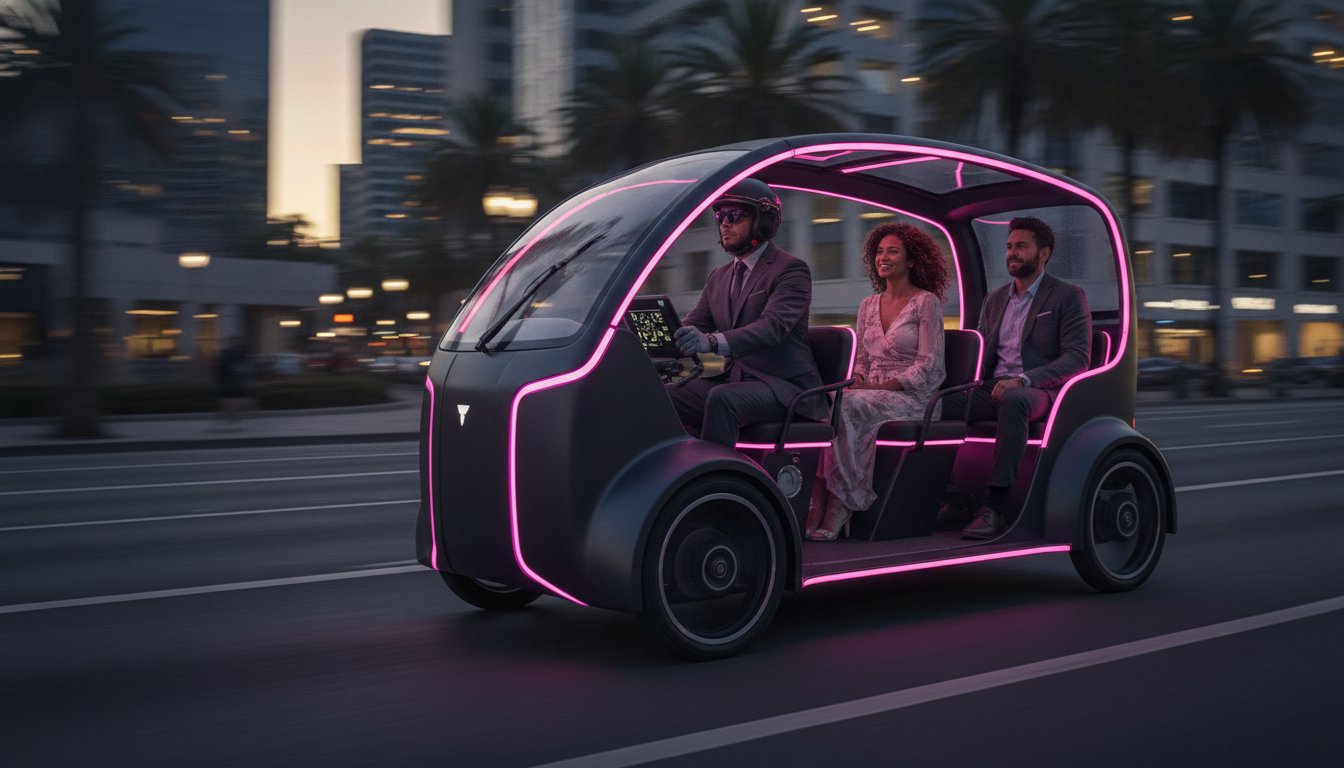
The evolution of the Auto rickshaw into a professional-grade electric vehicle represents a massive leap in urban engineering. Unlike bulky 4-wheel carts or standard passenger vans, the 3-wheel configuration provides a tighter turning radius and a narrower footprint. This allows operators to navigate congested tourist corridors and narrow historic streets where traditional vehicles simply cannot go. It's a matter of spatial efficiency. You can move more people through tighter spaces, more often. This maneuverability translates directly into more completed trips per shift.
Why Electric Trikes are Replacing Traditional Shuttles
Standard passenger vans are massive, expensive to insure, and difficult to park. In contrast, electric trikes offer an agile alternative that bypasses the logistical headaches of heavy vehicles. The open-air design isn't just a comfort feature; it's a premium selling point. Tourists want to feel the city, not be isolated behind tinted glass. From a regulatory standpoint, these vehicles often face fewer insurance hurdles and registration complexities than full-sized commercial buses. This lower barrier to entry is a primary reason why entrepreneurs are starting a pedicab company to capture the last-mile transit market in 2026. You get the utility of a shuttle without the massive overhead of a traditional fleet.
Defining the Commercial Opportunity in 2026
The market for zero-emission transit is exploding in entertainment districts and municipal centers. Cities are increasingly enforcing zero-emission mandates, effectively banning gas-powered transport from urban cores. This creates a vacuum that only industrial-grade electric taxis can fill. The revenue model is robust. Operators don't just rely on per-ride fees. They leverage the vehicle's high visibility for lucrative advertising sponsorships. You aren't just running a taxi service; you're managing a mobile billboard that pays for its own electricity. This dual-revenue stream ensures that the most successful fleets are scaling rapidly. Success in this market requires equipment that can handle the volume without breaking down.
Engineering Excellence: Anatomy of an Industrial-Grade Electric Taxi
An industrial-grade 3 wheel electric taxi is defined by its ability to endure 8 to 12 hour daily duty cycles under maximum load. This isn't a hobbyist vehicle or a modified consumer trike. It's a purpose-built commercial asset designed for continuous operation. The chassis serves as the backbone of this endurance. We utilize aircraft-grade aluminum and reinforced steel because anything less will buckle under the repetitive stress of urban transit. Structural failure represents the ultimate downtime; avoiding it requires a frame that exceeds standard safety margins.
The CyberX engineering standard establishes the baseline for what a professional fleet operator should expect. It prioritizes structural longevity and mechanical simplicity, ensuring that your fleet stays on the road rather than in the shop. When evaluating a potential purchase, you must look past aesthetic features and focus on weld quality and load-bearing specifications. A professional brand image depends on vehicles that look and perform like high-end machinery.
High-Torque Drive Systems and Battery Longevity
Peak torque matters more than top speed in a city environment. While some manufacturers boast about high speeds that are irrelevant in congested districts, we focus on the power required to move 800 pounds of passengers up a 15 percent incline. A high-torque drive system ensures smooth acceleration and reduces the strain on the motor and controller. This power must be supported by LiFePO4 battery chemistry. We choose this chemistry because it offers thousands of charge cycles, providing a much lower total cost of ownership compared to cheaper lead-acid or standard lithium alternatives.
Thermal management is equally critical for back-to-back tours. Motors that overheat lead to forced downtime and component degradation. Our engineering focuses on heat dissipation to maintain performance even in high-temperature climates. Understanding the nuances of US vehicle classification is vital here, as it dictates the power limits and safety requirements for these commercial trikes. Ensuring your vehicle meets these standards protects you from future regulatory shifts.
Structural Integrity and Passenger Safety
Safety is the cornerstone of a successful transportation business. Hydraulic disc brakes on all three wheels are non-negotiable for a commercial 3 wheel electric taxi. You can't rely on rim brakes or mechanical cables when stopping a fully loaded vehicle on a downhill grade. Suspension tuning also requires a delicate balance. It must be stiff enough to handle heavy cargo but compliant enough to provide a premium passenger experience. If you're ready to upgrade your operations, you can explore our high-performance fleet options to see how industrial engineering drives revenue. Protecting your assets starts with a roll-cage and frame design that prioritizes passenger containment and structural rigidity.
Commercial Reality Check: Imported 'Tuk-Tuks' vs. Professional Pedicabs
A $1,000 price tag on a 3 wheel electric taxi is a siren song for the inexperienced operator. It is an entry-level trap that ignores the brutal reality of commercial duty cycles. While these "bargain" imports look functional on a digital storefront, they're built with consumer-grade components that aren't designed to survive the 12-hour shifts required for a profitable fleet. Choosing a professional-grade build over a cheap import isn't just a preference; it's a strategic move to protect your capital and ensure your business actually stays in business.
The transition to sustainable urban mobility requires more than just a battery and a motor. It requires a vehicle that can withstand the daily grind of city streets without constant mechanical failure. High-end, industrial-grade trikes hold roughly 70% of their value after three years of service. In contrast, generic imports often have zero resale value once the first proprietary motor controller fails. You aren't just buying a vehicle; you're investing in a depreciating asset that must pay for itself through consistent uptime.
The Hidden Costs of Low-Price Imports
The true cost of an overseas import rarely stops at the purchase price. Operators often face significant shipping delays and "hidden" port fees that can double the initial investment before the vehicle even arrives. Once it lands, the lack of technical support becomes a critical liability. If a generic motor controller fails, you don't have a service center to call. You have a multi-thousand-pound paperweight taking up space in your garage. This leads to a catastrophic loss of revenue that far outweighs any initial savings.
Maintenance and Parts Availability
Universal parts are a myth in the specialized world of electric transit. When a wheel buckles or a drive chain snaps, you need an immediate replacement from a domestic supply chain. Professional operators maintain a "Fleet Continuity" mindset. This means having a partner who stocks every bolt, motor, and battery in the USA for immediate shipping. Utilizing a comprehensive electric pedicab maintenance guide is only possible if you have access to the specific high-performance components the guide describes.
- Regulatory Compliance: Vehicles engineered and assembled in the USA are built to meet domestic safety standards, simplifying the street-legal certification process.
- Component Reliability: Commercial-grade controllers and wiring harnesses prevent the common electrical fires seen in low-quality imports.
- Brand Integrity: A fleet of matching, high-end 3 wheel electric taxi units projects a professional image that attracts premium advertising sponsors.
Don't settle for equipment that forces you into a cycle of constant repair. Build your fleet on a foundation of engineering that respects your bottom line and your passengers' safety.
Selecting the Right Vehicle: 3-Seat vs. 6-Seat Configurations
Choosing the right 3 wheel electric taxi configuration is a decision that dictates your daily revenue ceiling. You must match the vehicle's capacity to the specific demands of your local market. A 3-seat model serves as a versatile workhorse for standard urban taxi services, offering maximum agility in tight traffic. Conversely, a 6-seat model like the VorteX is engineered to dominate high-volume tourism and resort areas. While the 3-seat unit requires a $13,500 investment, the $15,000 high-capacity unit allows you to capture larger groups in a single trip. This increases your revenue per mile without doubling your driver costs.
The financial logic of this choice depends on your operational environment. If your business focuses on quick, point-to-point transit for individuals or couples, the smaller footprint of the CyberX is ideal. If you're operating in a resort town where families travel together, the higher upfront cost of a 6-seat unit pays for itself through increased ticket prices and higher occupancy rates. You aren't just buying a vehicle; you're purchasing a specific revenue potential.
Optimizing for Tourism and Entertainment Districts
The 6-seat VorteX is the preferred choice for family-oriented resorts and entertainment districts where group travel is the norm. Maneuverability is essential, but capacity drives profitability in these sectors. A 6-seat 3 wheel electric taxi allows you to move twice the passengers with the same labor cost. You need to find the sweet spot for your local geography. If your routes are primarily flat and wide, the high-capacity trike is the superior financial choice. These larger vehicles also offer more surface area for custom branding and vinyl wraps. This turns every trip into a secondary revenue stream through advertising sponsorships from local businesses.
Scaling Your Operation with Fleet Packages
Success in the transit market requires a mindset of scale. Buying individual units is a start, but electric pedicab fleet packages are the catalyst for rapid growth. There is a clear financial logic in acquiring five or more units simultaneously. It allows you to standardize your maintenance protocols and streamline driver training. When every vehicle in your fleet uses the same high-torque motor and battery system, your mechanics spend less time diagnosing problems and more time keeping wheels turning.
Standardization also builds a professional brand image that commands higher rates. Whether you choose the agility of the CyberX or the capacity of the VorteX, your fleet must reflect industrial excellence. If you're ready to dominate your local market, contact us today for a custom fleet quote and start scaling with equipment built for the 2026 market.
Why Xion Motors is the Definitive Choice for US Fleet Operators
Selecting a vehicle manufacturer is a long-term partnership that determines your fleet's survival. Xion Motors is not a middleman or an importer. We are a San Diego based engineering firm with over two decades of operational heritage in the transit industry. Our team has spent twenty years in the trenches, managing fleets and refining designs based on real-world street performance. This experience is baked into every 3 wheel electric taxi we produce. We don't just sell machines; we provide the perfected tools of the trade to entrepreneurs who demand industrial-grade reliability.
Our commitment to excellence extends from the drafting table to your doorstep. We provide national shipping to all 50 states, utilizing professional crating and logistics to ensure your assets arrive in showroom condition. You get direct access to the founders and engineers who designed your vehicles. If you have a technical question or need a custom solution, you're speaking with the master practitioners, not a call center. This level of professional support is what separates a serious commercial operation from a hobbyist venture.
The Advantage of USA-Based Manufacturing
Quality control standards in our California facility far exceed international import requirements. We oversee every weld, wiring harness, and drive system installation to ensure it meets our rigorous benchmarks. This domestic focus eliminates the supply chain volatility that cripples other operators. We maintain an immediate availability of replacement parts in our US warehouse. If you need a motor controller or a specialized wheel, we ship it immediately. You won't wait weeks for a container to clear a port while your revenue sits idle. Expert technical support is available in your time zone, providing the rapid response necessary to maintain a high-performance fleet.
Launching Your Fleet with Xion Motors
We guide you through a consultative sales process to ensure you deploy the right hardware for your specific market. Whether you need the high-torque agility of the CyberX for urban centers or the high-capacity Custom VorteX Trike for resort transport, we align our engineering with your business goals. Our manufacturing capacity is built for scale. We support operators launching a single pilot unit and established agencies scaling to 50-unit fleets.
- Direct-to-Operator Pricing: We eliminate the markup of third-party dealers to maximize your initial ROI.
- Proven Engineering: Every 3 wheel electric taxi is built on a foundation of 20 years of fleet data.
- Comprehensive Support: From maintenance guides to technical consultations, we are invested in your growth.
Your transportation business deserves a foundation of modern industrial excellence. Don't gamble your capital on unproven imports or companies without a legacy of performance. View the 2026 Xion Motors Commercial Catalog today and secure the equipment that will define your market leadership.
Dominating the 2026 Transit Market with Industrial Excellence
Success in the 2026 transit market belongs to the operators who treat their equipment as a serious industrial asset. We've established that the distinction between a hobbyist trike and a professional 3 wheel electric taxi lies in the torque, the chassis, and the domestic support chain. By prioritizing high-torque drive systems and structural integrity, you eliminate the mechanical failures that drain profits from inferior fleets. You aren't just buying a vehicle; you're securing a revenue stream that remains viable for years to come.
Building a legacy requires a partner with the depth to support your growth. Xion Motors brings over 20 years of fleet operation experience to your business, offering USA-made frames and vehicles engineered and assembled in San Diego — quality that imports cannot match. Our high-torque industrial drive systems are engineered to handle the most demanding commercial cycles across all 50 states. It's time to stop managing repairs and start managing expansion. Your vision for a high-performance transportation brand starts with the right foundation, and we're ready to help you lead the charge in your city.
Build Your Fleet: Contact Xion Motors for Commercial Pricing
Frequently Asked Questions
Are 3 wheel electric taxis street legal in the United States?
Street legality depends on local municipal codes and state vehicle classifications. Most jurisdictions classify these as either low-speed vehicles or electric bicycles, depending on the motor wattage and top speed. We engineer our vehicles to meet these domestic standards, simplifying the certification process for your fleet. You should always verify the specific last-mile regulations in your target city before deployment.
What is the average range of a commercial electric taxi on a single charge?
Range varies based on passenger weight, terrain, and battery configuration. A professional 3 wheel electric taxi typically delivers five to six hours of continuous operation on a single charge, and a simple battery-rotation protocol extends coverage to a full 8 to 12 hour shift. Using LiFePO4 chemistry ensures that the battery maintains its performance over thousands of cycles. This reliability is critical for maintaining a consistent revenue stream throughout your peak revenue windows.
How long does it take to charge a 6-seat electric pedicab?
Charging takes approximately five hours when using standard commercial chargers. Most fleet operators utilize overnight charging schedules to ensure every vehicle is ready for the morning shift. If your operation requires constant uptime, we recommend implementing a battery-swapping protocol or utilizing high-amp rapid chargers. This keeps your assets on the road where they generate profit rather than sitting idle in the garage.
Can these vehicles handle steep hills with a full passenger load?
Yes, provided the vehicle utilizes a specialized high-torque drive system. Standard consumer-grade motors often fail on steep inclines when carrying a full passenger load. Our engineering focuses on low-end power, allowing a 3 wheel electric taxi to maintain steady momentum on 15 percent grades. This performance ensures you don't have to turn down lucrative tours in hilly historic districts or entertainment zones.
What is the expected lifespan of a Xion Motors electric taxi?
We design our vehicles for a decade of commercial service when following a professional maintenance schedule. The industrial-grade chassis and high-end electrical components are built to survive the repetitive stress of daily urban transit. While cheap imports may buckle within a year, our 20 years of fleet experience ensures that the core structural elements outlast multiple battery lifecycles. It's an investment in long-term operational longevity.
Do I need a special license to operate a 3 wheel electric taxi business?
Licensing requirements are determined by your local city or county government. Most major markets require a standard business license and a specific pedicab or for-hire vehicle permit. You don't typically need a commercial driver's license, but some cities mandate a brief safety training course for drivers. We recommend contacting your local department of transportation to review the specific permit application process for your area.
How much revenue can a single electric pedicab generate annually?
A single cab typically generates $30,000 to $35,000 in annual gross revenue, and top operators earn more. Your exact number depends on your location's passenger volume and your ability to secure advertising sponsorships. Successful operators maximize their ROI by leveraging the vehicle's high visibility for mobile billboard contracts alongside per-ride fees. Because these vehicles operate at a fraction of the cost of gas shuttles, a higher percentage of every dollar generated goes directly to your bottom line. Consistency and professional branding are the keys to scaling.
Does Xion Motors offer international shipping outside of the 50 US states?
We currently prioritize national shipping to all 50 US states with professional crating and support. This focus ensures that our domestic clients receive the fastest possible delivery times and immediate access to replacement parts. If you are an operator located outside of the United States, we recommend contacting our engineering team directly to discuss the logistical requirements for your specific region and fleet size.