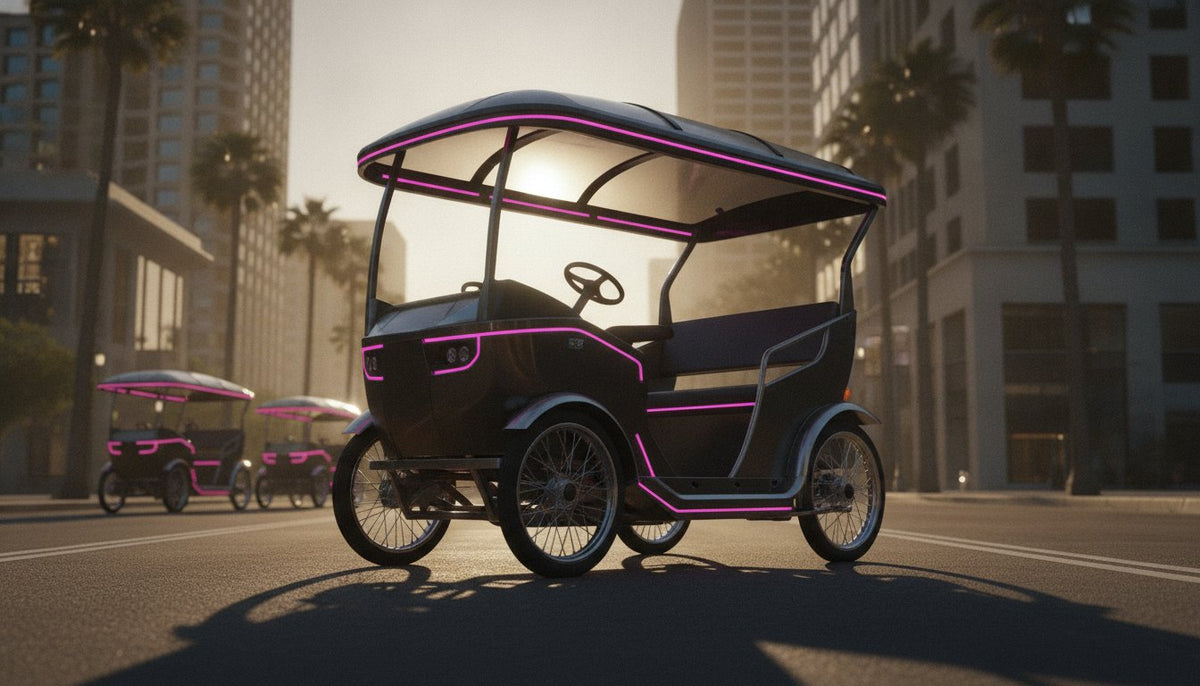
In the high-stakes world of urban mobility, the average cost of commercial pedicab units is a deceptive metric that often lures new operators into a trap of frequent maintenance and lost uptime. You understand that a low entry price is meaningless if your fleet is sidelined by structural failure three months into the season. You're looking for a clear path to profitability, not a gamble on flimsy equipment. This guide provides a complete financial blueprint for 2026, detailing the initial purchase prices, insurance realities, and the precise operating expenses required to keep a professional fleet in motion.
We'll move beyond surface numbers to verify the $30,000 annual revenue claim through real-world performance data. You'll see a line-item budget for year one that accounts for everything from permitting to the durability of industrial-grade frames. We explore why investing in 3-seat models at $13,500 or 6-seat models at $17,500 is the only way to eliminate the fear of frequent breakdowns. By the end of this breakdown, you'll know how to leverage high-torque electric systems to maximize your return on investment. We build these machines because we've spent decades in the trenches, and we know that success in this industry belongs to those who prioritize engineering over shortcuts.
Key Takeaways
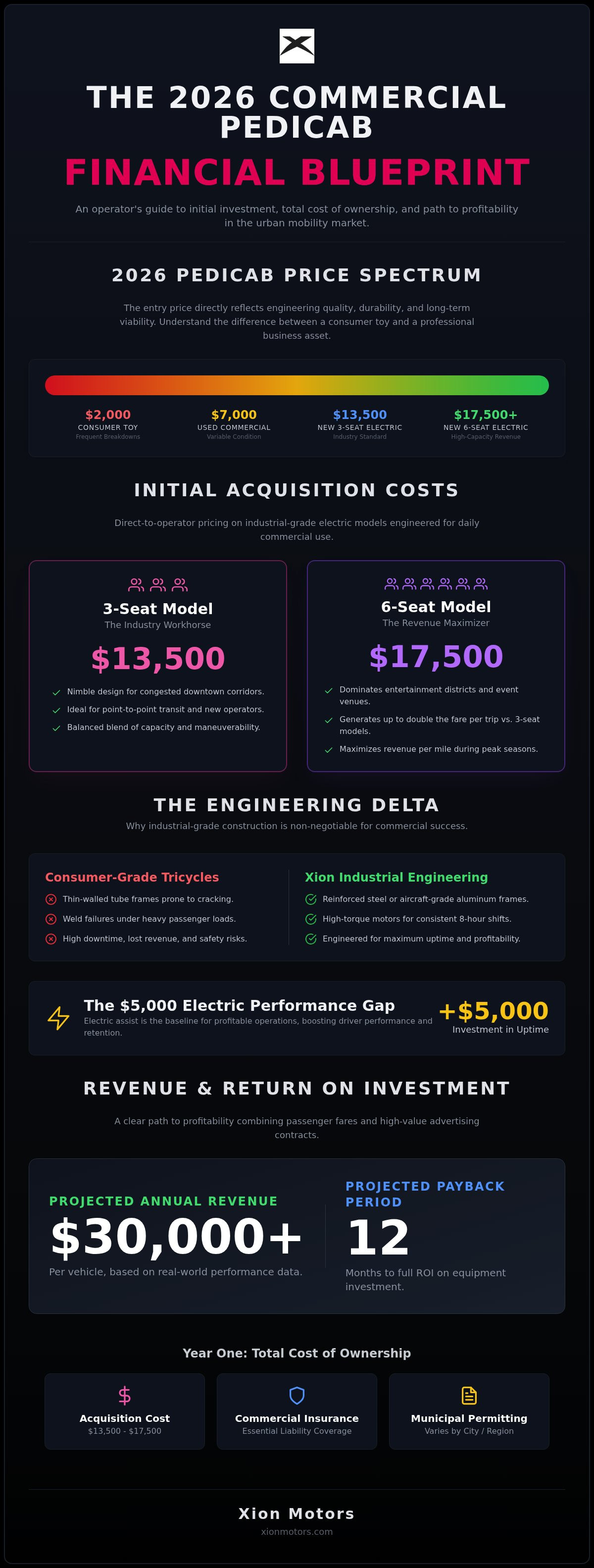
- Understand the 2026 market landscape where the average cost of commercial pedicab units ranges from $7,000 for used models to $17,500 for high-capacity, industrial-grade electric vehicles.
- Calculate your total first-year budget by accounting for initial acquisition costs alongside essential operational expenses like commercial liability insurance and municipal permitting.
- Evaluate the revenue potential of passenger fares and high-value advertising contracts to achieve a projected 12-month payback period on your equipment investment.
- Leverage fleet scaling strategies, such as the "Rule of Three," and take advantage of tiered pricing discounts to maximize operational efficiency and profit margins from day one.
- Distinguish between consumer-grade tricycles and industrial engineering standards like the CyberX and VorteX to ensure your fleet survives the rigors of daily commercial use.
Understanding the 2026 Commercial Pedicab Price Spectrum
The average cost of commercial pedicab equipment reflects a hard truth: you get exactly what you pay for on the street. If you're looking at a $2,000 tricycle online, you're looking at a consumer toy, not a professional business asset. True commercial-grade vehicles are engineered for thousands of miles of annual use under heavy load. In 2026, the price spectrum spans from roughly $7,000 for a well-maintained used unit to $17,500 for a new, high-capacity electric powerhouse. We build our vehicles with high-torque systems and industrial frames because we've seen what happens when inferior equipment hits the pavement.
Three primary factors drive these costs. First is the powertrain; high-performance electric assist is now the industry standard. Second is passenger capacity, which dictates the size and reinforcement of the chassis. Third is the frame material. While consumer trikes use thin-walled tubing, industrial-grade models like the CyberX utilize reinforced steel or aircraft-grade aluminum to handle the rigors of daily commercial abuse. The transition from manual "pedal power" to electric assist is no longer a luxury. It's the baseline for any profitable operation in a modern city.
Manual vs. Electric: The $5,000 Performance Gap
Modern fleets have almost entirely phased out manual pedicabs. The reason is simple: driver performance. An electric assist system typically adds about $5,000 to the build cost, but it removes the physical ceiling that limits your daily revenue. Drivers can tackle steep inclines, maintain consistent speeds through an eight-hour shift, and navigate dense traffic without physical exhaustion. This surcharge isn't an expense. It's a tool for driver retention and route versatility that manual bikes can't match. You'll find that the increased trip volume quickly offsets the initial investment.
Capacity Tiers: 3-Seat vs. 6-Seat Configurations
Choosing between capacity tiers is a strategic decision based on your specific market. Standard 3-seat models, starting at $13,500, are the industry workhorses. They're nimble enough for narrow urban corridors and perfect for quick point-to-point transit in congested downtown areas. They represent the most common entry point for new operators.
High-capacity 6-seat units, starting at $17,500, are designed to dominate entertainment districts and event venues. While these larger vehicles may carry slightly higher insurance premiums, the revenue potential is significantly higher. A single 6-seat trip often generates double the fare of a standard unit with nearly the same operational overhead. You're trading a higher initial acquisition cost for a massive increase in revenue per mile, especially during peak festival seasons.
Initial Acquisition Costs: Electric Power vs. Industrial Engineering
When calculating the average cost of commercial pedicab ownership, the sticker price is your first indicator of long-term viability. At Xion Motors, we've standardized the 3-seat electric model at $13,500 and the high-capacity 6-seat variant at $17,500. These price points aren't arbitrary. They represent the baseline for equipment that survives the daily grind of urban transport. By utilizing a direct-to-operator sales model, we eliminate the $2,000+ dealer markups that typically inflate fleet costs. You're investing directly into the drivetrain and frame, not a middleman's commission.
The core of this investment lies in the drivetrain. High-torque motors and long-range battery systems are non-negotiable for professional operators. A standard hub motor might suffice for a hobbyist, but commercial routes demand a system that can handle repeated starts under heavy load without overheating. We build for the street. Our power systems are engineered to provide consistent torque across an eight-hour shift, ensuring your drivers stay productive and your equipment stays out of the shop.
The Engineering Delta: Why Chassis Durability Matters
A cheap frame is a liability, not an asset. The hidden cost of low-grade equipment is the inevitable downtime caused by metal fatigue and weld failure. We've seen frames crack under the stress of 600-pound passenger loads, effectively ending a season before it starts. This is why we adhere to CyberX engineering standards, which prioritize reinforced gussets and oversized axles. Industrial-grade components like hydraulic disc brakes and heavy-duty wheels aren't optional extras; they're the components that keep your fleet safe and operational when the pressure is on.
Customization and Branding Costs
Your pedicab is a high-visibility revenue generator. Professional vinyl wraps are the gold standard for advertising, typically adding a modest cost that pays for itself through brand partnerships. Beyond aesthetics, we offer custom powder coating and integrated lighting packages to enhance night-time visibility and safety. We simplify the logistics by providing freight shipping to all 50 states, delivering your equipment directly to your base of operations. If you're ready to deploy a professional fleet, you can view our electric pedicabs to see how industrial engineering translates to profit.
The Real Math: Total Cost of Ownership (TCO) and Annual Expenses
The average cost of commercial pedicab ownership extends far beyond the initial check you write for the vehicle. Professional operators know that the acquisition price is only the first line item in a comprehensive first-year budget. To maintain a profitable fleet in 2026, you must account for commercial liability insurance, municipal permitting, and a disciplined maintenance schedule. These aren't just costs. They're the infrastructure that protects your investment from legal and mechanical failure. We build for the long haul, but even the best engineering requires a managed operational budget to thrive.
Commercial liability insurance is the most significant recurring expense you'll face. While premiums vary based on your local transit district, most operators should budget for professional coverage that specifically handles passenger transport. Registration and permitting fees in high-volume districts also require upfront capital. These regulatory costs ensure your right to operate in the most lucrative zones, turning a mandatory fee into a strategic market advantage. Without these protections, your $30,000+ annual revenue potential is a liability waiting to happen.
Fixed vs. Variable Operating Costs
Your daily energy costs are surprisingly low. Charging a high-capacity lithium battery system typically costs pennies per cycle, making fuel expenses a non-issue compared to traditional transit. Storage and garaging represent your primary fixed overhead. National averages suggest that secure fleet housing is essential for protecting your sensitive electronics from the elements and vandalism. Your driver compensation model, whether based on a daily lease-out system or a revenue-share arrangement, will ultimately dictate your net margins. A well-structured lease model can often cover your fixed overhead before the first passenger even boards.
Maintenance Protocols for Longevity
Reactive repairs are the enemy of profitability. We've spent over 20 years in fleet operations, and we know that a proactive schedule saves thousands in the long run. Budgeting for high-wear items like brake pads, heavy-duty tires, and chain sets is mandatory for commercial continuity. Using authentic vehicle parts ensures that your replacement components match the industrial engineering of the original build. Consumer-grade bike parts will fail under the 600-pound loads our trikes handle daily.
A professional lithium battery system is designed for longevity, typically providing several years of service before capacity degrades significantly. By following strict charging protocols, you extend the life of your most expensive component. This level of precision is what separates a master practitioner from a hobbyist. You aren't just riding a bike; you're managing a high-performance industrial asset that requires professional oversight to maintain its value.
Scaling for Profit: Fleet Pricing and Operational Logistics
Starting with a single unit is a common entry point, but real profitability is found in the "Rule of Three." Managing one pedicab carries the same administrative burden as managing a small fleet, but without the revenue to justify the overhead. When you scale, the average cost of commercial pedicab units drops significantly through structured procurement and logistical efficiency. We build our equipment to be the backbone of a professional operation, and we've structured our pricing to support that growth.
We offer clear fleet discount tiers to reward operators who are serious about market dominance. Operators purchasing 3 to 9 units receive a 10% discount, while those deploying 10 or more units benefit from a 15% reduction. Beyond the sticker price, scaling allows you to amortize freight shipping across multiple vehicles, drastically reducing the per-unit delivery cost. Standardizing your fleet with identical models also slashes maintenance overhead. You only need to stock one set of tires, pads, and chains to keep every vehicle in motion, ensuring your shop remains lean and organized.
Fleet Management Software and Logistics
A multi-unit operation requires precision. Tracking and dispatching tools allow you to monitor driver performance and route efficiency in real-time, providing the data needed to hit your ROI targets. Training your team is equally vital. Onboarding drivers for safe electric operation ensures that your high-performance equipment is handled with care, preserving the lifespan of the battery and drivetrain. For a deeper look at these metrics, consult our 2026 Guide to Scaling Commercial Transit ROI. This level of operational control is what separates a hobbyist from a master practitioner.
Financing and Leasing Strategies
You don't always need full capital upfront to dominate a market. Traditional equipment financing and private capital are viable paths for expansion. Many operators leverage Section 179 tax deductions, which allow for the immediate expense of commercial vehicles to lower their taxable income in the year of purchase. We also support lease-to-own models for established operators looking to refresh their fleet without a massive cash outlay. These financial tools turn the average cost of commercial pedicab acquisition into a manageable monthly operating expense that's easily covered by passenger revenue.
If you're ready to move from a single bike to a dominant urban fleet, contact us for a custom fleet package quote.
Justifying the Investment: ROI and Revenue Projections
The average cost of commercial pedicab equipment is an investment in a high-yield asset, not a sunk expense. You aren't just purchasing a vehicle; you're acquiring a revenue engine capable of generating $30,000 to $35,000 in gross annual revenue. This isn't a theoretical projection. It's the standard result for operators who combine consistent passenger fares with strategic advertising contracts. When you analyze the math, a 12-month payback period is entirely realistic for units deployed in high-traffic entertainment districts and tourism hubs.
Quality equipment protects your capital through superior resale value. While a consumer-grade tricycle is essentially scrap metal after two seasons of heavy use, industrial-grade frames retain 60-70% of their original purchase price even after three years of service. This durability allows you to cycle your fleet every few years, keeping your equipment modern while recouping a massive portion of your initial outlay. In high-volume environments, the reliability of a reinforced chassis means more hours on the street and fewer hours in the shop, directly impacting your bottom line.
The Advertising Revenue Multiplier
Advertising is the secret weapon of the professional operator. A 6-seat high-capacity unit is a rolling billboard that local businesses are eager to sponsor. In premium tourism markets, wrap sponsorship rates are high enough that a single contract can often cover your entire monthly financing or storage cost. This multiplier effect transforms your vehicle into a self-funding marketing platform. Every passenger fare collected after the ad contract is signed becomes pure profit, significantly accelerating your return on investment.
The Xion Motors Advantage
We've spent over 20 years in the trenches of fleet operation. We build machines that we've personally operated on the street, which is why our designs avoid the rookie mistakes common in the industry. This is the "Master Practitioner" approach to vehicle design. Every weld, gear ratio, and battery placement is optimized for street-level profitability and industrial longevity. You're not just buying hardware; you're buying two decades of operational wisdom that ensures your fleet stays profitable from the first mile to the last.
If you're ready to move beyond the planning phase and start generating real revenue, you need a proven strategy. Start your fleet journey with a professional blueprint to ensure your investment is backed by the best engineering in the industry.
Dominate Your Local Market with Industrial Reliability
You now have the financial roadmap to move from a single operator to a dominant fleet owner. We've established that the average cost of commercial pedicab units is an investment in durability rather than a simple purchase. By focusing on industrial-grade CyberX engineering and avoiding dealer markups through our direct-to-operator model, you're positioning your business for long-term viability. You don't just want a bike on the road; you want a high-torque revenue engine that stays out of the shop and on the street.
Our 20+ years of fleet expertise are baked into every frame and drivetrain we manufacture. We've seen the mistakes rookies make; we've engineered the solutions into our current lineup. It's time to stop calculating and start deploying. You can View Current 2026 Pedicab Pricing and Fleet Packages to lock in your equipment today. Your path to $30,000+ annual revenue per unit begins with the right hardware. Build your legacy on a foundation of industrial excellence and proven street performance.
Frequently Asked Questions
How much does a new commercial electric pedicab cost in 2026?
Professional units start at $13,500 for standard 3-seat models and $17,500 for high-capacity 6-seat variants. The average cost of commercial pedicab equipment has stabilized around these points as high-torque electric drivetrains become the industry baseline. These prices reflect a direct-to-operator model that removes dealer markups, ensuring your capital goes directly into industrial-grade engineering and reinforced chassis components built for daily urban abuse.
What is the difference in price between a 3-seat and a 6-seat pedicab?
The price gap is exactly $4,000 between these two primary configurations. This investment covers a significantly larger reinforced frame, heavy-duty rear axles, and the high-capacity battery systems required to move six passengers under electric assist. While the 3-seat model is more nimble in tight corridors, the 6-seat variant allows you to double your passenger revenue per trip in high-traffic entertainment districts and event venues.
Do commercial pedicabs come with a warranty?
You should verify specific coverage terms with the manufacturer to understand the protection for your frame and electrical components. Professional builders prioritize industrial reliability to ensure your fleet remains operational during peak seasons. Because we focus on high-performance engineering, our machines are designed to minimize the mechanical failures that typically lead to warranty claims, keeping your drivers on the street rather than in the shop.
How much should I budget for pedicab insurance annually?
Annual insurance premiums depend heavily on your local municipal requirements and the size of your fleet. Operators should consult with specialized commercial providers to get accurate quotes for liability and passenger transport coverage. Budgeting for professional insurance is a non-negotiable operational expense that protects your business from the unique risks associated with urban transit and high-volume passenger turnover.
Are there discounts available for buying a fleet of pedicabs?
Yes, scaling your operation reduces the average cost of commercial pedicab units through structured fleet discounts. We offer a 10% discount for orders of 3 to 9 units and a 15% discount for fleets of 10 or more vehicles. These tiers allow professional operators to amortize their initial capital more effectively while standardizing their maintenance protocols across multiple identical machines for better logistical efficiency.
What is the typical ROI for a commercial electric pedicab?
Most professional operators achieve a 12-month payback period by generating between $30,000 and $35,000 in gross annual revenue per vehicle. This return is driven by a combination of passenger fares and high-value advertising contracts. Because industrial-grade units retain significant resale value after three years of use, your total return on investment remains high even when you decide to cycle your fleet for newer models.
How much does it cost to ship a pedicab across the United States?
Shipping costs vary based on the destination and the total number of units being delivered to your base of operations. We provide freight shipping to all 50 states, utilizing carriers experienced in transporting specialized commercial vehicles. To minimize these expenses, we recommend shipping multiple units simultaneously, which allows you to distribute the fixed freight costs across your entire fleet order.
Should I buy a used pedicab or invest in a new one?
Investing in new equipment is the most pragmatic choice for operators who prioritize uptime and driver retention. Used units often carry hidden frame fatigue or degraded lithium batteries that lead to frequent breakdowns and lost revenue. New industrial-grade machines provide the security of a clean maintenance history and the latest high-torque technology, ensuring your business remains competitive in a demanding transit market.