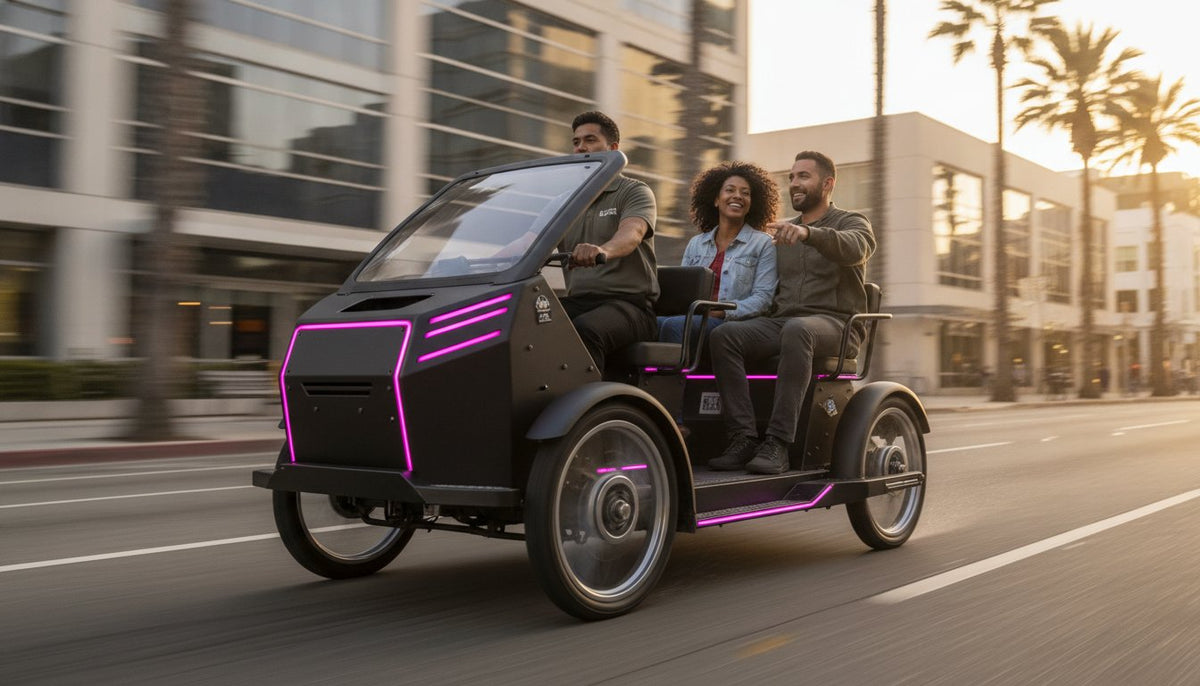
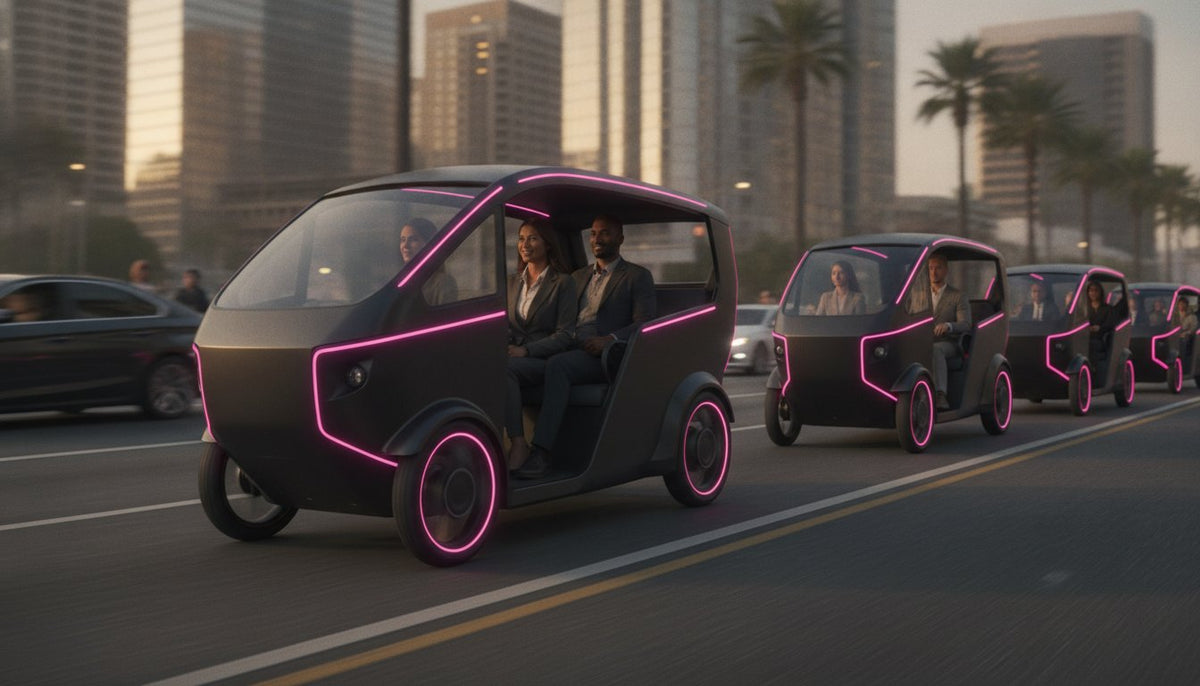
Choosing the cheapest import might seem like the fastest way to scale your fleet, but it's actually the most efficient way to drain your capital. You know that every hour a vehicle spends in the shop is an hour it isn't generating fares or advertising revenue. Relying on consumer-grade components for a 12-hour commercial shift is a recipe for operational failure. Custom pedicab fleet manufacturing in 2026 has evolved beyond simple assembly. It's now an exercise in industrial-grade engineering designed to withstand the brutal demands of urban transit.
At Xion Motors, we've spent 20 years in the trenches perfecting the balance between high-torque performance and long-term durability. We understand the frustration of waiting months for a proprietary part while your revenue sits idle. This article explores the engineering benchmarks and operational strategies required to deploy a high-performance fleet that stays on the road. You'll discover how the 2026 industrial standard, exemplified by our CyberX and VorteX models, eliminates common battery range issues and simplifies maintenance. We're moving from the "what" of vehicle design to the "why" of commercial profitability, ensuring your investment pays for itself in record time.
Key Takeaways
- Master the engineering benchmarks of high-torque drive systems required to sustain 1,000lb+ loads during rigorous commercial shifts.
- Optimize revenue potential by strategically deploying 3-seat CyberX and 6-seat VorteX models tailored to high-capacity transit needs.
- Understand how custom pedicab fleet manufacturing ensures structural integrity through industrial-grade chassis materials that outlast standard aluminum frames.
- Minimize vehicle downtime by establishing preventative maintenance protocols supported by a domestic supply of authentic replacement parts.
- Leverage the 30-90 day lead time advantage of USA-based production to scale your operations faster than competitors relying on international imports.
Scaling Urban Mobility with Custom Pedicab Fleet Manufacturing
Scaling a transit operation isn't about buying toys. It's about deploying assets that work as hard as you do. Custom pedicab fleet manufacturing represents a shift from recreational hobbyism to industrial-grade transit engineering. While the traditional cycle rickshaw served as a simple human-powered tool, the 2026 standard demands precision-machined vehicles capable of 12-hour shifts in high-volume environments. We've moved past the era of modified bicycles. Today's commercial fleets are purpose-built machines designed for the rigors of constant urban movement.
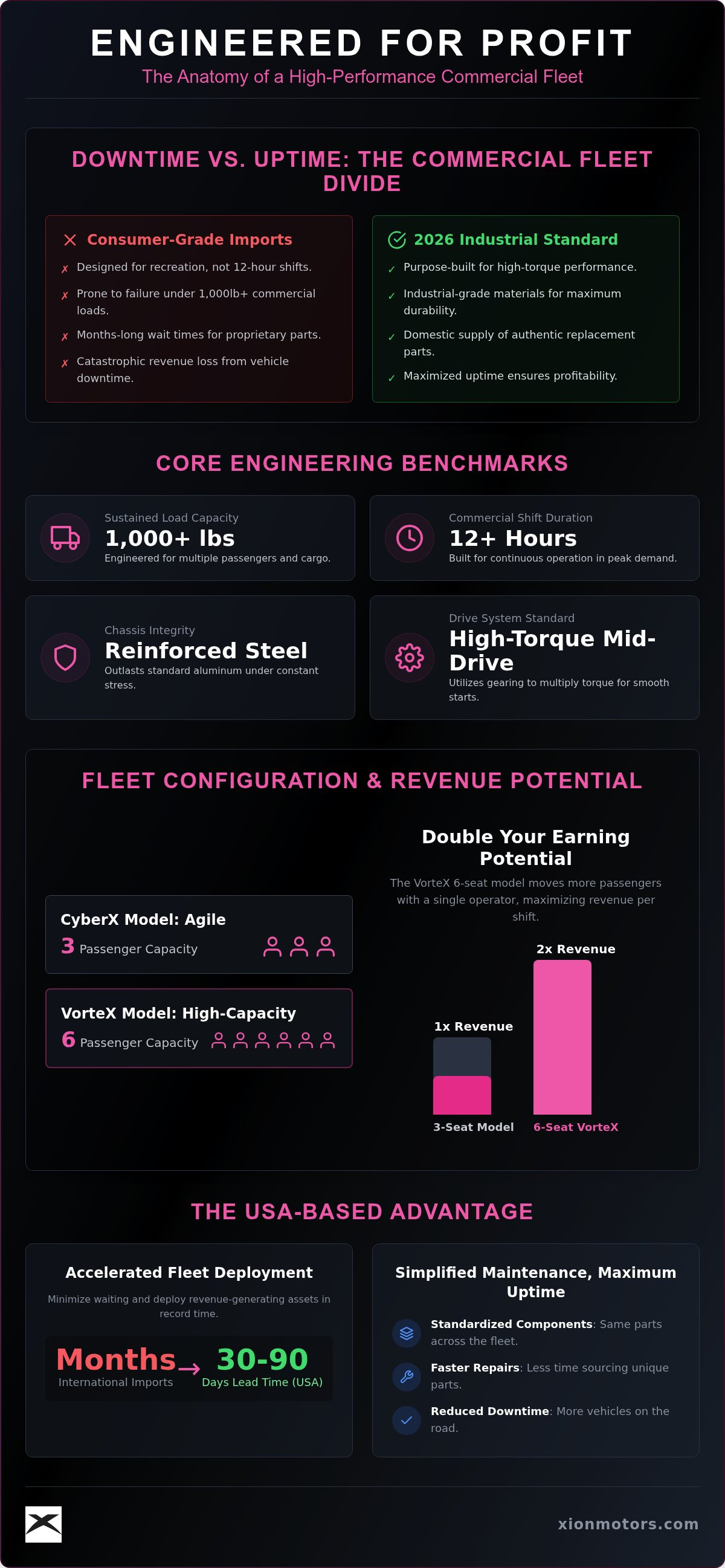
Consumer-grade electric bikes fail in these environments because they aren't engineered for 1,000lb+ loads or the heat cycles of continuous commercial use. In tourism hubs, resort corridors, and entertainment districts, vehicle failure during peak hours is a catastrophic loss of revenue. That's why the 2026 market has pivoted toward 6-seat configurations. These high-capacity units allow operators to move more people with fewer drivers, maximizing the passenger throughput of every square foot of your storage facility.
The Business Case for High-Capacity Electric Fleets
A 3-seat model like the CyberX is an agile asset for narrow city streets, but the 6-seat VorteX is the true revenue powerhouse of a modern fleet. Moving six passengers with a single operator effectively doubles your earning potential per shift compared to standard units. Electric assist is the engine of operator retention; it keeps your drivers fresh and capable of working full shifts without physical burnout. Fleet ROI is the mathematical result of maximizing passenger throughput while minimizing mechanical downtime.
Transitioning from Single Units to Fleet Operations
Moving from a single trike to a dozen requires a tactical shift in logistics. You'll need dedicated infrastructure for multi-unit charging and secure storage to protect your capital. Managing a diverse range of models is a maintenance nightmare that kills profitability. We solve this by standardizing components across our electric pedicab fleet packages. When every vehicle in your fleet uses the same high-torque motors and heavy-duty braking systems, your mechanics spend less time sourcing parts and more time keeping the fleet in motion. With our 30-90 day lead times, you can scale from a pilot program to a full-scale transit solution faster than competitors waiting on international imports.
Engineering Durability: The Anatomy of a Commercial Electric Fleet
Engineering a fleet isn't about slapping a motor on a bicycle frame. It requires a fundamental understanding of load-bearing physics and electrical thermal limits. In the context of municipal regulation of the pedicab industry, safety and reliability aren't just preferences; they are legal and operational mandates. Custom pedicab fleet manufacturing in 2026 centers on one objective: ensuring a 1,000lb+ loaded vehicle can stop, start, and climb for 12 hours straight without a single component failure.
High-Torque Drive Systems for Heavy Duty Performance
Mid-drive configurations are the industrial standard for high-capacity fleets. Unlike hub motors that can overheat under extreme stress, mid-drive systems utilize the vehicle's internal gearing to multiply torque. This mechanical advantage is critical for smooth starts under heavy passenger weight. You need specific gear-reduction ratios to prevent motor strain when pulling away from a stoplight. Modern 2026 systems also integrate regenerative braking. This tech doesn't just save your brake pads; it captures kinetic energy to extend battery range during stop-and-go city shifts.
Chassis Integrity and Structural Load Bearing
While the drivetrain handles the load, the suspension must manage the terrain. For fleet owners who want to understand how high-performance dampening components are engineered for extreme stress, you can visit Suspension Store to explore the latest in shock absorber technology.
Standard aluminum frames might work for a solo rider, but they crack under the constant vibration and weight of commercial livery. We utilize reinforced steel alloys and heavy-duty wheelsets to handle the torque of our electric systems. This focus on material science is why professional operators prioritize custom pedicab fleet manufacturing over off-the-shelf consumer solutions. The CyberX engineering framework serves as the benchmark here. It features a reinforced chassis designed to absorb road shock without compromising structural alignment. Every frame receives a weather-resistant powder coating to prevent the corrosion that typically kills cheaper imports within their first year of service.
Safety requires more than just a strong frame. Hydraulic braking systems are mandatory for any fleet carrying multiple passengers. These systems provide the consistent, high-pressure clamping force needed to stop a fully loaded 6-seat unit on a decline. Battery technology has also reached a new threshold. The 2026 industrial standard demands UL 2849 certification and advanced thermal management. This ensures your cells maintain a stable cycle life even during fast-charging sessions or high-ambient heat operations. If you're ready to upgrade your operations, you can view our industrial-grade fleet options to see these technical specs in action.
Strategic Fleet Configuration: Optimizing Capacity and Revenue
Strategic fleet configuration is the difference between a profitable transit operation and a logistical bottleneck. While single-unit operators often focus on aesthetics, high-level custom pedicab fleet manufacturing prioritizes the revenue-to-operator ratio. You aren't just buying vehicles; you're designing a system that matches passenger demand with operational efficiency. A well-configured fleet uses a mix of vehicle sizes to capture different market segments, from solo travelers to large family groups.
The 3-seat CyberX remains the standard for agile, on-demand urban hailing. It’s the perfect fit for couples navigating dense traffic or quick "last-mile" hops. However, the Custom VorteX Trike has redefined the resort and event landscape. By providing a high-capacity solution, it allows a single driver to handle larger groups, significantly lowering your labor costs per passenger mile. Be aware that seating configuration directly impacts your municipal permitting. Some jurisdictions require specialized livery insurance for vehicles exceeding four passengers, yet the increased revenue from group fares almost always offsets these premiums. Beyond the numbers, aesthetic customization ensures your fleet reinforces your brand identity, turning every trip into a high-visibility marketing event.
The 6 Seat Electric Pedicab: High-Volume Transit Force
The shift toward family-oriented tourism has made the 6 seat electric pedicab the preferred choice for major attractions and resorts. These units offer superior stability due to a wider rear track and reinforced suspension systems designed for high-capacity loads. To calculate your seat-per-mile revenue, don't just look at the fare. Factor in the efficiency of moving six people in one trip versus two trips in a smaller unit. This throughput is what drives ROI in 2026, especially in high-traffic zones where operator time is your most expensive resource.
Customizing for Business-Specific Use Cases
Modern fleet owners are looking beyond passenger transit. We've seen a surge in custom electric trikes for business adapted for cargo delivery and mobile vending. Custom pedicab fleet manufacturing also includes the integration of digital signage and high-visibility advertising wraps. These assets turn your fleet into a mobile billboard network, creating a secondary revenue stream that often covers the vehicle's monthly operational costs. Finally, gear ratio selection is a critical customization step. We help you choose the right mechanical advantage for your specific terrain, ensuring a flat coastal resort fleet operates with different efficiency parameters than a fleet in a hilly entertainment district.
Lifecycle Logistics: Managing Maintenance and Replacement Parts
Maintaining a commercial fleet is a battle against friction and fatigue. In high-volume environments, your revenue is directly proportional to your uptime. Custom pedicab fleet manufacturing provides the industrial foundation, but lifecycle logistics ensure that foundation doesn't crumble under the weight of 12-hour shifts. You need a rigorous maintenance strategy to protect your capital and keep your operators earning. Uptime is your only metric for success.
Preventative Maintenance for Commercial Continuity
While our focus is on new, precision-engineered pedicab components, the broader transportation industry often relies on the strategic sourcing of high-quality automotive spares. For those managing vehicle fleets in North Africa, you can learn more about YOUMBA Auto Maroc and their selection of imported engines and mechanical parts.
A reactive maintenance model is a financial liability. You don't wait for a chain to snap or a motor to seize; you inspect, adjust, and replace before the failure occurs. High-use fleets require a tiered inspection checklist to maintain peak performance levels. We recommend the following schedule:
- Weekly: Verify tire pressure, adjust chain tension, and check fastener torque on all load-bearing joints.
- Monthly: Inspect hydraulic fluid levels, monitor brake pad thickness, and lubricate all pivot points.
- Quarterly: Conduct deep-cleaning of drive systems and perform controlled battery discharge cycles to calibrate health.
For detailed technical protocols, refer to our electric pedicab maintenance guide. Tires, brake pads, and chains are your primary wear items. Stocking these components in-house is the difference between a five-minute swap and a three-day service delay that costs you fares.
Sourcing Industrial-Grade Replacement Parts
Using non-standard components in a precision-engineered fleet is a dangerous gamble. Off-the-shelf bicycle parts aren't designed for the 1,000lb+ loads your vehicles carry daily. They fail prematurely, often causing collateral damage to more expensive drive components. We prioritize "Made in USA" parts continuity to ensure you aren't at the mercy of broken international supply chains. When you rely on international imports, a single factory closure in another hemisphere can ground your entire operation for months. We eliminate this vulnerability through domestic assembly and a robust inventory of components for custom pedicab fleet manufacturing.
Shipping heavy components like 72V lithium batteries or high-torque mid-drive motors requires specialized handling and hazardous materials certification. Our logistics team manages these complexities, providing streamlined national shipping to all 50 states. This direct-to-operator support model ensures that even your heaviest assets are replaced with minimal friction. Modern fleet management in 2026 also leverages battery health monitoring systems to identify degraded cells before they strand an operator in the field. When you partner with a manufacturer with a 20-year legacy, you're securing a supply chain that keeps you in motion.
Don't let a minor part failure stall your growth. Order authentic vehicle parts today to secure your fleet's long-term ROI and operational readiness.
Xion Motors: Leading the Standard for USA-Made Fleet Manufacturing
Xion Motors represents the pinnacle of two decades of industrial evolution. We don't just assemble vehicles; we create high-performance assets that define the 2026 standard. Our 20-year legacy in fleet operations provides us with a perspective that no newcomer can replicate. We've spent decades in the trenches, refining our tools so you don't have to learn through expensive failures. This rugged authority is baked into every weld and every high-torque drive system we produce.
The Direct-to-Operator Manufacturing Advantage
By removing the middleman, we reduce your initial acquisition costs and eliminate the communication gaps that plague international sourcing. You deal directly with the engineers and operators who built the machines. This direct relationship is vital when you're managing custom pedicab fleet manufacturing for large-scale deployments. We understand that a vehicle in the shop is a liability. That's why we offer specialized fleet pricing and direct support that keeps your overhead manageable and your uptime at maximum capacity. Our team knows the street-level challenges of urban transit because we've lived them.
Securing Your 2026 Fleet Deployment
Timing is a critical competitive advantage in a fast-moving market. Our USA-based manufacturing and assembly facility allows us to offer 30-90 day lead times, which is a significant improvement over the unpredictable timelines of international imports. You can move from design finalization to national delivery in a fraction of the time it takes to clear customs with a foreign container. This speed allows you to scale your operations to meet seasonal demand without the risk of missing your revenue window.
We also provide a comprehensive consultative approach for those starting a pedicab company. We share the professional blueprint we've perfected over 20 years, covering everything from municipal compliance to shift management. The CyberX and VorteX lines remain the industry benchmarks because they were born from this deep operational experience. They offer the structural integrity and high-torque performance required to dominate any market, whether you're navigating a flat coastal resort or a hilly entertainment district.
Success in this industry requires more than just a fleet; it requires a partnership with a manufacturer invested in your growth. Our domestic assembly and stocked replacement parts ensure your investment is protected for the long haul. Don't settle for consumer-grade equipment when you can deploy industrial-grade power. Request a custom manufacturing quote today and secure your 2026 fleet deployment with the master practitioners of the industry.
Dominating the Urban Transit Market with Industrial Precision
Success in the 2026 pedicab industry isn't a matter of luck; it's a matter of engineering. You've seen how industrial-grade chassis materials and high-torque drive systems form the backbone of a profitable operation. By prioritizing durability over cheap imports, you eliminate the downtime that kills revenue. Strategic seating configurations like the 6-seat VorteX further amplify your ROI by doubling passenger throughput without increasing labor costs. Every decision you make in the manufacturing phase dictates your profit margins for the next five years.
Professional custom pedicab fleet manufacturing is an investment in long-term operational security. We back every vehicle with 20+ years of fleet operational expertise and the reliability of USA-engineered industrial durability. With national shipping to all 50 states and a deep inventory of authentic parts, we ensure your fleet stays on the road where it belongs. Don't let your growth be limited by consumer-grade equipment. It's time to deploy a fleet built for the rigors of the modern street.
Request a Custom Fleet Manufacturing Quote from Xion Motors and start scaling your transit empire today. Your future as a market leader begins with the right tools.
Frequently Asked Questions
What are the typical lead times for custom pedicab fleet manufacturing in 2026?
Typical lead times for custom pedicab fleet manufacturing range from 30 to 90 days. This timeline is significantly faster than international imports, which often face customs delays and shipping bottlenecks. Because we handle engineering and assembly in the USA, we maintain strict control over the production schedule. This allows you to deploy your assets and start generating revenue within a single fiscal quarter, ensuring your business capital doesn't sit idle for months on end.
Why is a high-torque motor essential for commercial electric pedicabs?
High-torque motors are essential for managing 1,000lb+ gross vehicle weights during constant stop-and-go city cycles. Standard bicycle motors lack the internal gearing to pull heavy passenger loads from a dead stop without overheating. Our industrial-grade mid-drive systems provide the mechanical advantage needed for smooth acceleration and reliable hill climbing. This power doesn't just improve the passenger experience; it protects the drive system from premature wear, ensuring your fleet survives years of rigorous commercial use.
How many passengers can a custom manufactured pedicab legally carry?
Our custom manufactured units are designed for specific passenger capacities: the CyberX carries up to three passengers, while the VorteX accommodates up to six. While our vehicles meet high engineering standards for these loads, legal limits are ultimately determined by your local municipal regulations. It's critical to verify your specific city's ordinances regarding seating capacity and livery insurance. High-capacity 6-seat models are increasingly popular in 2026 for maximizing revenue per driver in busy resort districts.
Do you offer national shipping for replacement parts across all 50 states?
Yes, we provide national shipping for all replacement parts across all 50 states. We maintain a robust inventory of USA-made components to ensure your fleet never faces extended downtime due to supply chain disruptions. Whether you need heavy-duty tires, brake pads, or high-capacity battery packs, we ship directly to your base of operations. This logistics support is a cornerstone of our partnership model, keeping your vehicles in motion and your revenue streams consistent year-round.
What is the difference between the CyberX and VorteX fleet models?
The CyberX is an agile 3-seat model designed for dense urban environments and quick point-to-point transit. It excels in heavy traffic where maneuverability is a priority. The VorteX is our 6-seat industrial powerhouse built for high-volume family tourism and resort transit. While both feature the same rugged chassis engineering and high-torque electrical systems, the VorteX doubles your passenger throughput per operator. Choosing between them depends on your specific market demand and local street-level logistics.
How does electric assist affect the ROI of a pedicab fleet operation?
Electric assist dramatically increases ROI by extending operator shift longevity and increasing the total number of fares per day. Drivers who don't face physical exhaustion can work full 12-hour shifts and handle hilly terrain that would be impossible for manual trikes. This leads to higher operator retention and consistent vehicle utilization. When your fleet can move more people faster and for longer periods, the initial investment in custom pedicab fleet manufacturing typically pays for itself within 12 months.
What maintenance is required for an industrial-grade electric trike?
Industrial-grade trikes require a structured preventative maintenance protocol to ensure commercial continuity. Weekly checks should focus on tire pressure and fastener torque, while monthly inspections must cover hydraulic brake pad wear and chain tension. Quarterly, you should perform deep-cleans of the drive system and battery health diagnostics. Because our vehicles use standardized industrial components, these tasks are straightforward for any fleet mechanic. Consistent maintenance is the only way to guarantee the five-year lifespan expected of professional-grade equipment.
Can I customize the branding and colors of my pedicab fleet during manufacturing?
Yes, full aesthetic customization is a key part of the manufacturing process. We offer a range of powder-coated frame colors and can integrate custom advertising wraps or digital signage during assembly. This turns your fleet into a high-visibility marketing asset that generates secondary revenue through brand partnerships. Professional branding doesn't just look better; it builds passenger trust and allows you to charge premium rates for a high-end, cohesive transit experience in your local market.