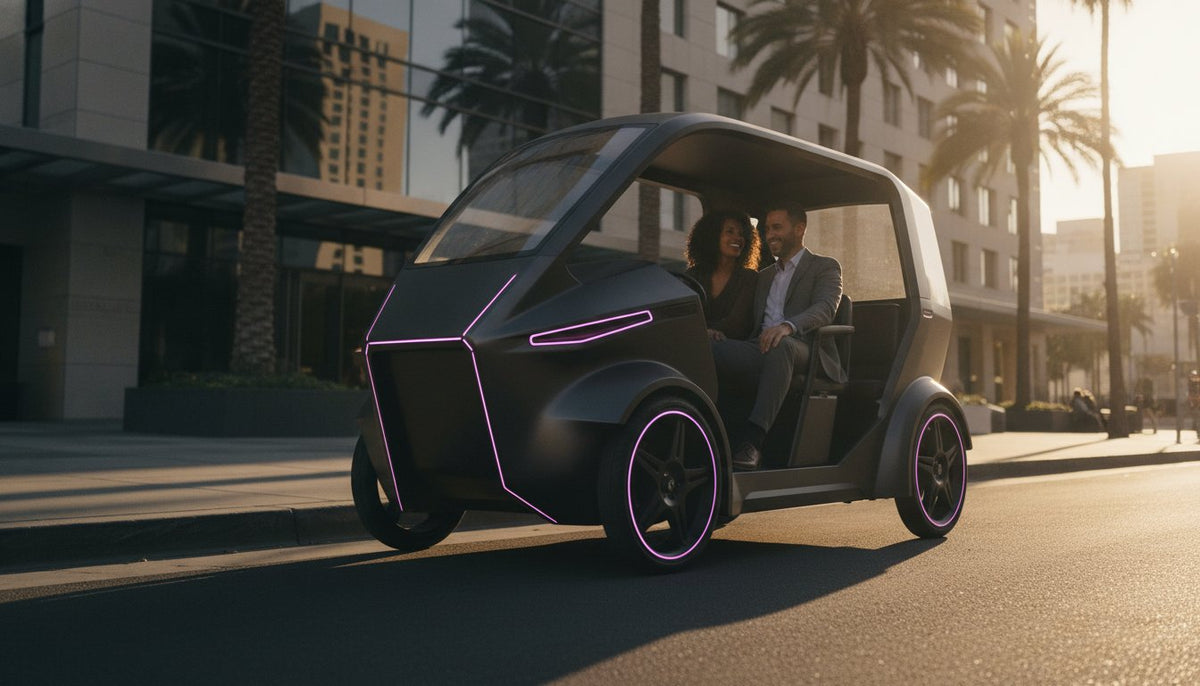
A consumer-grade frame is often just a liability disguised as an investment. You've likely seen the struggle firsthand. Motors smoke under a full passenger load, and cheap frames snap just as the tourist season peaks. It's frustrating to watch your profit margins vanish into constant repair bills and operational downtime. You know that to scale a fleet, you need equipment that works as hard as you do. Investing in a high-performance commercial 3 seater electric pedicab shouldn't feel like a gamble on fragile components or imported kits that weren't built for the street.
This 2026 industrial guide provides the technical blueprint for professional transport. We'll master the engineering requirements for a 1,500lb payload capacity and the specific power configurations needed to secure $30,000 or more in annual revenue per unit. You'll learn why a 750W direct-drive transaxle is the industry standard for durability and how to navigate the shifting regulatory landscape. We're moving past the hobbyist talk and focusing on the rugged, industrial-grade reality of high-volume passenger transport. It's time to build a fleet that generates results instead of excuses.
Key Takeaways
- Identify the engineering benchmarks required for industrial performance, including the 750W direct-drive transaxle and a 1,500 lb payload capacity.
- Analyze the financial potential of a commercial 3 seater electric pedicab, which can secure upwards of $30,000 in annual revenue per unit through rides and advertising.
- Evaluate the total cost of ownership benefits when transitioning from gas-powered shuttles or golf carts to high-efficiency electric platforms.
- Discover how American-engineered steel frames and direct-to-operator support eliminate the maintenance bottlenecks common with imported consumer equipment.
- Pinpoint high-traffic opportunities in tourism and resort logistics where traditional vehicles are restricted but industrial trikes excel.
Defining the Industrial-Grade 3-Seater Electric Pedicab
The modern commercial 3 seater electric pedicab is a precision-engineered industrial asset. It isn't a modified mountain bike or a glorified cargo trike. It's a high-stability platform designed to move three adults through dense urban environments with relentless reliability. While the traditional Cycle rickshaw (pedicab) relied on human endurance, today’s fleet operators demand high-torque electric propulsion and industrial-grade chassis. This shift from consumer-grade toys to professional machinery is a response to the brutal realities of the street. A 3-passenger configuration is the strategic entry point for high-volume tourism. It maximizes revenue per trip while maintaining a footprint agile enough for historic districts where larger vehicles are banned.
Commercial vs. Consumer Passenger Trikes
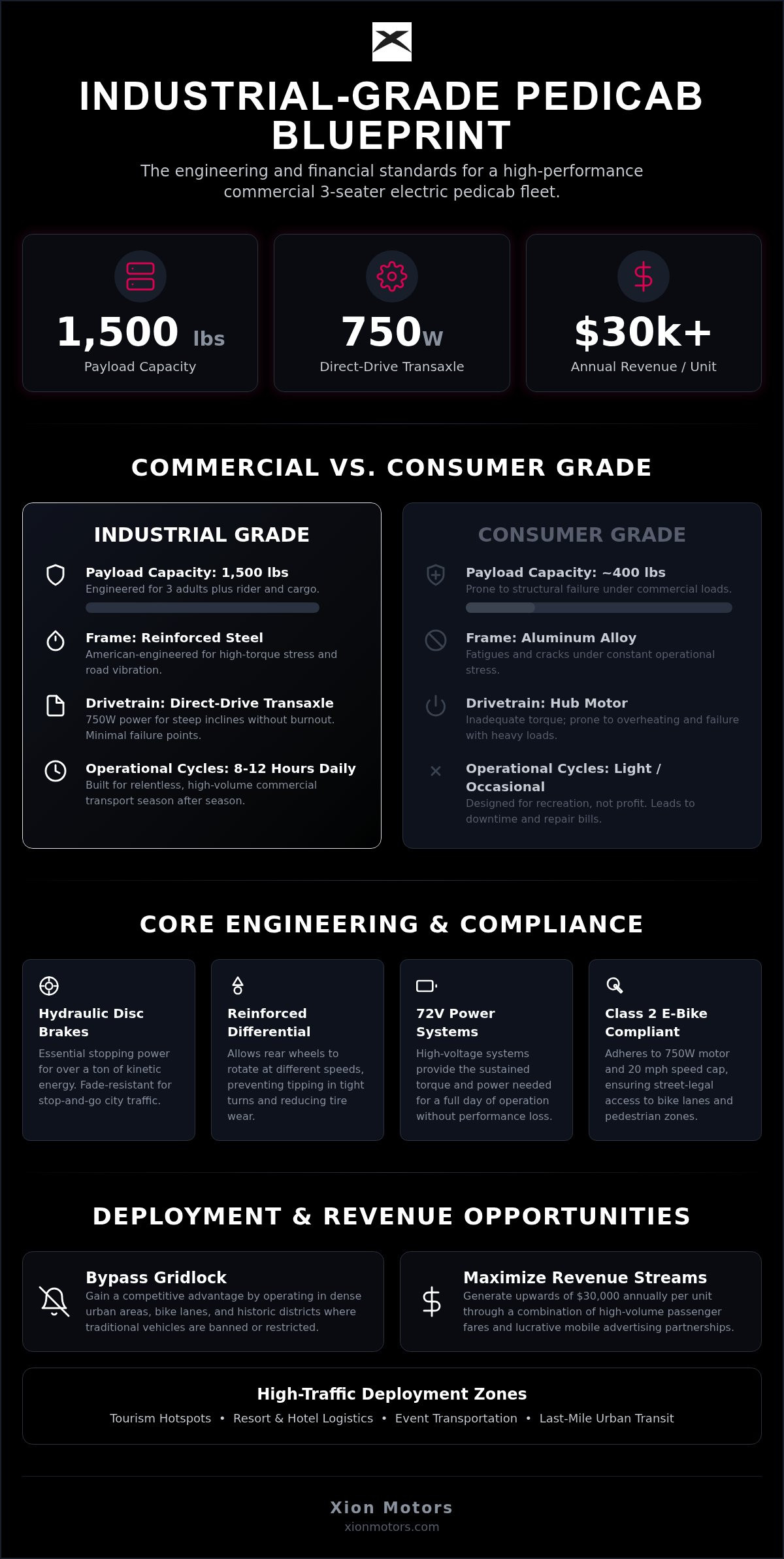
The gap between consumer and industrial equipment is measured in payload and persistence. Most consumer trikes use aluminum alloy frames rated for 400 lbs. That's barely enough for two adults and a rider; it's a recipe for structural failure under heavy use. In contrast, a professional vehicle like the CyberX utilizes reinforced powder-coated steel frames engineered for a massive 1,500 lb payload capacity. This structural integrity isn't just about safety. It's about longevity. Industrial steel handles the road vibration, lateral forces, and torque stress of 8 to 12 hour daily operational cycles. Consumer frames fatigue and crack under these loads. Industrial frames keep earning season after season.
Class 2 E-Bike Compliance
Federal standards define the operational boundaries of your business. To remain street-legal across most U.S. jurisdictions without requiring specialized licenses, a commercial 3 seater electric pedicab must adhere to Class 2 e-bike regulations. This means a 20 mph motor-assisted speed cap and a motor output not exceeding 750W. This 750W limit is the legal sweet spot for professional fleets. It provides the necessary torque to move a full load while ensuring the vehicle is classified as a bicycle rather than a motor vehicle. This classification is vital for accessing dedicated urban transit lanes and pedestrian zones. It allows your fleet to bypass the gridlock that traps traditional taxis and shuttles, giving you a distinct competitive advantage in congested markets.
Engineering for 1,500 lbs: Transaxles and 72V Power Systems
Moving three adult passengers plus a rider isn't just about speed; it’s about raw torque. Most cargo bikes use hub motors. These work for light groceries but fail under 1,500 lb passenger loads. A commercial 3 seater electric pedicab requires a 750W direct-drive transaxle. This configuration delivers the mechanical advantage needed to start on steep inclines without burning out the internal windings. By eliminating the traditional chain-drive to the rear axle, we remove a primary point of mechanical failure. It’s the difference between a vehicle that lasts one season and one that anchors a decade-long business.
Stopping power is equally critical for fleet safety. When you combine a 500 lb chassis with a 1,500 lb payload, you’re managing over a ton of kinetic energy. Heavy-duty hydraulic disc brakes aren't optional. They are the baseline for professional operation. These systems provide consistent, fade-resistant performance during 12-hour shifts in stop-and-go traffic. The chassis itself is engineered to act as a dampener. High-tensile steel absorbs the road vibration that would otherwise fatigue the rider and rattle the passengers, ensuring a premium ride quality that justifies higher fare rates.
The VorteX Engineering Standard
Stability in the future of micromobility depends on precision chassis design. The Custom VorteX Trike handles high-torque stress through a reinforced differential system. Unlike fixed-axle designs, a precision differential allows the rear wheels to rotate at different speeds. This prevents tipping during tight urban maneuvers and reduces tire wear during sharp turns. American-engineered frames utilize thicker wall tubing at critical stress points. This domestic quality control outlasts imported mass-market alternatives that prioritize shipping weight over street durability.
Battery Range and Thermal Management
Uptime is the only metric that matters for fleet ROI. A 72V 58Ah lithium-ion battery architecture provides the high-voltage efficiency required for all-day service. You can expect a real-world range of up to 40 miles, even with a full 3-passenger load. Maintaining industrial-grade performance requires advanced thermal management. Our systems protect the cells from heat soak during rapid charging and heavy climbing. This ensures the battery life cycle isn't compromised by the demands of high-volume tour turnover. If you're building a business around a commercial 3 seater electric pedicab, you can check our latest fleet configurations to see these systems in action.
The Business Case: ROI and Revenue Per Trip for 3-Seat Fleets
A commercial 3 seater electric pedicab is a high-yield industrial asset. It’s not just a transit solution; it's a dual-revenue platform. Operators in high-traffic U.S. markets consistently generate between $30,000 and $35,000 in annual revenue per vehicle. This income stems from a combination of passenger fares and high-visibility advertising. By utilizing the canopy and body panels for professional brand wraps, you transform a simple trike into a mobile billboard. These wraps command premium rates from local businesses and national brands looking to penetrate pedestrian-heavy zones where traditional out-of-home media is restricted.
Operating costs are where the electric advantage becomes undeniable. When you compare an industrial electric trike to a gas-powered shuttle or a standard golf cart, the savings are immediate. Electricity costs pennies per charge. There are no oil changes, no spark plugs, and no complex transmissions to fail. This efficiency is amplified when you scale. Investing in electric pedicab fleet packages lowers your cost per unit and streamlines your logistical footprint. You’re building a business on a platform that offers maximum uptime with minimal overhead.
3-Seat Pedicab vs. 6-Seat Scalability
The 3-seater is the strategic "starter" for any serious fleet. Its smaller footprint allows it to navigate tight historic alleys and congested boardwalks that would trap a 6-seat model. This maneuverability ensures you can reach the highest-value pick-up points. As your operation matures, you can balance your fleet composition. Use the agile 3-seaters for city tours and reserve 6-seat units for high-volume stadium transport or event logistics. This tiered approach maximizes passenger throughput across different urban environments without sacrificing the ability to operate in restricted zones.
Insurance and Total Cost of Ownership (TCO)
Financial viability is anchored in long-term value retention. Because these vehicles adhere to Class 2 e-bike standards, insurance premiums remain significantly lower than those for registered motor vehicles. You’re avoiding the heavy registration fees and high-liability costs associated with gas-powered transit. TCO is further protected by the durability of American-engineered steel frames. When repairs are eventually needed, using authentic commercial trike replacement parts ensures the vehicle stays within its original engineering specs. This reduces maintenance downtime and preserves the resale value of your fleet, keeping your capital working for you rather than sitting in a repair shop.
Operational Deployment: Tourism, Resorts, and Event Logistics
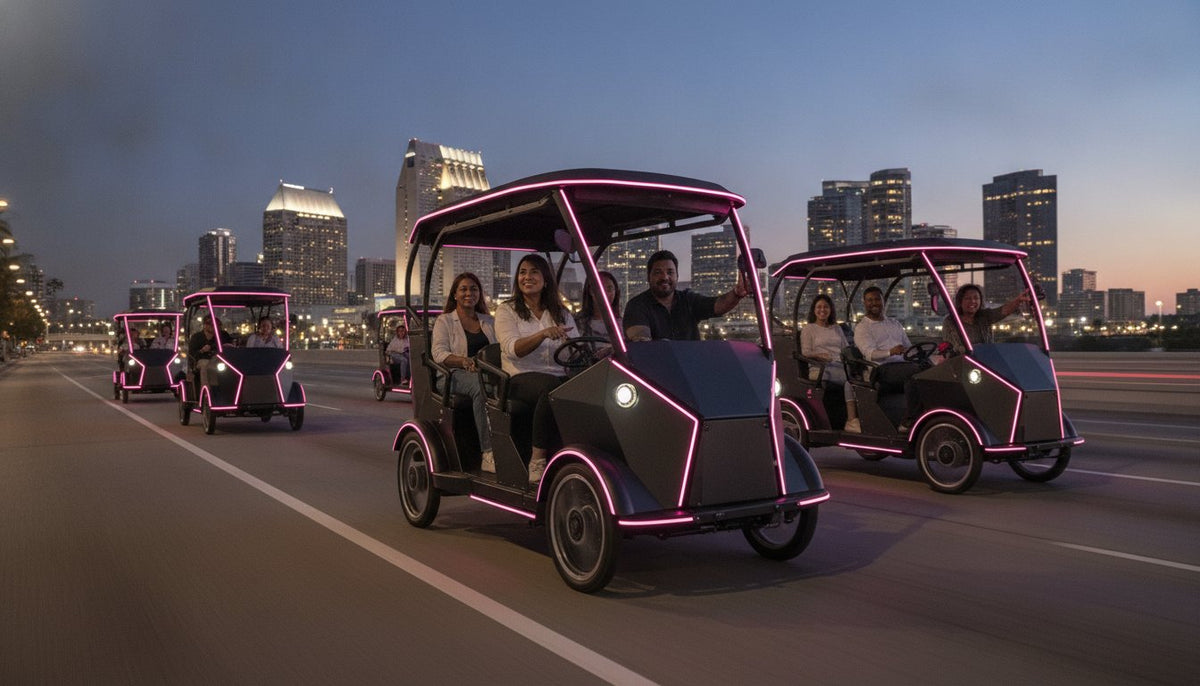
The commercial 3 seater electric pedicab excels where traditional transit fails. It dominates the last-mile gap in entertainment districts, ferrying passengers between transit hubs and stadiums with surgical precision. For resort operators, these vehicles provide silent guest transport that preserves the property’s tranquility without sacrificing industrial power. Event logistics represent your highest revenue peaks. Festivals, conventions, and sports events create massive demand for reliable shuttling. Securing a contract for a single weekend festival can often cover several months of vehicle overhead. You're deploying a tool that solves congestion while generating consistent cash flow.
Navigating Historic Districts
Historic zones often feature narrow, European-style streets that are inaccessible to standard vans or buses. The 3-seater footprint is engineered specifically for these constraints. It offers the agility of a bicycle with the payload of a small utility vehicle. Quiet electric operation is mandatory for compliance with strict urban noise ordinances. These trikes deliver modern performance while maintaining the aesthetic charm tourists expect. You aren't just selling a ride. You're providing an immersive experience that moves through restricted zones without the rattle of a combustion engine. This access is a competitive moat that cars and buses simply cannot cross.
Fleet Management Best Practices
Operational success depends on more than hardware. It requires a disciplined approach to maintenance and driver oversight. High-torque 3-wheel vehicles demand specific driver training to ensure safety during tight cornering and heavy braking. Implementing a rigorous daily inspection protocol is the only way to sustain heavy-duty commercial service. Check tire pressure, brake fluid levels, and battery health before every shift. If you're building an operation from the ground up, follow the 2026 professional blueprint for startup success. This framework ensures your fleet hits the street with a proven operational structure that prioritizes safety and uptime.
The path to profitability is paved with smart deployment. By targeting high-traffic venues and historic corridors, you maximize the utility of every charge. Ready to deploy? You can browse our industrial fleet packages today and start dominating your local market with professional-grade equipment.
The Xion Motors Standard: American-Engineered Commercial Trikes
Xion Motors operates as a master practitioner in the electric vehicle space. We don't just assemble parts; we engineer solutions for the street. Our direct-to-operator model ensures you aren't paying for a distributor's overhead. You get professional-grade equipment at fleet-direct pricing. This approach allows us to maintain a tight feedback loop with our operators, ensuring every commercial 3 seater electric pedicab we ship meets the brutal demands of high-volume transit. We've spent decades refining these tools to ensure your business stays profitable and your vehicles stay on the road.
Precision Manufacturing in the USA
Every frame in the CyberX and VorteX lines is born from American-engineered steel. We've refined our welding and powder-coating processes to withstand coastal salt air and industrial road grime. This domestic focus means we offer customization options that imported brands can't touch. Whether you need specific branding mounts or unique chassis configurations for the VorteX line, our team handles it in-house. We stand behind our work with lifetime support for our frames. If you have a technical question, you speak to the engineers who built your vehicle, not a call center overseas. This level of accountability is the cornerstone of the Xion Motors standard.
Modern fleet management requires more than just rugged steel. It demands data. Our integration with the Chariot app allows you to track revenue and dispatch units with precision. You can monitor vehicle health and trip metrics in real-time, turning a collection of trikes into a synchronized transport network. This digital layer ensures your investment is always optimized for the highest-traffic routes. It takes the guesswork out of fleet management, allowing you to scale based on hard performance data.
Securing Your 2026 Fleet
Scaling a business requires capital flexibility. We offer financing options for operators looking to deploy five or more units, making it easier to dominate a new territory quickly. Our logistics network provides direct shipping to all 50 states, ensuring your fleet arrives ready for immediate deployment. You don't have to worry about customs delays or international freight complications. We handle the heavy lifting so you can focus on the street. Our team is invested in your growth because your success is the ultimate proof of our engineering.
The 2026 season will favor operators who prioritize durability and domestic support. Don't settle for consumer-grade compromises when you can own the industrial standard. It's time to scale your operations with Xion Motors 3-seater pedicabs and secure your position as a market leader.
Dominating the 2026 Transit Market
Transitioning from a single unit to a high-performance fleet requires more than ambition. It demands hardware that can withstand 1,500 lb loads and grueling 12-hour operational cycles. You've seen why the 750W high-torque transaxle is the legal and mechanical sweet spot for urban navigation. Investing in a commercial 3 seater electric pedicab isn't just about moving people; it's about securing a reliable revenue stream that outlasts cheap, imported alternatives. Every component must be built to perform under pressure, from the hydraulic disc brakes to the reinforced steel chassis.
American-engineered durability is the foundation of every successful operator we support. By choosing precision-built frames and direct-drive systems, you're eliminating the mechanical bottlenecks that stall growth. The market for micro-mobility is expanding rapidly, and the tools you choose today will define your dominance in the years to come. You have the blueprint for ROI and the technical specifications for success. It's time to stop managing maintenance and start managing your expansion. Scale your revenue with Xion Motors industrial-grade 3-seaters. Build your legacy on a platform designed for results.
Frequently Asked Questions
Is a 3-seater electric pedicab street legal in all 50 states?
Federal law defines a low-speed electric bicycle as a vehicle with a motor under 750W and a 20 mph speed cap. Most states follow this Class 2 standard, making these trikes street legal without specialized registration. However, some jurisdictions are tightening rules. For instance, certain areas now require registration for all e-bikes, and others have reclassified high-output cycles. Always check applicable local regulations to ensure compliance before deploying your fleet.
How much weight can a commercial 3-seater electric trike actually carry?
A commercial 3 seater electric pedicab from Xion Motors is engineered for a 1,500 lb payload capacity. This industrial rating accounts for three adult passengers, the rider, and any onboard advertising hardware. Consumer trikes often fail at 400 lbs because they use light-duty aluminum frames that can't handle lateral stress. We use American-engineered steel to ensure the chassis remains rigid under maximum load, preventing the frame fatigue that causes catastrophic failure.
What is the average range of a 3-passenger pedicab on a single charge?
You can expect up to 40 miles of range on a single charge under typical commercial conditions. This performance is powered by our 72V 58Ah lithium-ion battery system. Real-world range depends on passenger weight and terrain, but our high-voltage architecture maintains efficiency better than standard 48V systems. For high-volume operations, fast-charging protocols allow for quick turnarounds between tours. This ensures your vehicles stay on the street during peak revenue hours.
Do I need a special license to operate a commercial electric pedicab?
Most states don't require a driver's license for Class 2 e-bikes because they are legally classified as bicycles. However, the regulatory landscape is shifting. Some jurisdictions now require riders to have a license and the vehicle to be registered. Other areas have also expanded their oversight for vehicles with high power outputs. We recommend verifying specific local requirements, though our 750W limit is designed to fit within the most common legal definitions.
How does a 750W transaxle differ from a standard e-bike hub motor?
A 750W direct-drive transaxle provides significantly more torque than a standard hub motor. Hub motors are designed for light commuting and often overheat when pushing 1,500 lb loads up an incline. Our transaxle system is built into the rear differential, providing mechanical advantage and superior heat dissipation. It's an industrial-grade component that replaces fragile chains and spokes with a robust gear-driven assembly. This engineering choice is what separates professional transit from hobbyist equipment.
What is the typical ROI timeframe for a 3-seater commercial electric bike?
Many operators see a full return on investment within their first operational season. With a proven annual revenue potential of $30,000 to $35,000 per vehicle, the math is straightforward. A commercial 3 seater electric pedicab generates income through both passenger fares and high-visibility advertising wraps. Because maintenance costs are low on American-engineered frames, more of that revenue stays in your pocket. It's an aggressive ROI path that beats traditional gas-powered shuttles.
Can the Xion 3-seater handle steep inclines with 3 adult passengers?
Yes, our vehicles are specifically engineered to conquer inclines with a full 3-passenger load. The combination of a 72V power system and a 750W high-torque transaxle provides the necessary climbing power without stalling. We've tested these configurations in demanding urban environments to ensure they don't lose momentum when the grade increases. This capability is essential for tourism fleets operating in hilly historic districts where passenger comfort and vehicle reliability are non-negotiable.
Are replacement parts readily available for Xion Motors vehicles?
We maintain a full inventory of replacement components in the USA for immediate shipping. Because we are the manufacturer, you have direct access to the engineers who designed your CyberX or VorteX trike. You don't have to wait for international freight or deal with middlemen who don't understand the machinery. We provide everything from brake pads to replacement transaxles to ensure your fleet downtime is measured in hours, not weeks. Our support is built for professionals.