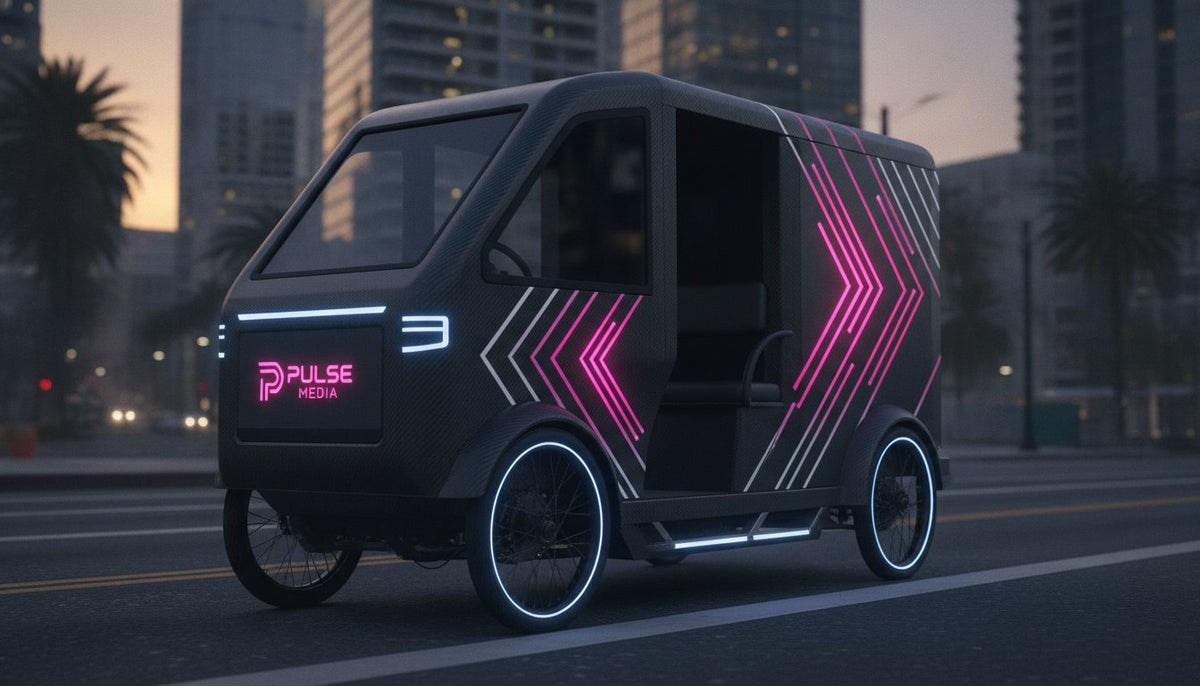
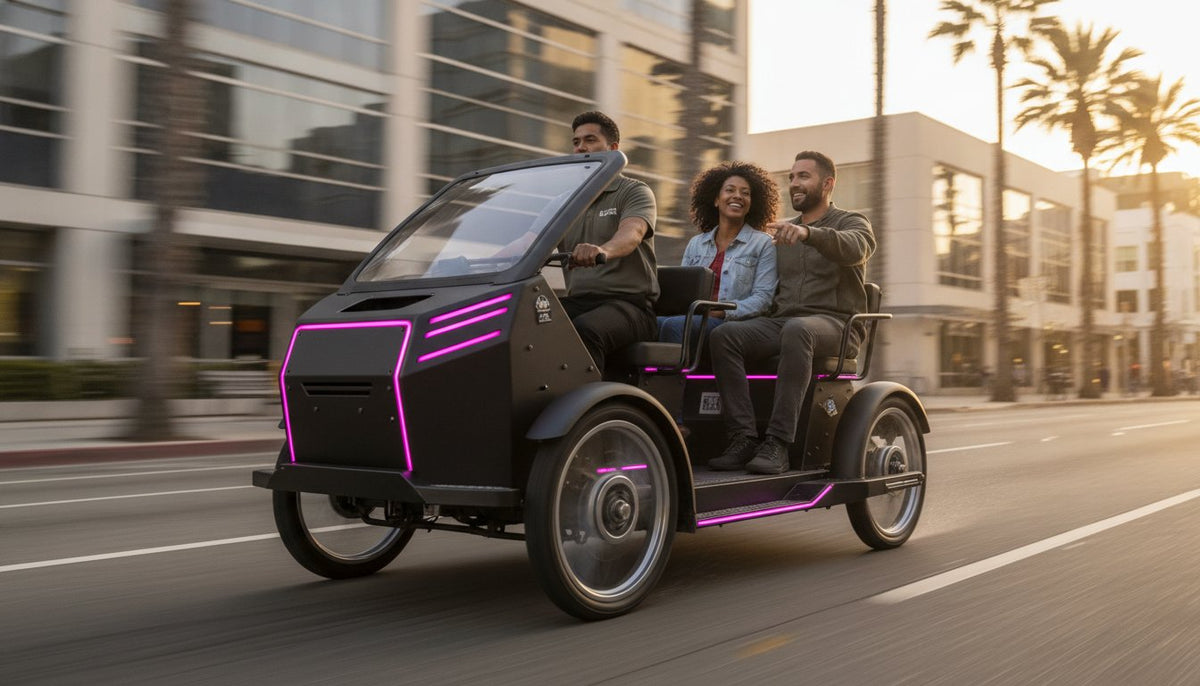
Your current shuttle van is a depreciating liability that your guests actively dislike. It's a stuffy, generic box that drains your margins through rising fuel prices and constant maintenance. For luxury resorts and urban boutiques, the search for a viable hotel shuttle alternative has shifted from larger engines to smarter engineering. In 2026, the transition to industrial-grade electric pedicabs isn't just about sustainability; it's about reclaiming the guest experience while slashing operational expenditure. We've spent two decades in the trenches of fleet operations, and we've seen that the most successful properties are those that treat transit as a brand touchpoint rather than a chore.
You know that first impressions are everything, yet the transit from the lobby to the local district is often the weakest link in the guest journey. We'll show you exactly how industrial-grade electric pedicabs outperform traditional vans in guest satisfaction, cost-per-mile, and brand visibility. This guide breaks down the engineering behind models like the CyberX and VorteX, examines the profitability of dual revenue streams, and provides the blueprint for integrating a high-performance electric fleet into your property's workflow. Discover why moving away from the "shuttle bus" mentality is the most profitable decision you'll make this year.
Key Takeaways
- Replace high-overhead transit vans with industrial-grade electric pedicabs to slash fuel and maintenance costs while improving bottom-line profitability.
- Discover why the CyberX and VorteX models represent the 2026 engineering standard for demanding, high-traffic commercial environments.
- Transform guest transit into a powerful marketing engine by utilizing a hotel shuttle alternative that provides open-air immersion and doubles as a mobile billboard.
- Navigate modern logistics and safety requirements with a hybrid fleet strategy that ensures ADA compliance and passenger security in congested districts.
- Learn how to scale your operations effectively using specialized 3-seat and 6-seat fleet packages backed by two decades of industry expertise.
The Limitations of Traditional Hotel Shuttle Systems
Maintaining a fleet of internal combustion engine (ICE) vans is a legacy strategy that no longer aligns with the economic realities of 2026. These vehicles represent a massive overhead trap for resort owners. You're paying for insurance premiums that continue to climb, fuel prices that fluctuate wildly, and specialized drivers who are increasingly difficult to recruit. When you require a Commercial Driver’s License (CDL) for operation, you're competing for a shrinking labor pool that demands premium wages. It's a high-cost solution for a low-complexity problem. For properties seeking a more agile hotel shuttle alternative, the standard van is a financial anchor.
The Rising Cost of Conventional Transit
The math for traditional vans doesn't add up. Commercial vehicle insurance for shuttle vans has reached levels that often outpace the revenue the transit service is meant to support. Maintenance fatigue is another silent killer. ICE vehicles require frequent oil changes, brake pads, and transmission work that keeps them in the shop rather than on the street. High-uptime resorts can't afford to have 20% of their fleet grounded for repairs. Then there's the "empty seat" problem. Running a 15-passenger van to transport a single couple is an operational failure. You're burning fuel and labor hours for capacity you rarely utilize.
Guest Sentiment and the 'Generic' Experience
Guests want immersion, not isolation. An enclosed van creates a physical barrier between the traveler and the destination. It feels like a generic bus ride, not a luxury amenity. This disconnect is why wait times for traditional shuttles are frequently the primary source of negative guest reviews. While the Cycle rickshaw has served as a foundational transit method for centuries, modern hospitality demands a professional-grade evolution. Guests today expect transit that doubles as a private tour experience, providing them with a clear view of the local atmosphere rather than the back of a driver's headrest.
Large shuttles also fail in the "last mile" of dense urban or historic districts. They're too bulky for narrow streets and too slow in heavy congestion. They get stuck in the same traffic as the guests who decided to walk, rendering the service useless. By sticking to these outdated systems, you aren't just losing money; you're losing the opportunity to provide a superior hotel shuttle alternative that actually enhances the guest's perception of your brand. Industrial-grade solutions are now available that navigate these bottlenecks with precision while providing the open-air luxury that modern travelers demand.
Why Electric Pedicabs are the Ultimate Hotel Shuttle Alternative
Industrial-grade electric pedicabs aren't just bicycles with motors; they're high-torque micro-mobility platforms engineered for the rigors of commercial hospitality. While a traditional van is a box that isolates guests, the pedicab is a bridge to the destination. It's the definitive hotel shuttle alternative for short-range transit, offering agility that a two-ton vehicle simply cannot match. These machines navigate pedestrian-only zones, scenic boardwalks, and narrow historic alleys where vans are legally or physically barred. You're giving your guests front-row seats to the local environment rather than a view through tinted glass. It's a precision tool designed for the "last mile" of the guest journey.
Experiential Guest Transportation
In 2026, the guest experience is the only differentiator that matters. A ride in an open-air electric trike is inherently "Insta-worthy," turning a routine trip to a local restaurant into a highlight of the stay. This focus on premium presentation is vital for any modern fleet; much like how discerning owners of Chinese automobile brands turn to TheChiDrive for high-end accessories, your transit vehicles must project a sense of luxury and attention to detail. Your drivers become a "concierge on wheels," engaging with guests in a way that’s impossible from the front seat of a 15-passenger bus. This direct interaction builds rapport and improves guest satisfaction scores. Because these vehicles are nimble, you can dispatch them on-demand, virtually eliminating the friction of fixed shuttle schedules and long wait times in the lobby.
Environmental and Social Governance (ESG) Impact
Adopting zero-emission transit is no longer a suggestion; it's a requirement for modern brand positioning. By switching to electric fleets, resorts benefit from lower operating costs while meeting stringent 2026 urban green-zone mandates. These industrial-grade vehicles eliminate noise pollution, preserving the tranquility of your resort grounds and quiet residential districts. This alignment with municipal sustainability goals often opens doors to exclusive access permits in congested tourist hubs. It's a strategic move that satisfies both the balance sheet and the local planning board.
Every trip is a marketing opportunity. A custom-branded fleet of electric pedicabs serves as a rolling billboard, keeping your hotel’s logo front and center in the most high-traffic areas of your city. Unlike a generic white van that blends into traffic, a sleek, well-designed trike commands attention. It projects an image of innovation and premium service. If you're ready to upgrade your guest experience, exploring a professional pedicab fleet is the next logical step for your property's growth. You aren't just moving people; you're moving your brand forward.
Comparing Operational Costs: Pedicabs vs. Transit Vans
The financial argument for a hotel shuttle alternative is rooted in hard numbers. A standard transit van requires an upfront capital expenditure often exceeding $50,000; by contrast, a 3-seat industrial-grade electric pedicab starts at $13,500, while a high-capacity 6-seat model is priced at $17,500. This initial delta allows properties to deploy a full fleet for the price of a single traditional vehicle. Beyond the purchase price, the operational expenditure (OPEX) gap is staggering. You're replacing high-octane fuel and complex internal combustion engines with high-efficiency lithium batteries and direct-drive motors. Charging a battery costs pennies compared to the daily expense of filling a gas tank.
Labor dynamics further tip the scales in favor of micro-mobility. Traditional shuttles often trigger CDL requirements or specialized licensing that narrows your hiring pool and inflates wages. Industrial-grade electric trikes operate under regulations that allow for a broader, more flexible workforce. You aren't just saving on fuel; you're optimizing your entire human resources strategy. This pragmatic approach to transit ensures your fleet stays on the road without the administrative burden of heavy-vehicle compliance.
The ROI of Micro-Transit
Annual savings on insurance premiums provide an immediate boost to your bottom line. Low-speed electric vehicles carry significantly lower risk profiles than two-ton vans navigating city traffic, leading to reduced commercial coverage costs. Additionally, these vehicles transform a cost center into a profit center. Hotels can monetize rides as premium "private tours" or local excursions; for example, a hotel near the harbor might use its fleet to help guests discover Success Sport Fishing for a private sportfishing excursion, generating direct revenue that a generic shuttle bus never could. Based on current operational data, a Xion Motors vehicle typically reaches full payback within the first year of service through a combination of OPEX reduction and ancillary revenue.
Engineering matters in a commercial environment. Recreational e-bikes fail under the stress of 24/7 resort operations, but industrial-grade trikes are built for high-uptime environments. Our electric pedicab maintenance guides are significantly simpler than automotive schedules, focusing on mechanical precision rather than complex transmission repairs. The chassis is reinforced for heavy payloads, ensuring the vehicle survives the rigors of constant guest transit. When wear and tear does occur, sourcing commercial trike replacement parts is a streamlined process that minimizes downtime. This focus on durability ensures your investment remains a high-performance asset for years, not just seasons.
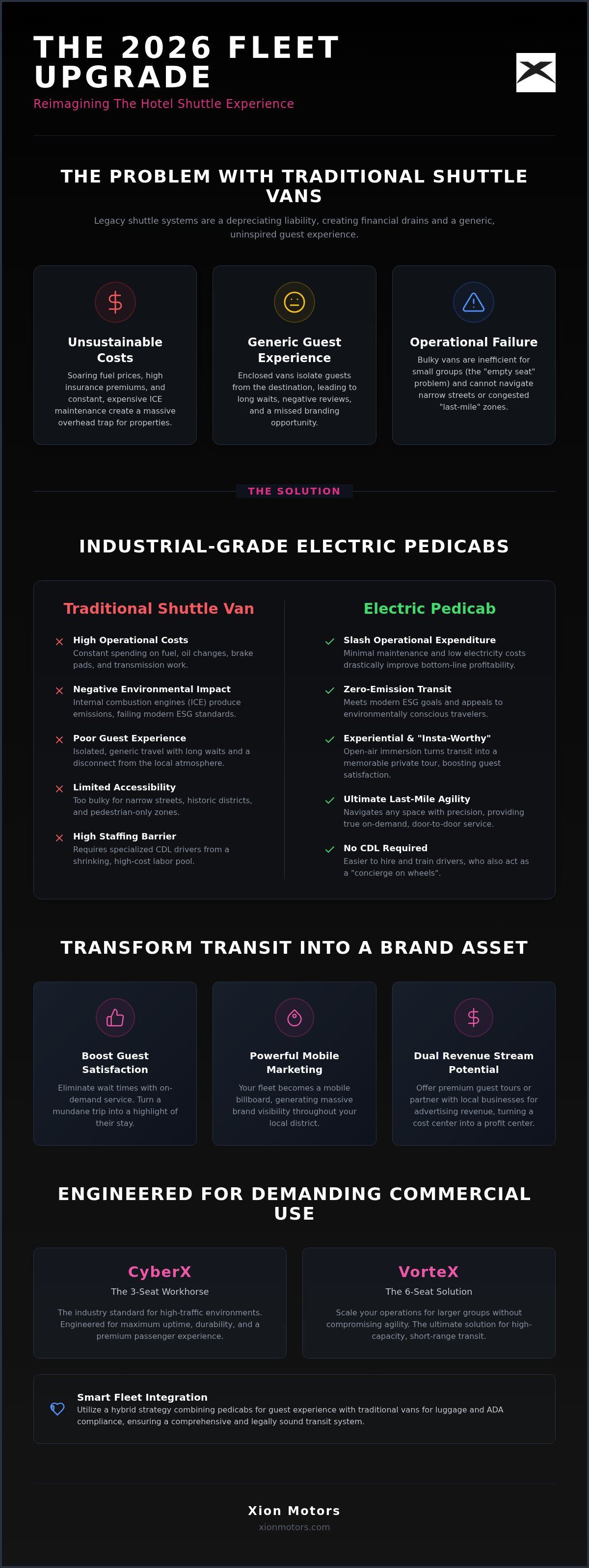
Navigating Logistics, ADA Compliance, and Safety
Adopting a new hotel shuttle alternative requires more than just buying vehicles; it demands a clear understanding of the regulatory and safety landscape. You don't have to sacrifice compliance for innovation. In 2026, the legal framework for micro-mobility has matured, with many municipalities providing clear classifications for industrial-grade electric trikes. These vehicles are designed for year-round utility. We've engineered integrated canopy systems and optional heated seating to ensure your fleet remains operational regardless of the season. Weather is a variable you can control through professional-grade hardware. Precision engineering ensures that your guest transit remains consistent from the peak of summer to the depths of winter.
The ADA Hybrid Strategy
Many operators hesitate because of the Americans with Disabilities Act (ADA) requirements. Compliance is a logistics puzzle, not a barrier to entry. You can maintain "equivalent service" by utilizing a hybrid fleet approach. Use electric pedicabs to handle 90% of your guest volume while maintaining a contract with a dedicated ADA transport service for specific needs. This strategy ensures that wait times and availability are consistent for all guests. Setting clear expectations through your concierge or mobile app is vital. When guests see that you've prioritized both high-performance transit and inclusive access, your brand authority increases. You're providing a solution that is both smart and compliant.
Industrial Safety Standards
Safety is a non-negotiable liability requirement. We don't use recreational components because they fail under commercial pressure. Our vehicles feature high-torque hydraulic braking systems and high-visibility LED lighting because we've spent two decades refining these standards in high-traffic tourism districts. Stability is built into the chassis through a low-center-of-gravity 3-wheel platform. This engineering prevents the tipping issues associated with lesser builds. Beyond the hardware, your driver training protocols should focus on navigating high-pedestrian zones with precision. A well-trained operator on an industrial-grade machine is the safest transit asset on the road. It's about reliability by design.
Navigating the patchwork of local ordinances and federal classifications can be complex. You need a partner who understands the "Master Practitioner" level of fleet logistics. We help you identify the specific permits required for your district and ensure your vehicles meet every safety benchmark. If you are ready to modernize your property's transit while maintaining the highest safety standards, contact Xion Motors to discuss a tailored fleet solution. We provide the tools; you provide the destination. Don't let outdated logistics hold back your guest experience.
Scaling Your Resort Transit with Xion Motors Fleet Solutions
Transitioning from a legacy van-based model to a modern, pedicab-first fleet requires a partner who understands high-uptime operations. You aren't just buying vehicles; you're architecting a new hotel shuttle alternative that scales with your guest volume. Selecting the right hardware is the first step in this evolution. For nimble, on-demand concierge trips, our 3-seat models provide the perfect balance of agility and performance. When you need to move families or larger groups to local attractions, deploying industrial-grade electric pedicabs with 6-seat capacity ensures you maximize throughput without the bloat of a full-sized bus.
Fleet Configuration and Pricing
Efficiency is a function of capacity and cost. The 6-seat VorteX is engineered for high-volume group transfers, ensuring that your property can handle peak check-out times with ease. We offer direct-to-operator fleet pricing for orders of 5 units or more, allowing you to build a comprehensive transit network while maintaining strict control over your capital budget. Because we are a US-based manufacturer, the logistics of shipping and assembling your national fleet are streamlined. You won't face the long lead times or customs hurdles associated with overseas recreational imports. Every vehicle arrives ready for professional deployment.
The Xion Motors Partnership
We've spent over 20 years in the trenches of fleet management, and we bring that "Master Practitioner" authority to every partnership. We've developed the definitive 2026 professional blueprint for starting a pedicab company or transit division within your resort. This isn't a hands-off sale. We provide the technical support and parts availability necessary for long-term sustainability. Whether you are tailoring the VorteX Trike for specific resort aesthetics or utilizing the CyberX for the most demanding urban environments, we ensure your fleet remains a high-performance asset.
Stop treating guest transit as a static overhead expense. It's time to transform your property's mobility into a profit-generating, brand-building engine. Our 3-seat models start at $13,500 and our 6-seat high-capacity trikes are priced at $17,500. These are industrial-grade tools designed for the business owner who demands the best in the market. Contact Xion Motors today to architect your 2026 fleet and discover the definitive hotel shuttle alternative. We don't just sell vehicles; we provide the engineering that drives your success.
The Future of High-Performance Resort Mobility
The era of the boxy, expensive shuttle van is ending. You've seen the data: traditional transit is a drain on your margins and a barrier to guest satisfaction. By adopting an industrial-grade hotel shuttle alternative, you reclaim your operational budget and turn every trip into a premium brand experience. Our CyberX engineering ensures that your fleet withstands the most demanding commercial environments while providing the open-air luxury guests now demand. It's a strategic shift from managing a depreciating liability to deploying a high-performance marketing asset.
We bring over 20 years of fleet operational experience to your property, offering the technical depth and reliability of a master practitioner. We offer national shipping to all 50 states, ensuring your transition to micro-mobility is seamless and efficient. It's time to stop managing overhead and start managing an asset that grows your bottom line. Build Your Custom Hotel Fleet with Xion Motors and lead the market in 2026. Your guests are ready for a better way to move, and your property is ready for the increased profitability that follows.
Frequently Asked Questions
Is an electric pedicab a legal hotel shuttle alternative on public roads?
Electric pedicabs are legal on most public roads, but regulations are a patchwork of state and local laws. For example, California mandates UL 2849 battery certification as of 2026, while New York City recently proposed mandatory safety training for drivers. We've spent two decades navigating these requirements. We recommend consulting with your local planning department to confirm specific zoning or permit needs for your district before launching your hotel shuttle alternative.
How do electric pedicabs handle steep hills or heavy passenger loads?
Our industrial-grade vehicles are engineered with high-torque motor systems specifically for heavy-duty commercial use. The 6-seat model supports a minimum payload capacity of 1,000 lbs, allowing it to handle full passenger loads on steep inclines without overheating. We don't use recreational components because they can't survive the stress of constant hill climbing. This rugged engineering ensures your guest transit remains reliable even in challenging geographical environments.
What is the typical battery range for a commercial electric pedicab in a hotel setting?
A standard commercial unit delivers a range of 40 to 60 miles on a single charge. This is more than enough for a typical eight-hour shift of short-range hotel transfers. For properties requiring 24/7 service, we offer swappable battery systems that keep your hotel shuttle alternative moving without long charging breaks. Using high-efficiency lithium technology ensures that your energy costs remain a fraction of what you'd pay for gasoline.
Do I need a special license to operate a 6-seat electric pedicab fleet?
Licensing is determined at the state and local level. In 2026, New Jersey reclassified these vehicles as motorized bicycles, requiring operators to have a license and registration. However, most states don't require a Commercial Driver's License (CDL) for pedicab operation. This lower barrier to entry makes it significantly easier to recruit and train staff compared to traditional shuttle bus drivers. Always check your local 2026 ordinances for specific driver requirements.
How does the cost of a Xion Motors pedicab compare to a traditional shuttle van?
The upfront cost is significantly lower than traditional options. Our 3-seat model starts at $13,500 and the 6-seat model at $17,500, while a new shuttle van can easily cost $50,000 or more. Beyond the purchase price, you'll see a massive delta in operating costs. When you factor in reduced insurance premiums and minimal energy expenses, an industrial-grade electric fleet provides a much faster return on investment than any internal combustion vehicle.
Can electric pedicabs be made wheelchair accessible?
We recommend a hybrid fleet approach to meet accessibility needs. While pedicabs are often classified as Other Power-Driven Mobility Devices (OPDMDs) under the ADA, they don't typically include wheelchair ramps. By using a professional transit solution for the majority of guests and contracting a specialized accessible van for others, you maintain equivalent service. This strategy allows you to optimize your main transit volume while ensuring every guest receives the accommodations they require.
What kind of maintenance is required for an industrial-grade electric trike?
Maintenance is focused on mechanical durability rather than complex engine diagnostics. You'll manage basic tasks like brake pad replacement, chain lubrication, and tire rotations. Because these are industrial-grade machines, they're built to withstand the rigors of daily commercial use. Annual maintenance costs typically stay between $100 and $300. This is a massive reduction from the $800 to $1,500 you would spend on the upkeep of a traditional transit van.
How do I handle guest luggage when using a pedicab as a shuttle alternative?
Logistics for luggage are handled through integrated storage solutions or a two-vehicle strategy. Our trikes include under-seat space for small bags and carry-ons. For guests with larger suitcases, many resorts use the pedicab for the passenger experience while a separate utility cart follows with the luggage. This keeps the guest ride comfortable and highlights the unique, open-air nature of the transit. It's a professional solution for the modern traveler's needs.