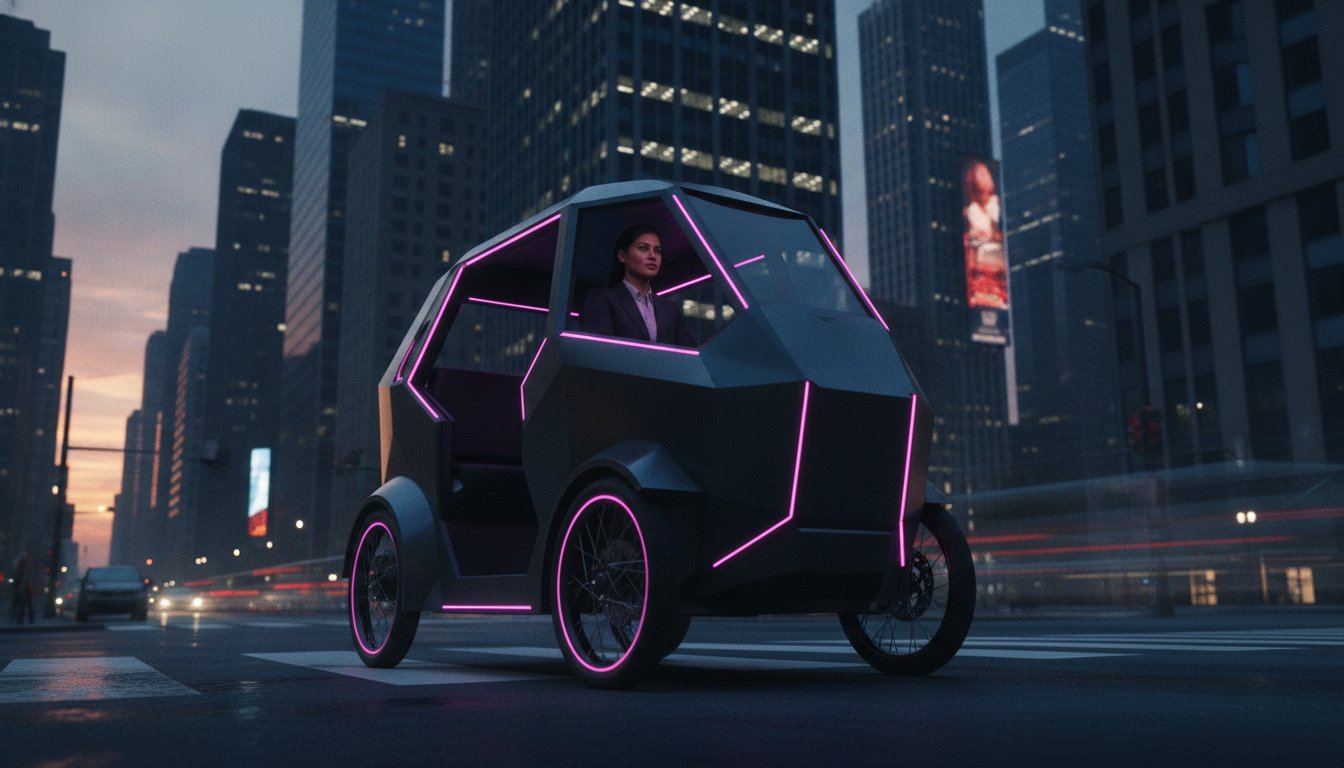
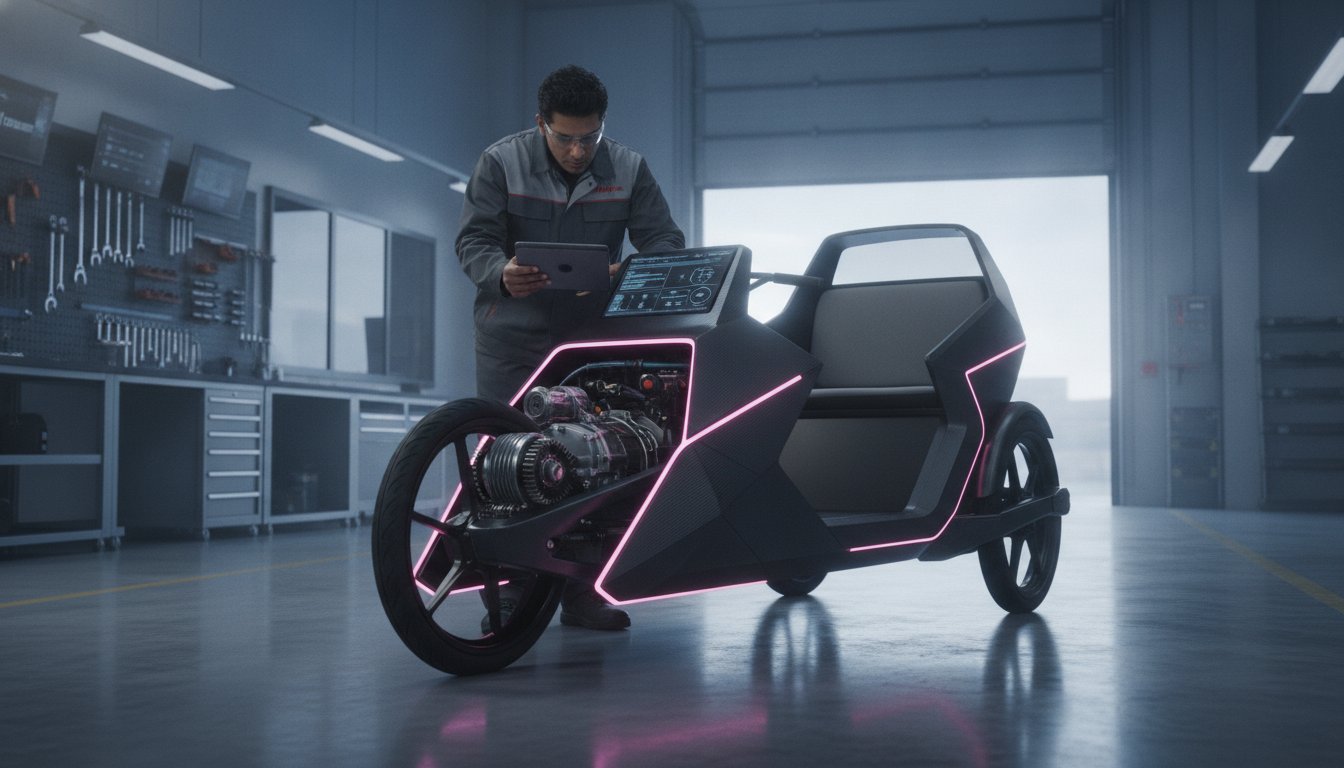
In the commercial pedicab industry, horsepower is a vanity metric; torque is the only currency that actually pays the bills. You've likely felt the frustration of a motor stalling at a busy intersection with a full load of passengers or seen your profit margins evaporate due to frequent drivetrain failures on low-quality kits. These aren't just minor inconveniences. They're the symptoms of a fleet that lacks the mechanical leverage necessary for professional-grade operations. Choosing a high torque electric pedicab is the difference between a vehicle that survives the summer heat and one that dominates the market.
We understand that your business relies on uptime and performance under pressure. This guide will show you why high-torque drive systems are the non-negotiable foundation of a profitable, reliable, and high-capacity electric pedicab fleet. We'll examine the engineering behind 3,000W peak motors and 1,500 pound payload capacities to prove how purpose-built vehicles transform street-level operations into high-yield assets. By the end, you'll see how the right engineering choices lead to the $35,000 annual earnings that top-tier operators now achieve.
Key Takeaways
- Identify the critical distinction between horsepower and torque to ensure your fleet can handle the physical demands of high-capacity commercial transit.
- Evaluate motor topologies and transaxle drive systems to maximize mechanical advantage when moving professional-grade payloads.
- Discover why a factory-integrated high torque electric pedicab is essential to prevent the frame stress and drivetrain failures associated with bolt-on conversion kits.
- Learn how high-torque engineering directly impacts your bottom line by eliminating motor overheating and reducing maintenance downtime during peak hours.
- Master the synergy between torque-heavy drive systems and regenerative braking to maintain control and operational efficiency on steep urban routes.
What is High Torque in Electric Pedicabs and Why Does It Matter?
Torque isn't a luxury; it's the mechanical backbone of your revenue. While casual riders often obsess over top speed, professional operators must focus on Newton-meters. Torque is the rotational force required to move heavy loads from a dead stop. In the context of a commercial Electric rickshaw or pedicab, this force determines whether you complete the tour or stall in the middle of a busy intersection. It is the muscle behind the machine.
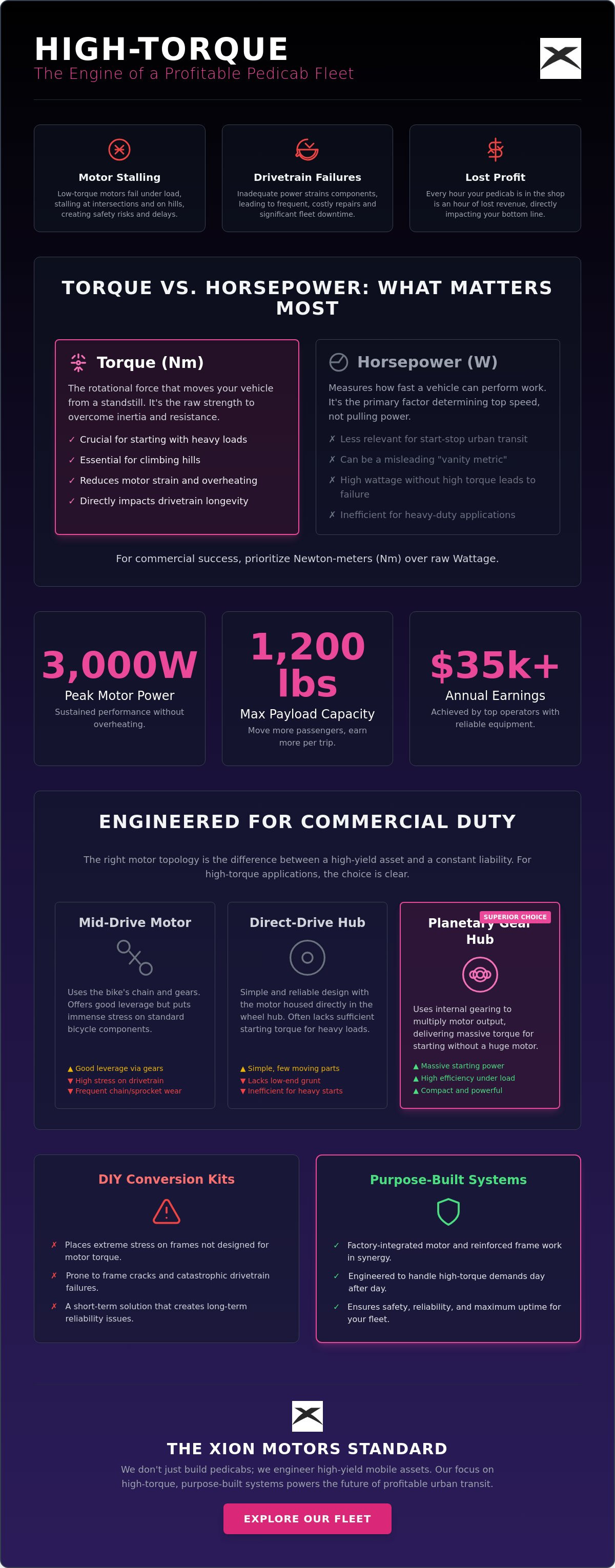
Understanding the difference between horsepower and torque is vital for fleet management. Horsepower represents how fast you can do work, but torque represents the work itself. In a commercial transit environment, you aren't racing for lap times. You're moving weight. A vehicle might have a high wattage rating and a high top speed, but if it lacks the low-end grunt to turn the wheels under a 1,500 lb payload, it's a liability. Torque is the primary factor in reducing motor strain and increasing drivetrain longevity.
Every vehicle has a "Critical Torque Threshold" where the motor either performs or begins to fail. For a standard three-seater, the requirements are significant. For a six-seater commercial unit, they're extreme. Operating a high torque electric pedicab ensures that the motor stays within its optimal efficiency range even when the cabin is at maximum capacity. This prevents the internal components from grinding themselves into obsolescence during the first season of use.
The Physics of the 'Start-Stop' Urban Environment
Stoplights and intersections are the primary killers of low-torque motors. Every time a driver stops, the motor must overcome the massive inertia of the vehicle and its passengers to get moving again. This requires a surge of rotational force. If the motor lacks sufficient torque, it draws excessive current, generates heat, and eventually melts its windings. This is why high torque is essential for passenger safety during uphill climbs. You cannot afford a stall when you're halfway up a 10% grade with 800 lbs of passengers behind you. Professional engineering accounts for these "worst-case" scenarios by prioritizing raw pulling power over decorative speed metrics.
Torque vs. Wattage: The 2026 Industry Standard
Don't get blinded by wattage alone. A 750W direct-drive motor with a high-torque configuration can frequently outperform a 1500W speed-focused motor in a heavy-duty application. When you're reviewing spec sheets, look for Newton-meters (Nm) instead of just Volts or Watts. A higher Nm rating indicates a motor's ability to handle the physical resistance of a fully loaded trike. This focus on torque also improves battery discharge rates. When a motor doesn't have to "fight" to move the load, it operates with higher thermal efficiency, which preserves your battery life and extends your daily range. It's a matter of working smarter, not just harder.
Engineering the Drive: Motor Topologies for Heavy-Duty Trikes
The motor is the heartbeat of your operation. Choosing the wrong topology means constant downtime and expensive repairs. By 2026, the industry has shifted decisively toward high-efficiency brushless DC (BLDC) motors for commercial fleets. These motors eliminate the friction and wear associated with traditional brushed systems, offering a longer operational lifespan and superior reliability. When you're managing a professional fleet, you need a drive system that can handle the relentless duty cycle of urban tourism without flinching.
Most operators weigh several configurations: mid-drive systems, single-wheel hub motors, and axle-mounted transaxle drives. Mid-drive motors utilize the bike's existing chain and gears, which provides leverage but places immense stress on the drivetrain. Hub motors are simple but often lack the low-end grunt needed for heavy loads and concentrate all their force on a single wheel. For a high torque electric pedicab, the 750W direct-drive transaxle has emerged as the superior choice. Adjustable up to 3,000W of peak output, this design drives the rear axle through a differential, providing massive starting power and distributing traction evenly across both rear wheels. Investing in this level of engineering often qualifies your fleet for the Commercial Clean Vehicle Credit, which helps offset the initial cost of upgrading to professional-grade equipment.
Heat is the enemy of performance. High-duty cycle operations generate significant thermal energy, especially when climbing grades or navigating stop-and-go traffic. Modern industrial motors now employ advanced heat dissipation techniques, such as ferrofluid cooling or aluminum heat-sink fins integrated into the motor casing. These features ensure that your drivers can operate at peak capacity during the hottest summer months without triggering thermal shutdown. If you want to see how this engineering translates to the street, explore the technical specifications of our electric pedicabs to see these systems in action.
Direct-Drive Transaxle Systems: The Industrial Gold Standard
Routing power through a differential to both rear wheels lets the transaxle deliver higher usable output force without concentrating load on a single hub. This mechanical advantage is critical when moving 1,500 lb payloads. However, the material of the internal components matters immensely. While consumer-grade kits use nylon gears to save money, commercial environments demand hardened steel in the differential and axle assembly. Steel components provide the durability required for thousands of miles of heavy-duty use. While a transaxle requires slightly more periodic lubrication than a bare hub motor, the trade-off in pulling power and balanced traction is non-negotiable for a profitable fleet.
Controller Intelligence and Phase Current
The motor is only as capable as the controller that manages it. A "Smart Controller" acts as the brain of your high torque electric pedicab, managing peak torque to prevent blown fuses or battery damage. The secret sauce to rapid acceleration under load is phase current. By precisely controlling the timing and volume of electricity sent to the motor, these controllers create smooth, powerful torque curves. You can even program these curves to match your specific urban terrain, ensuring your drivers have the power they need exactly when they need it.
Real-World Performance: Overcoming the Hill and Load Objection
The most common anxiety for fleet operators is the "burnout" factor. Will a motor survive a 10% grade hill when the cabin is packed with three adult passengers? In a professional environment, you aren't just moving a bike; you're managing a half-ton of rolling mass. Some manufacturers suggest saving weight by using smaller, single-wheel hub motors, but this is a fundamental misunderstanding of commercial physics. A five-pound motor weight difference is statistically irrelevant when your total vehicle weight exceeds 1,000 lbs. You don't need a lighter motor; you need a high torque electric pedicab that treats steep inclines as a routine operational task rather than a mechanical crisis.
High-torque systems provide a critical safety advantage through their synergy with regenerative braking. When navigating hilly urban routes, the same motor that provides the "grunt" to climb can be used to recapture energy and provide controlled descent. This reduces the heat load on your mechanical disc brakes, preventing brake fade during long shifts. Additionally, the presence of "Launch Control" in professional-grade controllers ensures that the initial surge of power is managed smoothly. This prevents the jerky acceleration that can unsettle passengers while providing enough force to clear intersections quickly in heavy traffic.
The human element is the most expensive part of your operation. High-torque engineering drastically reduces the physical toll on your drivers. By allowing the motor to handle the majority of the "work" during the start-stop cadence of city tours, you preserve your operators' energy. This leads to longer shifts, better passenger interaction, and higher overall revenue per vehicle. It's a pragmatic approach to fleet management: let the machine handle the physics so the human can handle the business.
Thermal Management Under Sustained Load
Heat is the primary cause of torque loss. As a motor's internal temperature rises, the resistance in the copper windings increases, which causes the torque curve to drop. Professional-grade motors utilize passive cooling fins or advanced internal thermal management to keep temperatures stable. If the system reaches a critical threshold, a smart controller will initiate "thermal throttling" rather than a hard shut-off. This allows the driver to continue at a reduced power level until the system cools, preventing the vehicle from becoming a dead-weight obstacle in the middle of a route.
The Impact of Wheel Diameter on Effective Torque
Mechanical advantage is often a game of inches. Smaller wheels, such as 20-inch rear wheels, provide a shorter lever arm for the motor to overcome, which effectively increases the torque applied to the pavement. While 26-inch wheels offer a smoother ride over some obstacles, they require much higher gear ratios to achieve the same climbing power. Gear ratios must be precisely tuned to specific wheel sizes to ensure the motor operates in its most efficient RPM range during a pull. Balancing tire durability with this torque output is a hallmark of a purpose-built commercial trike.
Evaluation Framework: Purpose-Built vs. DIY Conversion Kits
Amateur operators often fall into the trap of purchasing cheap conversion kits. They assume a motor is simply a motor. It's a mistake that costs thousands in the long run. A high torque electric pedicab is a cohesive system where the frame is engineered to withstand the twisting forces of the drive unit. When you bolt a powerful motor onto a frame designed for human legs, you're asking for structural failure. Standard bicycle dropouts aren't prepared for the shear stress of industrial-grade torque. They will eventually widen, crack, or snap, leading to a catastrophic motor spin-out that puts your driver and passengers at risk.
Integration is the second pillar of commercial performance. A factory-installed drivetrain ensures perfect chain alignment and optimal power transfer. Bolt-on kits frequently suffer from misalignment, leading to accelerated wear on chains and sprockets. You'll spend more on replacement parts in six months than you saved on the initial purchase. Beyond the mechanics, purpose-built vehicles like the CyberX are designed with the evolving regulatory landscape in mind. With new unibody requirements taking effect in cities like Chicago by April 2026, a DIY conversion simply won't meet the legal standard for a commercial license. Purpose-built engineering is the only way to ensure your fleet remains street-legal and operational.
Warranty and support represent the hidden costs of DIY downtime. When a conversion kit fails, you're often left dealing with overseas manufacturers and weeks of waiting for parts. In a professional fleet, every day a vehicle sits in the shop is a day of lost revenue. Choosing a manufacturer that provides integrated support and a commercial warranty protects your investment. It's the difference between a hobbyist project and a scalable business asset.
Structural Integrity and Torque Arms
High-torque motors require thick, reinforced dropouts and integrated torque arms to stay seated. In a converted aluminum frame, the soft metal can't resist the rotational force of the axle. We engineer the chassis of the VorteX and CyberX models specifically to handle these loads. This isn't about over-engineering; it's about operational safety. When you're carrying 1,500 lbs, "good enough" is a liability. Our frames are built to handle the 3,000W peak output that commercial routes demand without flexing or fatigue.
The ROI of Industrial Reliability
Calculate the cost of a down vehicle. If you lose a trike during the peak of summer, you aren't just losing a few rides; you're losing the $35,000 annual revenue potential that a healthy vehicle generates. High-torque systems designed for the task extend the life of your consumables. You'll see fewer snapped chains and stripped sprockets when the power delivery is smooth and the components are industrial-grade. To maximize your returns, consider Scaling Operations with Electric Pedicab Fleet Packages to ensure every unit in your fleet meets this standard. Ready to upgrade? View our full line of electric pedicabs and secure your fleet's future.
The Xion Motors Standard: Powering the Future of Urban Transit
Xion Motors isn't just a manufacturer; it's the master practitioner of the commercial pedicab industry. We've spent two decades in the trenches, refining the mechanics of urban transit through thousands of hours of street-level operations. While others sell modified bicycles, we deliver industrial-grade vehicles designed for the relentless rigors of professional fleets. Our high torque electric pedicab systems represent the culmination of this experience. We've moved beyond the era of underpowered "e-bikes" and into a future defined by reliable, high-capacity performance that treats every route as a revenue opportunity.
A fleet is only as strong as its weakest link. We ensure operational continuity by maintaining a robust inventory of authentic replacement parts specifically engineered for our drive systems. When you invest in a Xion vehicle, you're gaining access to a professional supply chain designed for maximum uptime. We ship to all 50 states, ensuring that high-torque power is available to every market across the country. By selling direct-to-operator, we eliminate the middleman. This allows us to provide technical support that is both immediate and authoritative. You aren't just buying a vehicle; you're partnering with a team invested in your long-term growth.
Engineering the CyberX and VorteX Drive
The drive systems in our CyberX and VorteX models are built to handle the extreme demands of professional use. We don't use off-the-shelf components found in consumer kits. Instead, we deploy proprietary motor configurations specifically tuned for 3-seat and 6-seat payloads. These systems feature custom-tuned controllers that balance aggressive launch force with smooth power delivery to ensure passenger comfort. Our durability testing is relentless. We simulate years of urban wear and tear within months by subjecting our drivetrains to continuous high-duty cycles under maximum load. This is why our vehicles stay on the street while others are in the shop.
National Support and Fleet Readiness
The transition to high-torque engineering is the only logical path for serious business owners who value reliability over low entry costs. It's time to stop struggling with underpowered kits and start operating industrial transit powerhouses. We provide the tools you need to dominate your local market and scale your operations with confidence. Explore Xion Motors High-Torque Electric Pedicabs today and see the difference that professional engineering makes for your bottom line. We're ready to power your fleet's future.
Secure Your Fleet's Competitive Advantage
The distinction between a profitable enterprise and a struggling fleet lies in the engineering. Torque is the non-negotiable metric for commercial success; it's the difference between a motor that stalls on a steep grade and one that powers through a full season of 1,500 lb payloads. By choosing a purpose-built high torque electric pedicab, you eliminate the structural risks of DIY kits and the thermal failures of consumer-grade electronics. You're investing in a tool designed for the rigors of the street.
Xion Motors brings over 20 years of fleet operations experience to every vehicle we build. Our CyberX and VorteX models represent the peak of industrial transit engineering, supported by national shipping and a dedicated inventory of authentic parts. We remove the mechanical guesswork so you can focus on scaling your revenue. Take the next step toward professional reliability and market leadership.
Build Your High-Performance Fleet with Xion Motors
Your business deserves a vehicle that works as hard as you do. We're ready to help you power your success.
Frequently Asked Questions
What is the difference between high torque and high speed in an electric pedicab?
Torque is the rotational force that moves a heavy load from a standstill, while speed is the rate of travel once momentum is established. In a commercial setting, you need high-end pulling power to navigate intersections safely. Speed without torque results in a motor that bogs down under a full cabin. Professional operators prioritize Newton-meters to ensure the vehicle remains a functional asset rather than a stalled liability.
Do high-torque motors drain the battery faster than standard motors?
Not necessarily. A high torque electric pedicab is often more efficient because the motor doesn't struggle or overheat when moving heavy payloads. High-torque systems stay within their optimal RPM range, whereas a speed-focused motor will draw excessive current trying to overcome inertia. This prevents the battery from discharging too rapidly during the high-stress start-stop cycles of urban tours.
Can I install a high-torque motor kit on my existing manual pedicab?
You can, but it's often a recipe for mechanical failure. Manual frames aren't engineered to withstand the twisting forces of a high-torque drive system. Without reinforced dropouts and heavy-duty torque arms, the axle can easily spin out or snap the frame. We recommend purpose-built chassis like the CyberX to ensure your fleet meets the industrial standards required for daily commercial use.
What is the best motor type for a 6-seat passenger trike?
A 750W direct-drive transaxle, adjustable up to 3,000W of peak output, is the industry gold standard for six-seat vehicles. These systems drive the rear axle through a differential to multiply usable force, providing the leverage necessary to move a 1,500 lbs payload capacity. This configuration offers a superior balance of durability and pulling power compared to single-wheel hub motors, which often lack the low-end grunt for high-capacity passenger transport.
How many Newton-meters (Nm) of torque do I need for steep hills?
Commercial operations typically require between 80 and 120 Newton-meters of torque to handle steep grades and full passenger loads. While lighter e-bikes operate around 40 to 60 Nm, a professional-grade trike needs the higher threshold to prevent motor burnout on 10% inclines. This level of force ensures the motor operates with high thermal efficiency even when the vehicle is at its maximum gross weight.
Are high-torque electric pedicabs street legal in the United States?
Yes, though regulations vary significantly by city and state. In California, electric pedicabs are generally classified as electric bicycles and can operate on streets with speed limits up to 30 mph. However, cities like Chicago are moving toward unibody design requirements effective April 2026. Always check local ordinances regarding licensing, insurance, and top assisted speeds, which are often capped at 20 mph.
How often does a high-torque pedicab transaxle require maintenance?
A direct-drive transaxle requires periodic inspection and lubrication of the differential and axle assembly every 2,000 to 3,000 miles. While it has more moving parts than a bare hub motor, the trade-off is much higher torque output and balanced traction for heavy-duty work. Using hardened steel gears instead of nylon significantly extends these intervals. Consistent maintenance ensures your drivetrain remains quiet and efficient throughout the peak tourist season.
Thinking about starting or scaling a pedicab operation?
See what a pedicab costs ($13,500–$15,000 direct from the manufacturer), explore fleet pricing on 3+ units, or start with $0-down equipment financing. Xion operators earn $30,000–$35,000 per cab per year across 59+ US markets.