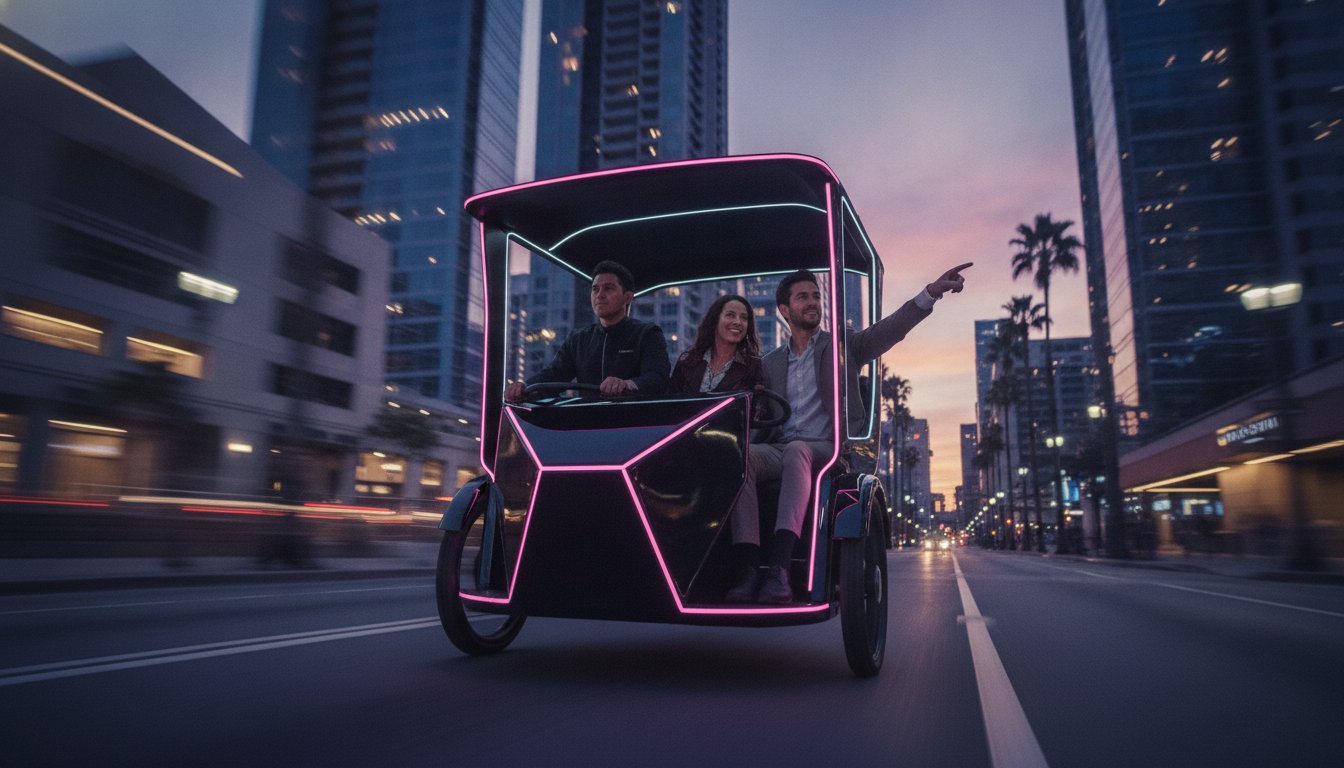
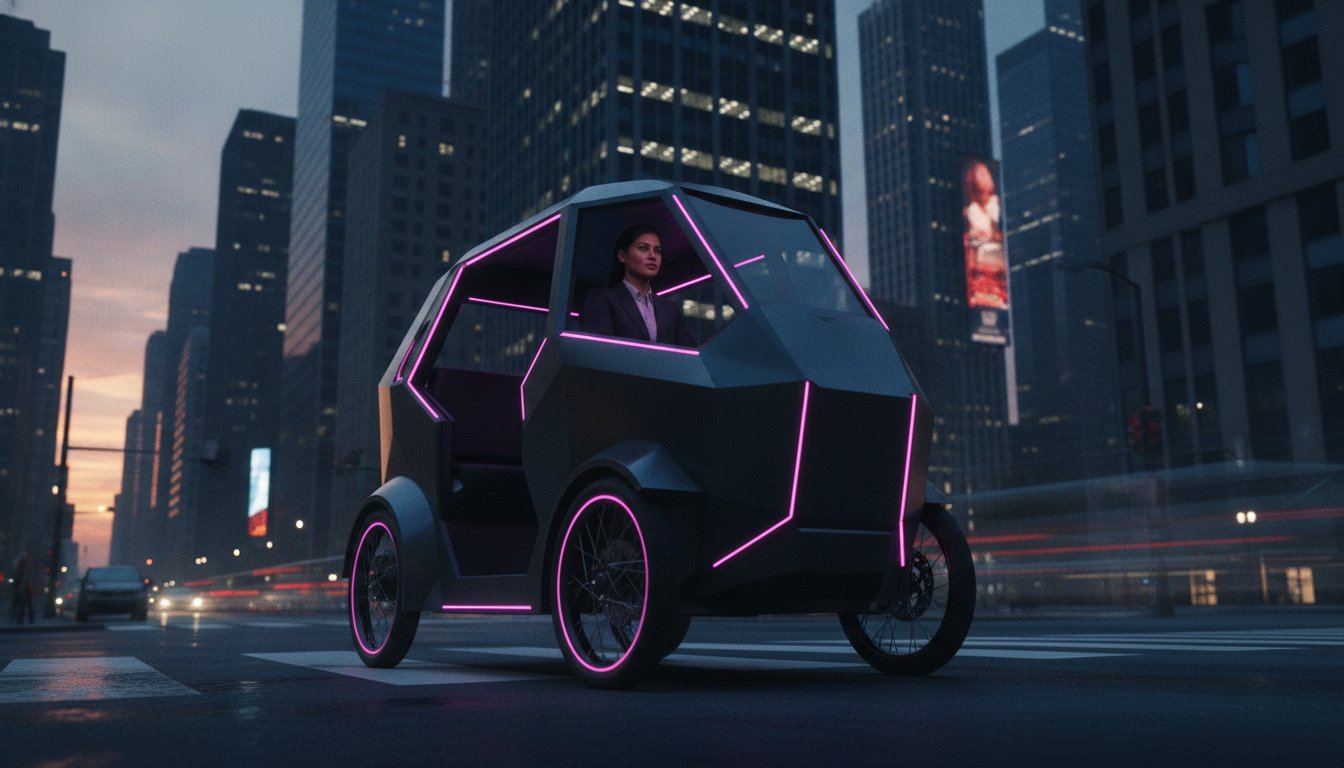
Most "green" transit solutions are built for a casual Sunday stroll, but an entertainment district on a Friday night is a high-intensity proving ground where consumer-grade hardware fails. You've likely seen the fallout of under-engineered equipment: snapped axles, depleted batteries, and lost revenue because a low-capacity trike can't handle the surge. It's a frustrating bottleneck for any serious operator. Deploying an industrial-grade electric pedicab for entertainment districts isn't just a design choice; it's a strategic necessity for those who treat transit as a high-yield business rather than a hobby.
We've spent years in the trenches of urban mobility, and we know that your success depends on vehicles that work as hard as your drivers. This article explores how modern, high-capacity shuttles are revolutionizing transit by maximizing your revenue per trip while meeting the strict UL 2849 safety standards required in 2026. You'll discover the specific engineering benchmarks that define industrial durability and see the clear business case for deploying a fleet that commands the street. From navigating pedestrian zone restrictions to ensuring total safety compliance, we're laying out the roadmap for dominant fleet operations in the world's busiest districts.
Key Takeaways
- Identify the engineering benchmarks of industrial-grade chassis and high-torque motors required to sustain heavy payloads in high-intensity commercial environments.
- Discover how the compact footprint of an electric pedicab for entertainment districts unlocks access to pedestrian zones and bike lanes that are off-limits to traditional shuttle vans.
- Navigate 2026 safety regulations by prioritizing UL 2849 battery certifications and standardized driver training for total street-legal compliance.
- Evaluate the business case for high-capacity 6-seater models to maximize passenger throughput and accelerate operator ROI in dense urban centers.
- Transition from fragile consumer equipment to professional fleet vehicles designed for the rigors of high-traffic transit and long-term mechanical reliability.
What is an Electric Shuttle for Entertainment Districts?
The modern electric shuttle is a high-torque, multi-passenger powerhouse engineered specifically for the grinding demands of commercial transit. It isn't a toy or a casual weekend cruiser. It's a precision-built tool designed to move people through neon-lit strips, historic downtowns, and sprawling resort districts without breaking a sweat. As major city centers across the country implement aggressive zero-emission mandates in 2026, the traditional gas-powered van is being pushed out of the most profitable corridors. The electric shuttle has stepped in to fill that void, offering a cleaner, more agile alternative that keeps the revenue flowing while meeting the strict environmental standards of the modern urban landscape.
The Evolution of Last-Mile Transit
The journey from human-powered transportation to modern electric fleets has been driven by both technological innovation and municipal necessity. Looking at the Cycle Rickshaw History, you can see how these vehicles evolved from simple pedal machines into the sophisticated, motorized assets we see today. Urban centers are rapidly pedestrianizing, creating "car-free" zones that require a more surgical approach to transit. A modern electric shuttle is a high-capacity, street-legal commercial tricycle that bridges the gap between walking and traditional ride-shares. It provides the speed of a vehicle with the accessibility of a bicycle, allowing operators to move passengers where cars can't go.
Why Entertainment Districts Demand Specialized Vehicles
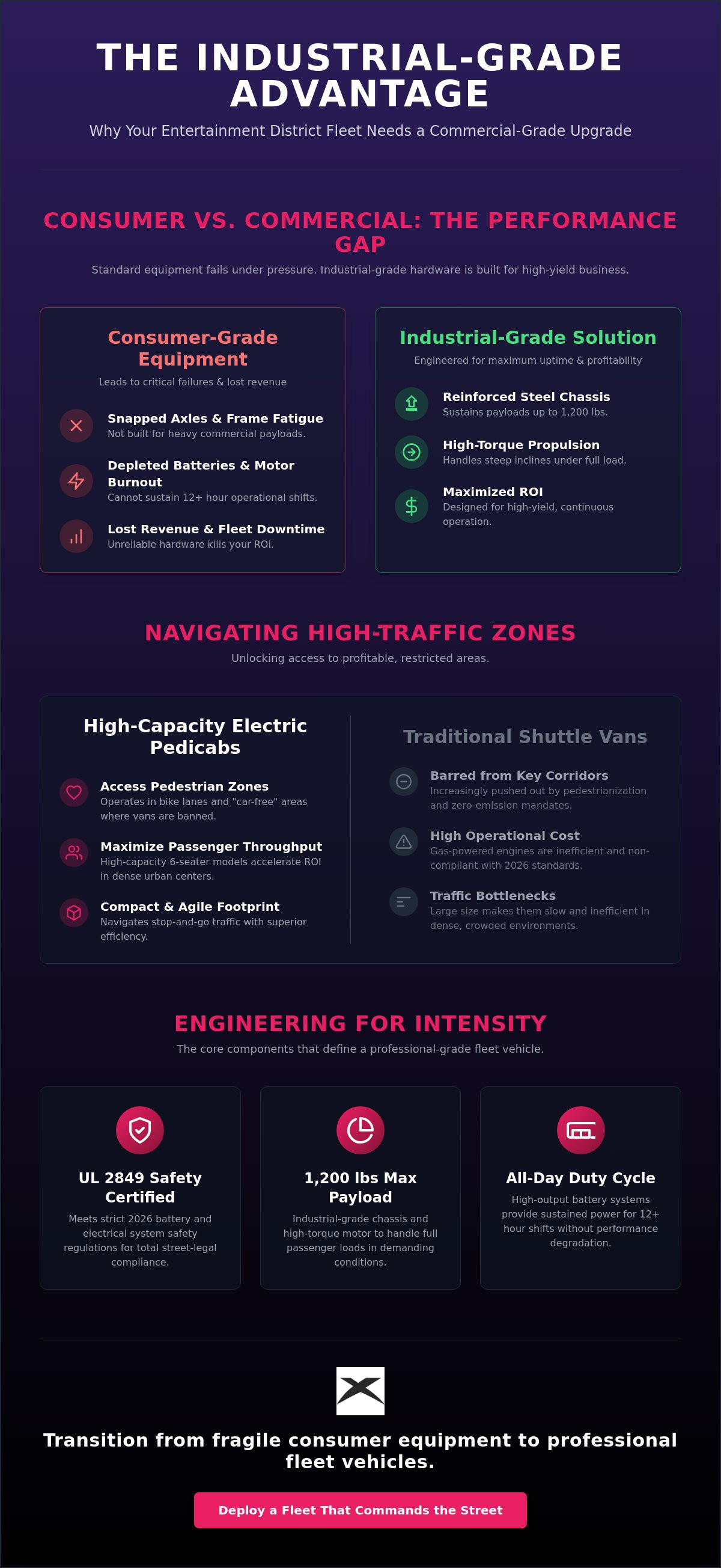
Entertainment districts are unique ecosystems that punish weak hardware. A typical shift involves 12+ hours of constant stop-and-go traffic, often carrying full passenger loads that can reach 1,500 lbs in modern high-capacity models. Consumer-grade "leisure" bikes simply cannot survive this environment. They suffer from frame fatigue and motor burnout within weeks of deployment. An electric pedicab for entertainment districts requires industrial-grade components, from reinforced steel chassis to high-torque motors capable of clearing steep inclines under full load.
We've seen the results of trying to cut corners with consumer gear. It leads to snapped axles and depleted batteries that leave your drivers stranded and your revenue at zero. In 2026, the market demands more. Every vehicle in your fleet must be a "Master Practitioner" of the street, built with the rugged authority to handle high-volume corridors without failing. Investing in professional-grade hardware is the only way to prevent the fleet downtime that kills your ROI. Reliability is your most valuable asset when the crowds are thick and the demand is peak. You need a vehicle that is as ambitious as your business goals.
Engineering for Intensity: Why Industrial-Grade Hardware Matters
Street-level transit isn't a playground for consumer-grade gear. If you're operating an electric pedicab for entertainment districts, you're running a commercial enterprise that demands industrial-grade hardware. Consumer frames are built for occasional weekend use; however, a professional fleet vehicle must endure 12-hour shifts under maximum payload. This is the Master Practitioner perspective. We build for the trenches because that's where the profit is made. Reliability isn't just a feature. It's the foundation of your ROI. When your equipment is down, your revenue stops, making mechanical durability the most critical variable in your business model.
High-Torque Propulsion Systems
Standard e-bike motors are designed for a single rider on flat pavement. They fail almost immediately when tasked with moving a 1,500-lb payload up a 10% grade in heavy traffic. Commercial operations require high-torque propulsion systems engineered for extreme duty cycles. These motors utilize advanced heat dissipation and heavy-duty planetary gears to ensure consistent performance under load. Our team established the CyberX engineering standard to address these specific stressors. High-output battery systems are equally critical, providing the sustained amperage needed for all-day coverage without the voltage sag that plagues cheaper alternatives.
Structural Integrity and Passenger Safety
Structural integrity is the difference between a safe trip and a liability nightmare. A commercial chassis must be constructed from reinforced steel or aircraft-grade alloys to withstand the constant vibrations of varied urban surfaces. Heavy-duty suspension systems are mandatory. These systems don't just provide passenger comfort; they protect the vehicle's sensitive electronic components from impact damage. Braking is another non-negotiable area. High-capacity shuttles require professional-grade hydraulic disc brakes to ensure precise stopping power in crowded zones.
Safe integration into urban environments is a primary concern for modern city planners. As highlighted in the National League of Cities report on Micromobility in Cities, safety and infrastructure compatibility are key hurdles for operators. Using modular parts allows your maintenance team to perform rapid swaps in the field, ensuring fleet continuity during peak hours. This modularity minimizes downtime and keeps your assets generating income. If you want to dominate your local market, you should invest in industrial-grade fleet packages that are built to outlast the competition. Precision engineering ensures that your fleet remains a reliable fixture of the district for years to come.
Navigating High-Traffic Zones: Pedicabs vs. Traditional Shuttles
Entertainment districts are high-density obstacle courses that punish oversized vehicles. While traditional shuttle vans and oversized golf carts struggle to negotiate tight corners and surging crowds, the electric pedicab for entertainment districts operates with surgical precision. A standard shuttle van is a spatial liability in a crowded corridor; however, a professional-grade trike maintains a compact footprint that allows it to thrive where cars fail. The turn radius advantage is decisive. While a van requires a multi-point turn in a narrow intersection, a pedicab can pivot and proceed, keeping your passengers moving and your revenue clock ticking.
The psychological impact of the ride is a powerful driver of repeat business. Traditional shuttles are utilitarian boxes that isolate passengers from the environment. In contrast, an electric pedicab provides an immersive experience that connects the rider to the energy of the district. This open-air perspective turns a simple transit trip into a highlight of the night, driving higher tips for your drivers and consistent demand for your fleet. You aren't just selling a ride; you're selling a front-row seat to the city's best attractions.
Maneuverability in Pedestrian-Heavy Corridors
Comparing Fleet ROI: Pedicabs vs. Gas Shuttles
The business case for electric propulsion is undeniable when you analyze the cost-per-mile. Internal combustion engines are expensive to fuel and even more expensive to maintain in stop-and-go environments. Electric motors eliminate the complexity of transmissions and exhaust systems, slashing your overhead. Each vehicle acts as a mobile billboard. The billboard effect of custom-branded pedicabs in high-visibility districts provides a dual revenue stream through local advertising partnerships. To understand how to scale these advantages, review our guide on electric pedicab fleet packages. Scaling your ROI requires a vehicle that works as an asset, not an expense. Transitioning to a high-capacity electric fleet is the most pragmatic move for any operator looking to dominate a high-traffic zone in 2026.
Operational Logistics for District-Wide Deployment
Purchasing a high-performance fleet is only the first phase of market dominance. To successfully integrate an electric pedicab for entertainment districts, you must transition from a hardware owner to a logistics expert. This requires a methodical approach to deployment that prioritizes uptime and driver performance. Successful integration begins with securing a strategic hub within the district to minimize deadhead miles. You're building a commercial transit system, not a rental shop. Every minute a vehicle spends traveling to its service zone is a minute of lost revenue. Establish clear driver training protocols that cover both safety and fare management to ensure your brand reputation remains as rugged as the vehicles themselves.
High-utilization environments demand a centralized maintenance schedule that leaves nothing to chance. When vehicles run 12-hour shifts, wear and tear accelerate exponentially. Sourcing authentic replacement parts is non-negotiable for fleet longevity. Generic components often fail under the industrial stressors of a full passenger load, leading to avoidable downtime. A disciplined maintenance culture ensures that your assets remain on the street, where they belong, rather than rotting in a repair bay. Precision in your logistics is what separates the seasoned veteran from the amateur enthusiast.
Fleet Management and Charging Infrastructure
Maximizing vehicle uptime depends on a sophisticated charging infrastructure. In 2026, professional operators utilize centralized hubs equipped with high-output charging stations to ensure rapid turnaround between shifts. Implementing software solutions for tracking fleet location and battery health is mandatory for scaling. This data allows you to proactively manage your assets rather than reacting to failures in the field. For a deep dive into sustaining these high-utilization assets, consult our electric pedicab maintenance guide. Consistent care is the only way to protect your initial investment from the grind of daily operations.
District Regulations and Street Legality
Navigating the legal landscape is a prerequisite for any commercial operation. Most industrial-grade electric shuttles are classified as Class 2 e-bikes, which typically permits a top speed of 20 mph and allows access to bike lanes. However, local requirements vary significantly. For instance, operators in Austin must navigate a $159 application fee for operating authority, while those in Salina, KS, face specific liability insurance requirements of at least $500,000 for their entertainment districts. Ensuring your vehicles meet all visibility and lighting requirements is a baseline safety standard. Use our starting a pedicab company blueprint to verify your legal setup before hitting the street. Compliance isn't a hurdle; it's a competitive advantage that keeps your fleet operational while others are sidelined by inspectors.
Ready to dominate your local market with a proven business model? Secure your pedicab fleet packages from a manufacturer that understands the rigors of the street. We provide the industrial-grade tools you need to turn a high-traffic district into a high-yield revenue stream.
The Xion Motors Advantage: High-Capacity Electric Solutions
Xion Motors stands as the premier manufacturer of industrial-grade electric shuttles, delivering vehicles that are engineered for the relentless pace of modern commerce. We don't just build trikes; we manufacture high-performance assets that are backed by over 20 years of fleet experience. Every engineering decision we make is informed by decades spent in the trenches of urban transit. This legacy of practical expertise ensures that our vehicles outlast and outperform consumer-grade alternatives. We ship these professional-grade machines to all 50 states, providing operators nationwide with the tools they need to secure market dominance in their local territories.
Choosing the right electric pedicab for entertainment districts requires an understanding of your specific traffic patterns and revenue goals. Our lineup is designed to provide maximum flexibility, offering both nimble 3-seat models and high-capacity 6-seat powerhouses. Whether you're navigating the narrow alleys of a historic downtown or the sprawling corridors of a resort district, our engineering provides the reliability you need to maintain a 100% uptime schedule. We are partners in your growth, providing the mechanical foundation for your entrepreneurial success.
CyberX: The 3-Seat Powerhouse
The CyberX is the definitive standard-bearer for maneuverability and performance in tight urban environments. It features a high-torque drive system that has been specifically tuned for the grueling duty cycles of commercial operation. This isn't a leisure motor; it's a precision-engineered propulsion system designed to handle constant stop-and-go surges without overheating. For new district operators, the CyberX represents the ideal entry point. It offers the perfect balance of agility and power, allowing drivers to navigate crowded intersections with total confidence while maintaining a high level of passenger comfort. It's a rugged, reliable workhorse that sets the pace for the industry.
VorteX: High-Capacity 6-Seat Solutions
When passenger volume is the primary driver of your business, the Custom VorteX Trike is the ultimate solution. This vehicle effectively doubles your revenue potential per trip by accommodating six passengers with zero effort. Moving a half-ton payload requires more than just a larger frame; it demands a complete re-engineering of the drivetrain and braking systems. The VorteX utilizes heavy-duty components that ensure smooth acceleration and precise stopping power, even under maximum load. It is the definitive answer for high-traffic zones where throughput is the key to profitability.
The transition to industrial-grade hardware is the most significant step you can take toward securing your business's future. Don't settle for underpowered equipment that leaves your revenue to chance. Contact our team today to consult on custom fleet configurations and discover how our high-capacity electric solutions can transform your operations. We provide the power, the precision, and the professional support you need to dominate the street.
Secure Your Market Leadership in 2026
The transition toward pedestrianized urban centers is a permanent market correction. Success in this new landscape requires more than just a vehicle; it requires a strategic asset built for the rigors of the street. You've seen why industrial-grade hardware is the only viable path for high-utilization environments. By prioritizing high-torque propulsion and structural integrity, you eliminate the mechanical failures that often sideline competitors. An electric pedicab for entertainment districts is your most effective tool for navigating narrow corridors while maximizing revenue per trip through superior passenger capacity.
Xion Motors delivers the precision engineering and rugged authority you need to scale with confidence. Our USA-based manufacturing facility leverages 20+ years of fleet operation experience to ensure every vehicle we ship is a master practitioner of the street. We don't just sell equipment; we provide the industrial-grade high-torque drive systems that keep your business moving forward. We are ready to ship your high-performance fleet to any of the 50 states to help you establish a dominant presence.
Explore Xion Motors Industrial-Grade Fleet Packages and take command of your district today. Build your legacy on a foundation of proven engineering and entrepreneurial pragmatism.
Frequently Asked Questions
Are electric shuttles street legal in most entertainment districts?
Yes, most industrial-grade models are classified as Class 2 e-bikes, which makes them street legal in the majority of urban corridors. These vehicles typically have a governed top speed of 20 mph to maintain compliance with federal safety standards. You must always check local municipal codes, as some districts require specific permits, safety inspections, or liability insurance before you can begin commercial operations.
How many passengers can a commercial electric pedicab safely carry?
Passenger capacity depends on the specific vehicle engineering. A standard industrial model like the CyberX safely accommodates three passengers, while high-capacity units like the VorteX can carry up to six adults. These professional-grade machines are built to handle a total payload of up to 1,500 lbs, ensuring safety and stability even when the vehicle is at its maximum occupancy.
What is the average battery range for an electric shuttle in a high-volume fleet?
An electric pedicab for entertainment districts typically achieves a range of 40 to 60 miles on a single charge. This distance varies based on the total passenger load, the frequency of stops, and the local terrain. Modern high-output battery systems are designed to sustain these high-utilization shifts, and many operators utilize rapid-swap battery protocols to keep their fleets running during peak event cycles.
How do electric pedicabs compare to golf carts for district transit?
Electric pedicabs offer significant access advantages over traditional golf carts. Because they are classified as bicycles, they can navigate bike lanes and pedestrian malls that are strictly off-limits to larger utility vehicles. Their smaller footprint and tighter turn radius allow for more efficient drop-offs in crowded zones, providing a more agile and profitable transit solution for dense urban environments.
What kind of maintenance is required for an industrial-grade electric trike?
Industrial-grade trikes require a disciplined schedule focused on high-wear components. You should perform weekly inspections of the hydraulic braking systems, tire pressure, and drive chain lubrication to ensure peak performance. Professional fleets utilize modular parts, allowing your maintenance team to swap out components quickly and minimize the downtime that kills your daily revenue.
Can electric shuttles operate on steep inclines with a full passenger load?
High-torque commercial motors are specifically engineered to conquer steep inclines under full load. Unlike consumer-grade e-bikes that often burn out on hills, industrial shuttles utilize heavy-duty planetary gears and advanced heat dissipation to maintain momentum. This power is essential for districts with varied topography, ensuring your drivers don't get stranded when carrying a full group of passengers.
Do I need a special license to operate an electric pedicab fleet?
Most jurisdictions don't require a Commercial Driver's License (CDL) for electric pedicab operations. However, you'll likely need a standard business license and a specific operating authority permit from the city's transit department. These permits often come with requirements for vehicle safety inspections and minimum liability insurance coverage to protect your business and your passengers.
What is the typical ROI for an electric shuttle in a tourist-heavy area?
Professional operators report high returns due to low overhead and multiple revenue streams. A single vehicle can generate significant annual income through a combination of passenger fares and local advertising partnerships. Because the cost-per-mile is drastically lower than internal combustion vehicles, most well-managed fleets see a full return on their initial equipment investment within the first year of operation.