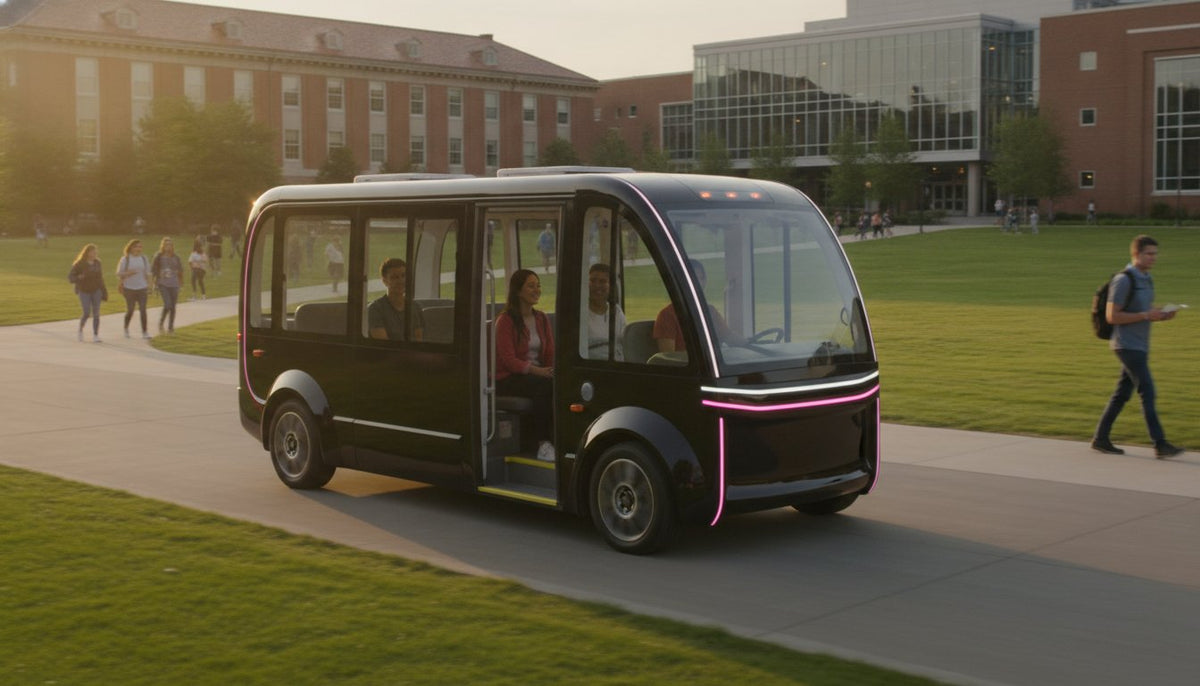
The days of treating the pedicab as a seasonal novelty are over. In the current market, a single professional-grade vehicle can generate between $30,000 and $35,000 in annual revenue, transforming a simple idea into a high-performance commercial enterprise. You understand that the demand for sustainable, last-mile transit is exploding, but starting a pedicab business requires more than just a passion for the streets. It demands a strategic approach to equipment durability and a clear grasp of the ROI differences between manual and electric power.
We know the uncertainty you face regarding shifting local regulations and the fear of investing in low-quality hardware that fails under pressure. This blueprint eliminates that guesswork by providing a master-level roadmap to launching a profitable fleet. You will gain the confidence to select industrial-grade assets like the CyberX and VorteX, ensuring your operation remains upright and earning while others break down. We will examine the step-by-step path from your first permit to managing a multi-vehicle fleet that dominates your local market.
Key Takeaways
- Analyze the transition from a seasonal novelty to a professional micro-transit model that yields $30k to $35k in annual revenue per vehicle.
- Learn the technical requirements for starting a pedicab business, focusing on why industrial-grade equipment like the CyberX is essential for fleet durability.
- Identify the specific licensing, insurance, and permit frameworks necessary to operate a commercial electric trike fleet within US regulations.
- Develop a scalable operational strategy that utilizes independent contractor leasing models and high-conversion, data-driven transit routes.
- Master the financial roadmap for scaling from a single owner-operator to a dominant multi-vehicle fleet using performance-engineered assets.
The 2026 Pedicab Business Model: From Novelty to Micro-Transit
The modern pedicab is no longer a seaside novelty; it is a vital micro-transit asset. Starting a pedicab business in 2026 requires a shift in perspective from bike rentals to professional fleet management. While a cycle rickshaw overview might showcase the humble origins of human-powered transport, today's industry is driven by high-torque electric motors and rugged, USA-manufactured chassis. You aren't just buying bikes. You are deploying a mobile infrastructure that solves the "last-mile" transportation gap in dense urban environments.
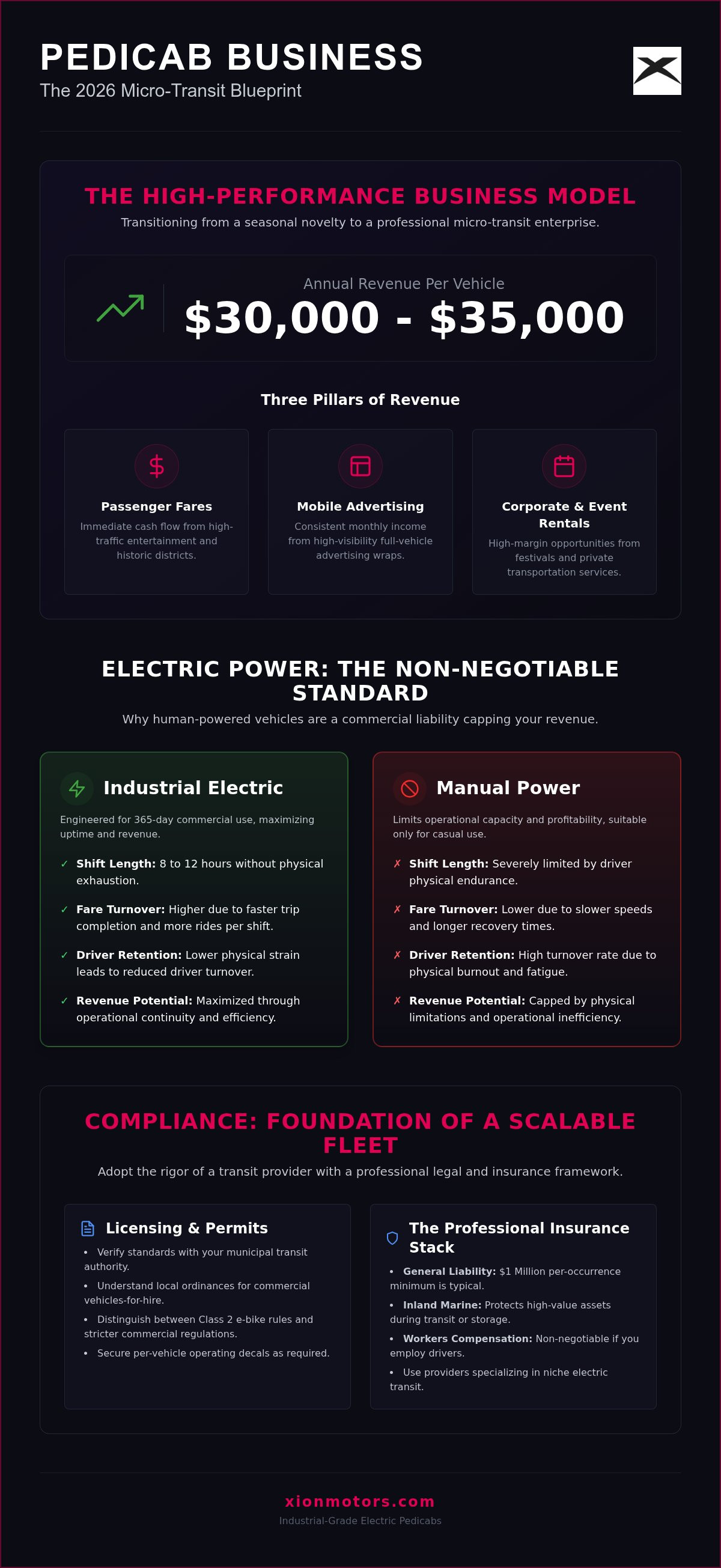
A professional fleet operator builds a business on three pillars of revenue. First, passenger fares provide immediate cash flow in high-traffic entertainment districts. Second, full-vehicle advertising wraps turn your fleet into high-visibility mobile billboards, generating consistent monthly income. Third, corporate event rentals and white-label transportation services for festivals offer high-margin opportunities that manual hobbyists simply cannot fulfill. This industrial-grade approach ensures your assets generate revenue even when they aren't carrying passengers.
Why Electric Power is the Non-Negotiable Standard
Manual pedaling is a commercial liability. If you are starting a pedicab business with purely human-powered vehicles, you are capping your revenue potential before the first shift. High-torque electric motors, like those engineered into the CyberX, allow operators to run 8 to 12-hour shifts without the physical exhaustion that leads to driver turnover. Electric power increases your fare turnover by allowing for faster trip completion and more total rides per day. To maintain operational continuity, you must invest in industrial-grade battery systems. These aren't consumer-grade e-bike batteries; they are professional energy modules designed for the rigors of 365-day commercial use.
Market Analysis: Where Micro-Transit Thrives
Micro-transit dominance happens in the dead zones where cars and buses struggle to navigate. Historic districts, sports arenas, and waterfront piers are prime territory for high-performance trikes. These zones offer the high-visibility advantage necessary to secure premium advertising contracts. Brands pay for the attention your fleet captures in these crowded corridors. Beyond the marketing value, your business serves a functional role by reducing urban congestion and providing an eco-friendly transit solution that local governments actively support. You provide the agility of a bicycle with the capacity and safety of a professional motor vehicle.
Navigating Legalities: Licensing, Permits, and Insurance
Compliance is the foundation of a scalable operation. When you are starting a pedicab business, you must move beyond the casual mindset of a bicycle hobbyist and adopt the rigor of a transit provider. The US regulatory framework for electric trikes varies by state, but the core distinction remains constant: the transition from a "Class 2" e-bike to a commercial passenger vehicle occurs the moment you accept a fare. While a Class 2 vehicle is typically limited to 20 mph via throttle, local ordinances often impose stricter commercial safety requirements on vehicles used for hire. You must verify these standards with your municipal transit authority to ensure your fleet meets all street-legal criteria.
Professionalism in this sector is defined by your insurance stack. Standard bicycle policies are insufficient for commercial passenger transport; they lack the coverage depth required for public liability. A robust insurance portfolio includes General Liability, typically with a $1 million per-occurrence limit, alongside Inland Marine coverage to protect your high-value assets while in storage or transit. If you employ drivers, Workers Compensation is non-negotiable. Many cities require specific "per-vehicle" liability limits before issuing operating decals. For a clear look at how a major metropolitan area structures these rules, review the NYC pedicab licensing requirements as a benchmark for high-traffic compliance.
Commercial Insurance for Fleet Operators
Securing the right coverage requires vetting providers who specialize in niche electric transit. Standard carriers often struggle to categorize electric trikes, which can lead to overpricing or inadequate protection. You need a partner who understands the duty cycle of an industrial-grade motor and the specific risks of urban passenger transport. This specialized coverage ensures that a single incident doesn't bankrupt your enterprise. It's about protecting your ROI as much as it's about safety. Before you deploy your first unit, ensure your electric pedicab fleet is backed by a policy that recognizes its commercial classification.
Permitting and Municipal Compliance
Municipalities generally use two systems for fleet management: medallions or open-access permits. Medallion systems cap the number of vehicles allowed on the street, which can increase the value of your operating rights over time. Open-access permits are more common but require strict adherence to vehicle safety inspections and VIN registration. Your vehicles must feature standardized lighting, high-visibility signage, and dual-independent braking systems to pass these inspections. The administrative heavy lifting of starting a pedicab business is often what separates the master practitioners from the temporary operators. Establish a proactive relationship with city officials to position your company as a professional transit solution rather than a nuisance, as this helps secure the best routes and event access.
Selecting Industrial-Grade Equipment: Engineering for ROI
Profitability in the micro-transit sector is won or lost in the workshop. When you are starting a pedicab business, the temptation to buy cheap, imported frames is high, but the Total Cost of Ownership (TCO) tells a different story. A low-quality chassis will flex and eventually crack under the constant stress of 800-pound passenger loads. This leads to fleet downtime, which is the ultimate revenue killer. We manufacture our chassis with industrial-grade steel because we know that frame durability is the primary factor in keeping your vehicles on the street and earning. A USA-manufactured chassis isn't just a purchase; it's a long-term commercial asset.
High-torque drive systems are equally vital for commercial continuity. It's one thing to pedal a bike; it's another to move three adults up a steep grade in mid-day heat without mechanical failure. Engineering for ROI means selecting a powertrain that handles heavy-duty loads without overheating or stripping gears. Your equipment must also align with local safety standards. Meeting the NYC pedicab licensing requirements, for example, requires specific braking and lighting configurations that cheaper imports often fail to provide. You must choose a platform that is built to pass inspection on day one.
The CyberX Standard: 3-Seat Versatility
Urban cores demand agility and rapid acceleration. The CyberX is engineered to balance high-torque performance with a compact footprint, making it the standard for dense city streets. It maneuvers through tight traffic where larger vehicles stall. This 3-seat configuration is the workhorse of the industry, optimized for quick fare turnover and high-volume daily trips. It's the ideal entry point for those starting a pedicab business who need a reliable, high-performance vehicle that drivers actually want to operate.
VorteX Engineering: Scaling to 6-Seat Capacity
Scaling your revenue often means increasing your capacity per trip. Moving six passengers requires a massive leap in structural integrity and motor cooling. The Custom VorteX Trike solves these technical challenges through reinforced frame geometry and specialized gearing. While a standard golf cart might struggle with resort terrain or narrow paths, a high-capacity electric trike offers superior ROI by accessing zones motorized vehicles cannot reach. These specialized 6-seat models are designed for high-capacity transit and corporate event rentals, where maximizing the revenue per mile is the primary objective.
Operational Strategy: Management, Marketing, and Maintenance
Launching your fleet is only the beginning of the journey. Successful operators treat their enterprise as a high-performance logistics network rather than a simple rental service. Starting a pedicab business requires a decisive shift from "owner-operator" to "fleet manager". You need a system that ensures your vehicles are moving and earning even when you aren't in the saddle. This involves data-driven route planning based on foot traffic patterns and local event calendars to maximize fare density and minimize idle time. Modern marketing bridges the gap between the street and the screen; leverage QR-code booking systems on your vehicle wraps to allow passengers to book future tours or pay instantly. This level of convenience increases conversion rates in high-traffic zones.
Recruiting and Retaining Professional Drivers
The "Shift Lease" model is the engine of fleet profitability. In this system, drivers pay a flat fee to lease the vehicle for a specific shift, allowing you to generate revenue before the first passenger is even picked up. This model shifts the incentive to the driver to maximize their own earnings while you maintain a predictable, upfront cash flow. You must implement training protocols that cover safety, local history for guided tours, and active sales techniques. Professional drivers stay with operators who provide well-maintained, high-performance equipment. If your trikes are unreliable or underpowered, your best talent will leave for a competitor with better assets.
Maintenance as a Profit Center
Downtime is a direct hit to your bottom line. You must move beyond reactive repairs and implement a rigorous electric pedicab maintenance guide protocol. This ensures "Commercial Continuity" by identifying wear before it causes a mechanical failure on the street. Daily inspections of braking systems and weekly battery health checks are mandatory for high-use electric fleets. Consistency in maintenance prevents small issues from cascading into expensive overhauls.
When components eventually wear out, you must use specialized commercial trike replacement parts. Generic bicycle components aren't designed for the torque and weight of a 6-passenger electric trike. Using sub-standard parts compromises passenger safety and increases your long-term liability. By keeping a stock of authentic, industrial-grade components, you minimize the time a vehicle spends in the shop. To build a fleet that lasts, you need a partner who understands these operational nuances. Explore our Pedicab Fleet Packages to begin your transition into professional fleet management.
Scaling Your Fleet: The Xion Motors Advantage
Scaling is the ultimate test of an entrepreneur's vision. When you move from a single-owner operation to managing a multi-vehicle fleet, you shift your focus from daily fares to systemic growth. Starting a pedicab business with a long-term perspective means building on a foundation of 20+ years of operational experience. We don't just sell vehicles; we provide the blueprint for national scaling. Our direct-to-operator shipping ensures that whether you are in Florida or New York, you receive industrial-grade assets ready for immediate deployment. This logistical support is the backbone of a professional expansion strategy.
The financial logic of expansion is clear. Investing in electric pedicab fleet packages allows you to maximize your ROI by reducing the per-unit acquisition cost and standardizing your maintenance protocols. This standardization is what allows a fleet manager to oversee ten vehicles as efficiently as two. You eliminate the chaos of mismatched parts and varying performance standards, replacing it with a synchronized operation that dominates your local market.
Calculating Your ROI: The $30k Per Vehicle Target
A professional-grade vehicle in a high-traffic district is capable of generating $30,000 to $35,000 annually. This revenue is a composite of passenger fares, high-margin tips, and monthly advertising contracts. While a 3-seat model offers agility in dense cores, integrating a 6 seat electric pedicab into your fleet accelerates the payback period by doubling the passenger capacity for tours and group transit. Over a 3-year trajectory, a well-managed fleet of five vehicles can surpass $150,000 in gross revenue, providing the capital necessary for continued market dominance and asset upgrades.
Partnering with a Master Practitioner
Longevity is a function of engineering. Partnering with a master practitioner means choosing USA-manufactured chassis that retain their resale value and structural integrity long after imported alternatives have failed. You gain the advantage of direct-to-manufacturer communication, ensuring that your specific business needs are met with precision-engineered solutions. We provide the technical support and authentic parts availability required to keep your fleet running at peak performance. The market for sustainable micro-transit is expanding rapidly. Don't settle for hobbyist equipment when you can deploy industrial-grade power. Start Your Fleet with Xion Motors Today and secure your position at the forefront of the urban transportation revolution.
Dominate the Urban Transit Market
The transition from an aspiring entrepreneur to a dominant fleet operator depends on the quality of your foundation. You've seen that starting a pedicab business in 2026 is no longer about novelty; it's about deploying high-performance micro-transit solutions that solve real urban congestion. Success requires a commitment to industrial-grade engineering and a rigorous approach to operational maintenance. By prioritizing high-torque USA-manufactured chassis, you ensure your assets remain on the street while competitors face costly downtime.
We leverage over 20 years of fleet operations experience to help you navigate this high-growth sector with precision. Our vehicles are engineered to generate $30,000 to $35,000 in annual revenue per unit, providing the financial fuel for rapid expansion. You have the roadmap and the technical insights. Now, it's time to secure your territory. Deploy Your Industrial-Grade Pedicab Fleet with Xion Motors and start building your legacy today. The streets are waiting for a professional standard.
Frequently Asked Questions
How much does it cost to start a pedicab business in 2026?
Starting a pedicab business requires an initial investment in high-performance equipment and regulatory compliance. A professional 3-seat electric model costs $13,500, while high-capacity 6-seat models are $17,500. You should also budget for commercial insurance, which typically ranges from $1,200 to $2,400 annually, and municipal permit fees. These upfront costs secure an industrial-grade asset capable of generating consistent revenue in dense urban corridors.
Do I need a special license to drive an electric pedicab?
Most municipalities require a valid state driver's license and a specific pedicab operator's permit. While you don't typically need a Commercial Driver's License (CDL), you must pass local background checks and safety exams. Some cities also require a vehicle-specific decal or medallion. Always verify the latest standards with your local transit authority to ensure your drivers are fully compliant before their first shift.
Is an electric pedicab more profitable than a manual one?
Electric models are significantly more profitable because they eliminate driver fatigue and increase fare turnover. While a manual operator might tire after four hours, a high-torque electric motor allows for full 12-hour shifts. This increased uptime, combined with the ability to handle steeper grades and heavier passenger loads, directly supports the $30,000 to $35,000 annual revenue target per vehicle. Electric power is the professional standard for ROI.
How much can a pedicab driver earn per day?
Daily earnings vary based on event schedules and foot traffic, but professional drivers in high-traffic districts often see high returns. With typical passenger fares ranging from $5 to $10 per person, a single high-capacity trip can generate $30 to $60 in minutes. When you factor in tips and the efficiency of electric-assist turnover, a motivated driver can maximize their shift lease value during peak tourism or sporting event windows.
What insurance is required for a pedicab company?
A professional insurance stack must include General Liability, Inland Marine, and Workers Compensation. Most cities mandate a minimum of $1,000,000 in general liability coverage to protect against passenger injury or property damage. Inland Marine coverage is essential for protecting your vehicles while they are in storage or being transported. This comprehensive protection ensures your fleet is shielded from the financial risks associated with high-volume urban transit operations.
How do I find high-traffic routes for my pedicab fleet?
You should target "dead zones" where cars and buses struggle to navigate, such as historic districts and waterfront piers. Analyze local event calendars for sports arenas and convention centers to position your fleet where demand peaks. High-traffic routes are those with dense pedestrian flow but limited parking. These zones provide the highest fare volume and maximize the visibility of your vehicle advertising wraps for secondary revenue.
Can I operate a pedicab business in all 50 states?
Yes, you can launch a fleet in any of the 50 states, as electric pedicabs are recognized as a viable micro-transit solution nationwide. While the vehicles themselves are legal for shipping and operation across the country, each municipality has its own specific set of ordinances. Success in starting a pedicab business depends on your ability to adapt to these local permit systems and safety inspections while maintaining a national standard of equipment.
What is the lifespan of an industrial-grade electric pedicab?
An industrial-grade electric pedicab is engineered for a decade or more of service when supported by a rigorous maintenance protocol. The USA-manufactured steel chassis provides a level of durability that imported frames cannot match. While consumable parts like tires and brake pads require regular replacement, the core structural integrity remains intact. Consistent battery management and the use of authentic replacement parts ensure your fleet remains a high-performing commercial asset for years.