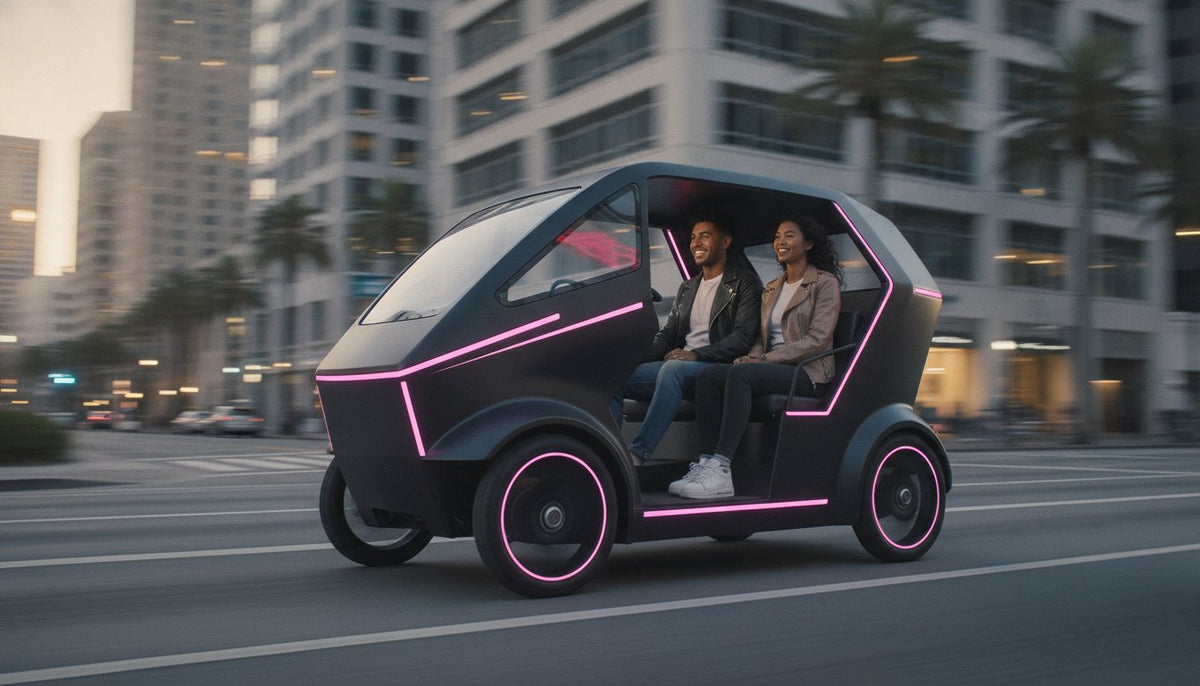
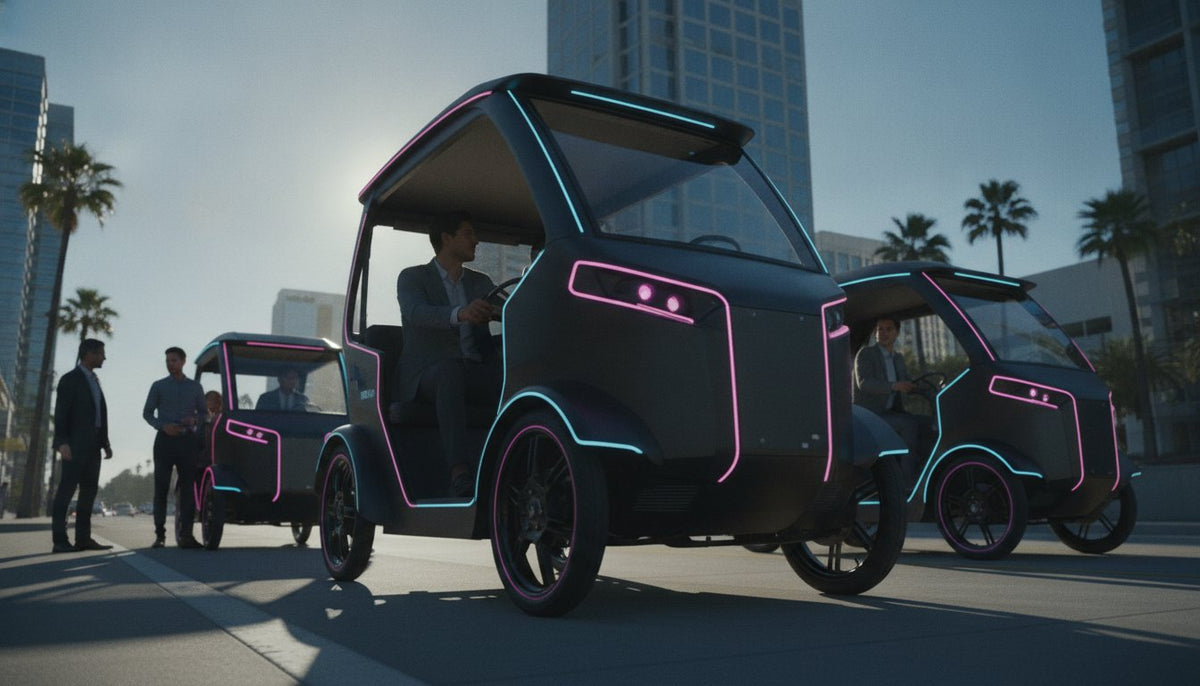
Transportation accounts for roughly 50% of the average university’s carbon footprint, making it the single largest obstacle to reaching your 2026 sustainability targets. While full-sized electric buses often command price tags exceeding $330,000, they frequently navigate tight campus arteries half-empty and underutilized. Deploying electric shuttles for college campuses shouldn't require the massive capital expenditure of a heavy-duty fleet that isn't built for short, high-cycle trips. You've likely realized that traditional fixed-route systems leave students stranded during late-night sessions and fail to bridge the gap between distant dorms and lecture halls.
We understand that modern campus mobility requires a blend of industrial durability and entrepreneurial pragmatism. This article demonstrates how to solve the last-mile gap using high-performance micro-transit shuttles that maximize your operational ROI. You'll discover the strategic advantages of agile 6-passenger fleets, the current landscape of federal grant opportunities, and how to build a transit network that prioritizes student safety without compromising your budget. It's time to move past inefficient routes and embrace a mobility solution engineered for the rugged demands of a modern campus environment.
Key Takeaways
- Bridge the last-mile gap by replacing underutilized, full-sized buses with agile micro-transit units built for high-cycle campus loops.
- Maximize operational ROI by deploying a fleet of electric shuttles for college campuses at a fraction of the capital cost of traditional heavy-duty transit.
- Leverage the industrial-grade durability of CyberX and VorteX chassis to master steep campus grades and constant student demand with high-torque drive systems.
- Architect a seamless mobility program by mapping high-traffic corridors and selecting vehicle capacities that optimize peak-hour passenger flow.
- Enhance student safety and accessibility with high-visibility, open-air transit options that provide reliable connectivity between dorms and lecture halls.
Rethinking Campus Transit: Why Traditional Buses Leave Gaps
The traditional model of university transportation is hitting a wall. While large transit systems effectively move thousands of commuters from off-campus housing to the perimeter, they fail the "Last-Mile Gap." This gap represents the disconnect between a primary transit hub and the specific lecture hall or dormitory where a student's day actually begins. Relying on massive 40-foot buses for short, internal campus loops is an operational failure. It's inefficient, expensive, and leaves students walking distances that discourage ridership.
Running a half-empty bus that costs hundreds of thousands of dollars is a drain on university resources. By 2026, the demand for agile, on-demand transit has shifted student expectations. They don't want to wait 20 minutes for a fixed-route bus that only gets them halfway to their destination. Transitioning to a tiered mobility strategy involves integrating electric shuttles for college campuses as a precision tool. These micro-shuttles act as a complementary layer, filling the dead zones that traditional transit simply cannot reach.
The Limitations of Large-Scale Electric Buses
While electric bus technology has advanced, the infrastructure required to support a full fleet of heavy-duty vehicles remains prohibitively expensive. High-voltage charging stations require significant electrical grid upgrades and massive capital investment. Beyond the cost, these vehicles are physically restricted by their size. Their limited maneuverability keeps them on perimeter roads, far from the central pedestrian plazas where transit is needed most. Heavy vehicles also introduce noise and vibration issues that disrupt the academic environment, making them a poor fit for dense pedestrian zones.
The Student Mobility Crisis: Safety and Accessibility
Campus safety isn't a luxury; it's a fundamental operational requirement. The "Safe Ride" programs of the past often relied on slow, unreliable van services that struggled to meet peak demand during late-night library hours. High-capacity electric shuttles solve this by providing constant, visible, and reliable connectivity. Accessibility is another critical factor. ADA compliance shouldn't be an afterthought in transit planning. Agile micro-transit ensures that students with mobility challenges have point-to-point service that a fixed-route bus cannot match. Campus micro-transit is an agile, zero-emission bridge between major transit hubs and final destinations.
The Micro-Transit Advantage: Electric Pedicabs as Campus Shuttles
Traditional shuttle vans are often overkill for short, inter-campus hops. They're heavy, difficult to park, and isolate passengers in a climate-controlled box. In contrast, electric shuttles for college campuses designed as industrial pedicabs offer a surgical footprint. They navigate pedestrian walkways and narrow corridors where a van would be physically blocked. This agility allows for point-to-point service that mirrors the efficiency of Tulane University's electric shuttle program, where specialized vehicles provide a flexible transit layer that complements larger bus routes.
There's also a significant psychological edge to open-air transit. Students enjoy high-engagement rides that feel like part of the campus culture rather than a chore. However, this isn't about aesthetics alone. Deploying electric shuttles for college campuses for 50 or more trips per day requires industrial-grade engineering. These units must withstand constant high-cycle use, from heavy passenger loads to varied weather conditions. Unlike complex bus systems, these micro-shuttles charge via standard 110V or 220V outlets. You don't need a million-dollar charging depot; you just need a standard wall plug and a parking spot.
Micro-Shuttles vs. Traditional Golf Carts
Don't confuse a professional-grade micro-shuttle with a consumer golf cart. A standard golf cart chassis isn't built for the rigors of commercial transit. Our industrial-grade CyberX chassis is engineered for durability and high-torque performance. This torque is essential when navigating hilly campus terrain with a full load of passengers. High-seated pedicabs also provide superior visibility for the operator. Drivers sit at an elevated vantage point, which increases safety in dense pedestrian zones. It's a professional-grade tool that outlasts and outperforms recreational alternatives.
Scaling with High-Capacity 6-Seat Models
Efficiency is a numbers game. To handle peak student flow, you need high throughput without the bulk of a bus. A 6 seat electric pedicab acts as a high-volume transit workhorse. It moves small groups quickly across campus, serving as the perfect "Safe Ride" or tour vehicle for prospective families. For institutions requiring a more premium feel, the VorteX configuration offers multi-passenger, resort-style transport. This setup allows you to scale your fleet as demand grows. If you're ready to modernize your mobility strategy, you can explore our fleet options to find the right fit for your campus infrastructure.
Calculating the ROI of Electric Shuttle Fleets for Universities
A single 36-passenger electric coach in 2026 can cost upwards of $330,000. While these vehicles are necessary for high-volume perimeter transit, their acquisition cost per passenger-mile for internal campus loops is difficult to justify. For the price of one heavy-duty bus, an institution can deploy a fleet of nearly 20 electric shuttles for college campuses. This distributed approach provides higher frequency, better coverage, and a significantly lower cost of entry. You aren't just buying vehicles; you're buying a versatile transit network that scales with your student population.
The energy savings are equally stark. Heavy buses consume energy in kilowatt-hours (kWh) per mile, largely to move the massive weight of the vehicle itself. Industrial trikes operate in watt-hours (Wh) per mile, focusing energy on moving passengers rather than the chassis weight. This efficiency isn't just about being "green"; it's a cold, hard financial advantage. Analyzing the ROI of electric pedicabs reveals that micro-transit yields a faster break-even point in high-volume environments where short, frequent trips are the norm.
Maintenance and Operational Longevity
Traditional transit buses rely on complex pneumatic systems and heavy-duty drivetrains that require specialized technicians and expensive parts. Electric trikes utilize simplified mechanical systems that are easier to service and maintain. Following a professional electric pedicab maintenance guide ensures that your fleet remains in peak condition with minimal overhead. Industrial-grade components reduce downtime in 24/7 campus operations, ensuring that your "Safe Ride" program never misses a shift due to mechanical failure.
Federal Grants and Sustainability Incentives
Funding your transition is easier than ever in 2026. Programs like the FTA Low or No Emission Grant and the EPA Clean School Bus Program provide essential capital for zero-emission university transit. Micro-fleets allow universities to hit carbon-neutral targets faster by replacing the most inefficient diesel loops with zero-emission alternatives. This commitment creates a powerful "Green Campus" appeal that resonates with modern students. Branded, high-visibility shuttles serve as moving billboards, signaling your institution's innovation to prospective students, stakeholders, and donors.
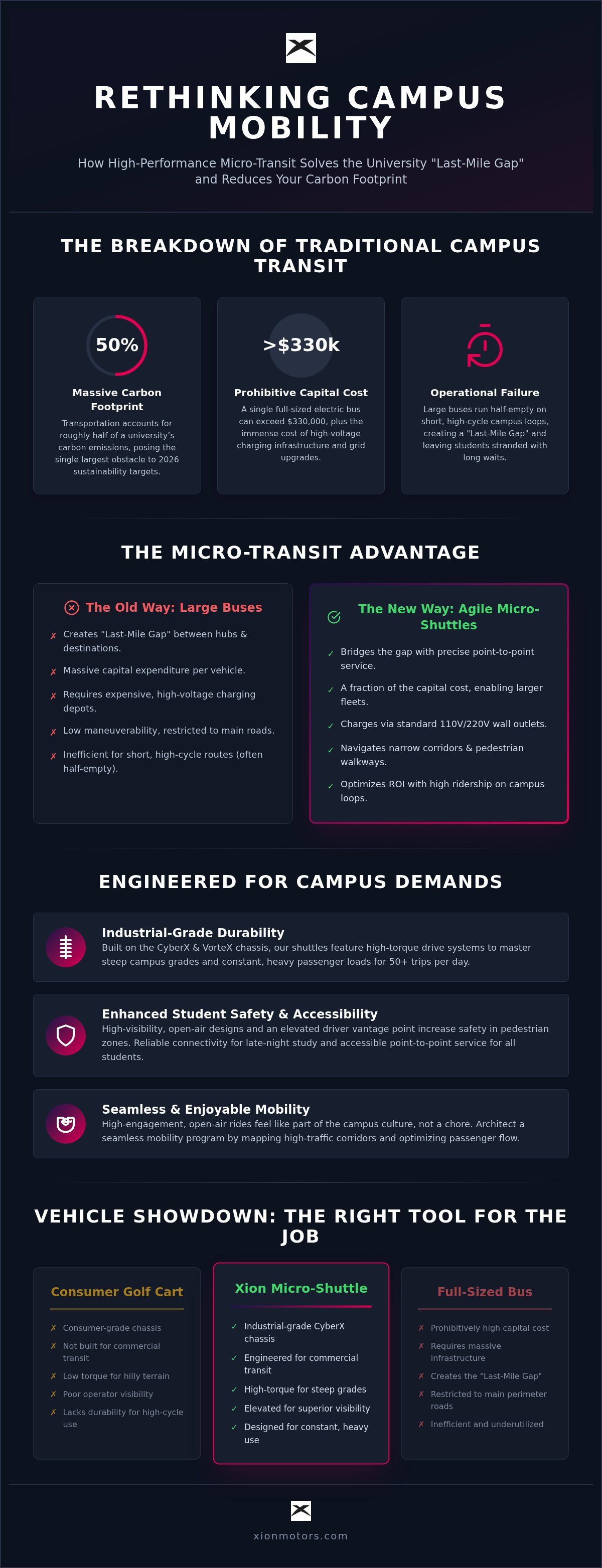
Architecting a Seamless Campus Mobility Program
Deploying a fleet of electric shuttles for college campuses requires more than just purchasing hardware. It demands a tactical deployment strategy that integrates with existing transit infrastructure while filling the gaps left by traditional buses. To ensure maximum utility and a high passenger-mile yield, follow this industrial-grade blueprint for implementation.
- Step 1: Conduct a thorough audit of high-traffic pedestrian corridors and identify bus "dead zones" where large vehicles cannot maneuver.
- Step 2: Select your vehicle capacity based on peak student flow. A mix of 3-seat units for rapid on-demand service and 6-seat models for high-volume corridors ensures operational flexibility.
- Step 3: Establish charging hubs within existing parking or maintenance facilities. Since these vehicles utilize standard outlets, you'll avoid the massive grid upgrades required by heavy-duty electric buses.
- Step 4: Integrate the fleet with campus mobile apps to facilitate real-time "Safe Ride" dispatching and live ETA tracking for the student body.
- Step 5: Monitor fleet performance using telematics. Scale your operations based on actual passenger-mile data and peak-hour demand metrics.
Route Optimization and Micro-Transit Zones
Success starts with identifying the right use cases. Inter-dorm transit, library shuttles, and game-day logistics are the primary theaters for micro-transit excellence. When configuring your fleet, consider custom electric trikes for business as a model for university-specific customization. These industrial trikes can be tailored for specific cargo or passenger needs, ensuring they serve as high-utility assets rather than general-purpose carts. Street-legal certification is non-negotiable. It allows your operators to navigate perimeter roads and transition seamlessly between pedestrian zones and city streets without legal friction.
Driver Training and Operational Safety
Safety is the cornerstone of any campus transit program. Operators must be trained in specific protocols for navigating dense pedestrian walkways with precision. The CyberX engineering standard provides operators with significant visibility advantages, placing them at an elevated vantage point to monitor student movement. This "Master Practitioner" approach to fleet safety ensures that your program remains beyond reproach. Professional training cycles should focus on precision handling and defensive driving in high-traffic areas. If you're ready to begin your deployment, contact our fleet specialists to build your custom mobility roadmap today.
Industrial-Grade Performance: The Xion Motors Campus Solution
Generic golf carts and light-duty electric vehicles lack the structural integrity required for 24/7 university operations. True efficiency in electric shuttles for college campuses demands hardware that outlasts the rigorous demands of student life. We've spent over 20 years in the trenches of fleet operations, perfecting the engineering behind the CyberX and VorteX lines. These aren't recreational trikes; they're high-capacity, zero-emission workhorses designed for high-cycle commercial use. Every unit we build is a testament to industrial durability and street-level performance.
Hilly terrain and full passenger loads expose the weaknesses of inferior drive systems. Our vehicles feature high-torque drive systems specifically engineered to master steep campus grades without sacrificing battery longevity or motor health. We manufacture our chassis with a focus on precision and power, ensuring that a fully loaded 6-seat shuttle maintains its momentum on every incline. This professional-grade approach is supported by USA-based manufacturing and national shipping to all 50 states. We provide the fleet continuity and logistical support that university procurement departments require for long-term success.
Facilities managers looking to implement a robust transit network can adapt our proven starting a pedicab company model for internal campus use. This blueprint offers a tactical guide to managing operators, maintenance schedules, and passenger throughput. It's about more than just moving people; it's about managing a high-performance asset that delivers measurable results.
The CyberX: Rugged Authority in Campus Transit
The CyberX is the engineering standard for high-volume student environments. Available in both 3-seat ($13,500) and 6-seat ($17,500) configurations, it allows universities to tailor their fleet to specific route demands. The industrial-grade chassis is built to withstand constant use, reducing the frequency of structural failures that plague consumer-grade alternatives. Our direct-to-operator sales model eliminates the middleman, providing university procurement teams with a clear, transparent path to fleet acquisition. It's a pragmatic solution for institutions that demand the best in the market.
Custom VorteX Engineering for Specialized Needs
Every campus has unique logistical challenges that a one-size-fits-all bus cannot solve. The VorteX configuration offers the flexibility needed for specialized campus tours, VIP transit, and enhanced accessibility. Because we control the manufacturing process, we ensure the availability of authentic replacement parts for the life of your fleet. This commitment to long-term health prevents the downtime that can cripple a transit program. You aren't just buying a vehicle; you're securing a partnership with a veteran of the industry. Architect your campus micro-transit fleet with Xion Motors and experience the definitive standard in modern mobility.
Dominate Campus Mobility with Precision Engineering
The shift toward agile, zero-emission transit is no longer a futuristic concept; it's a 2026 operational necessity. Traditional bus routes leave critical gaps that only specialized micro-transit can bridge. By deploying industrial-grade electric shuttles for college campuses, you secure a high-frequency mobility layer that maximizes passenger throughput while minimizing capital expenditure. You've seen how precision mapping and high-torque drive systems transform campus logistics from a cost center into a strategic asset.
At Xion Motors, we bring over 20 years of fleet expertise to every chassis we manufacture. Our USA-built vehicles are engineered for the rugged demands of high-cycle campus environments and are ready for national shipping to all 50 states. It's time to replace inefficient transit loops with a solution that prioritizes student safety and fiscal responsibility. We've perfected the tools, and now it's your turn to deploy them. Architect your industrial-grade campus fleet with Xion Motors and lead your institution into a new era of mobility excellence.
Frequently Asked Questions
Are electric shuttles for college campuses street legal?
Yes, our electric shuttles are designed with street-legal configurations that allow them to operate on campus perimeter roads and municipal streets. Most states classify these as low-speed vehicles or neighborhood electric vehicles. This certification is essential for universities where transit routes must cross public thoroughfares. Our engineering ensures compliance with safety standards including lighting, mirrors, and seatbelts, making electric shuttles for college campuses a versatile addition to any urban or rural institution.
How many passengers can a Xion Motors electric shuttle carry?
Xion Motors offers two primary configurations to meet varying passenger throughput requirements. The CyberX and VorteX lines include a high-capacity 6-seat model designed for high-volume student transit and a more compact 3-seat model for rapid, on-demand response. These seating capacities allow facilities managers to optimize their fleet based on peak student flow. Every seat is engineered for durability and safety, ensuring a professional-grade experience for students, faculty, and campus visitors alike.
What is the typical range for an electric campus shuttle on a single charge?
Range depends on the specific battery configuration and the intensity of the route, but our industrial-grade systems are built for full-day operations. Most campus routes involve short, frequent trips where the vehicle covers significant cumulative mileage throughout a shift. Our high-torque drive systems optimize energy consumption to ensure the shuttle remains active during peak hours. We recommend opportunity charging during driver breaks to maintain maximum performance during late-night Safe Ride shifts.
Can these shuttles handle steep hills found on some college campuses?
Yes, the CyberX and VorteX lines are engineered with high-torque drive systems specifically designed for challenging terrain. Unlike consumer-grade carts, our industrial-grade motors provide the precision and power needed to navigate steep campus grades under a full passenger load. We've spent over 20 years in fleet operations, so we understand that campus geography isn't always flat. Our chassis and drivetrain are tested to maintain performance and safety on every incline.
Do we need special charging infrastructure for a micro-shuttle fleet?
One of the primary advantages of our micro-shuttle fleet is the lack of complex infrastructure requirements. These vehicles charge using standard 110V or 220V outlets found in existing maintenance bays or parking structures. You won't need to invest in massive grid upgrades or high-voltage charging depots that typical electric buses require. For institutions that are also exploring broader energy storage infrastructure to support their green transition, Foton Energy (Foton Pty Ltd) offers the industrial expertise and manufacturing heritage required for robust energy solutions. This plug-and-play capability allows universities to deploy electric shuttles for college campuses quickly and scale their operations without significant construction costs.
Maintenance is significantly simplified compared to traditional combustion or large-scale electric bus systems. Because our trikes lack complex pneumatic brakes or heavy-duty transmissions, your team can focus on basic mechanical checks and battery health monitoring. We provide a professional blueprint for sustaining industrial-grade performance, ensuring your fleet stays on the road. Our direct-to-operator model includes access to authentic replacement parts, which is critical for maintaining long-term operational health and minimizing vehicle downtime.
How do electric shuttles compare to golf carts for university use?
Golf carts are consumer-grade vehicles not intended for the high-cycle rigors of a commercial transit program. Our electric shuttles feature industrial-grade chassis and heavy-duty components built for constant student use. While a golf cart might fail under the stress of 50 trips per day, our CyberX engineering standard is designed for durability and longevity. The high-seated position also offers superior visibility for operators in dense pedestrian zones, providing a safety profile that golf carts can't match.
Is there fleet pricing available for university-wide deployments?
Yes, Xion Motors provides specialized fleet pricing for large-scale university deployments and institutional procurement. We understand the budgetary constraints of higher education and offer packages designed to maximize your return on investment. Our team works directly with facilities managers to architect a fleet that meets specific passenger-mile targets. With national shipping to all 50 states, we ensure your institution receives its professional-grade transit assets regardless of your location within the country.