A single professional pedicab can generate $35,000 in annual revenue, yet one uninsured injury claim can liquidate your entire business in a single afternoon. In 2026, the global bike taxi market is surging toward a $68 billion valuation, but growth requires more than just high-torque motors and durable frames. You need a bulletproof strategy for bike taxi business insurance that satisfies municipal mandates without draining your operating capital. Most providers offer inflated quotes because they don't understand the difference between a consumer e-bike and an industrial-grade fleet vehicle.
We understand the frustration of being misclassified by underwriters who fear battery fires or passenger mishaps. This guide empowers you to master the complexities of commercial pedicab insurance to protect your assets and maximize your fleet’s revenue potential. You'll gain a clear list of required coverages, from $1,000,000 general liability minimums to specialized umbrella policies. We also provide actionable strategies to lower your premiums by leveraging safety protocols and high-performance equipment like the VorteX or CyberX. By the end of this professional guide, you'll have the confidence to launch or scale your fleet with total financial security.
Key Takeaways
- Distinguish between personal e-bike policies and professional transit coverage to ensure your fleet remains legally compliant and financially protected.
- Master the specific pillars of bike taxi business insurance, including general liability and inland marine coverage, to safeguard your vehicles during national transit.
- Leverage the superior build quality of industrial-grade vehicles like the CyberX and VorteX to position your business as a lower-risk entity for insurance underwriters.
- Reduce annual premiums and maximize ROI by establishing rigorous safety protocols that turn risk management into a competitive advantage for corporate sponsorships.
- Identify the critical documentation required to secure a specialized "Niche Transit" agent who understands the unique engineering of high-torque pedicab operations.
Understanding the Foundations of Bike Taxi Business Insurance
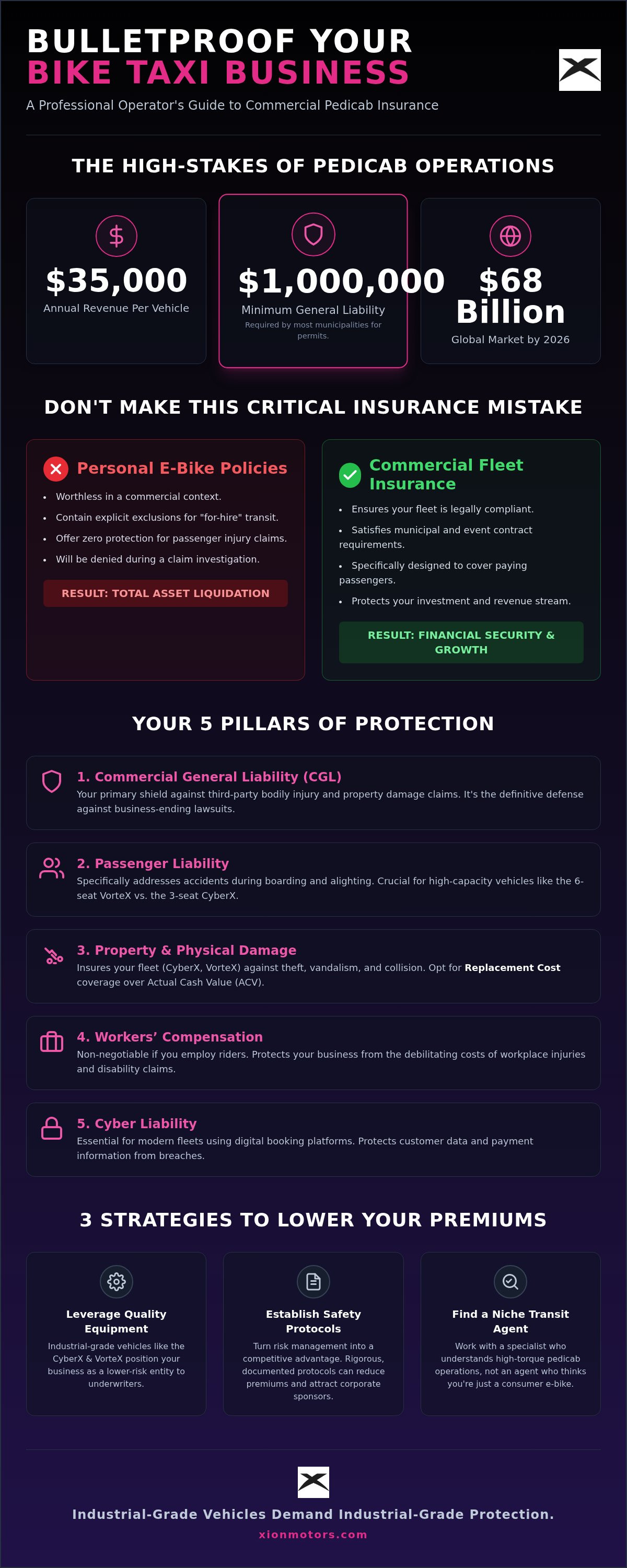
Professionalism in the pedicab industry starts with a hard look at your risk profile. While the Cycle rickshaw has evolved into a high-performance electric vehicle, the legal requirements for operating them have become equally sophisticated. Standard e-bike or personal umbrella policies are essentially worthless in a commercial context. They contain explicit exclusions for livery or for-hire transit services. If you're running a CyberX or a VorteX for profit, you must secure dedicated bike taxi business insurance. Without it, you're one collision away from total asset liquidation and a permanent market exit.
Securing municipal operating permits or high-value event contracts depends entirely on your ability to produce a valid Certificate of Insurance (COI). In 2026, most major municipalities require a minimum of $1,000,000 in general liability coverage per occurrence just to grant a permit. This isn't just bureaucratic red tape; it's a professional filter that separates seasoned fleet operators from amateur hobbyists. When your vehicles have the potential to generate $35,000 in annual revenue, protecting that income stream with industrial-grade bike taxi business insurance is a pragmatic business decision.
Commercial General Liability (CGL) for Pedicabs
CGL is your primary defense against third-party bodily injury and property damage claims. If a rider clips a parked vehicle or a pedestrian is injured near your staging area, CGL manages the legal defense and settlement costs. Most urban entertainment districts and corporate sponsors won't engage with your brand without seeing these limits. Commercial General Liability for pedicab operators serves as the definitive primary shield against sudden business bankruptcy. It ensures that a single mistake on the street doesn't end your entrepreneurial journey.
The Necessity of Passenger Liability
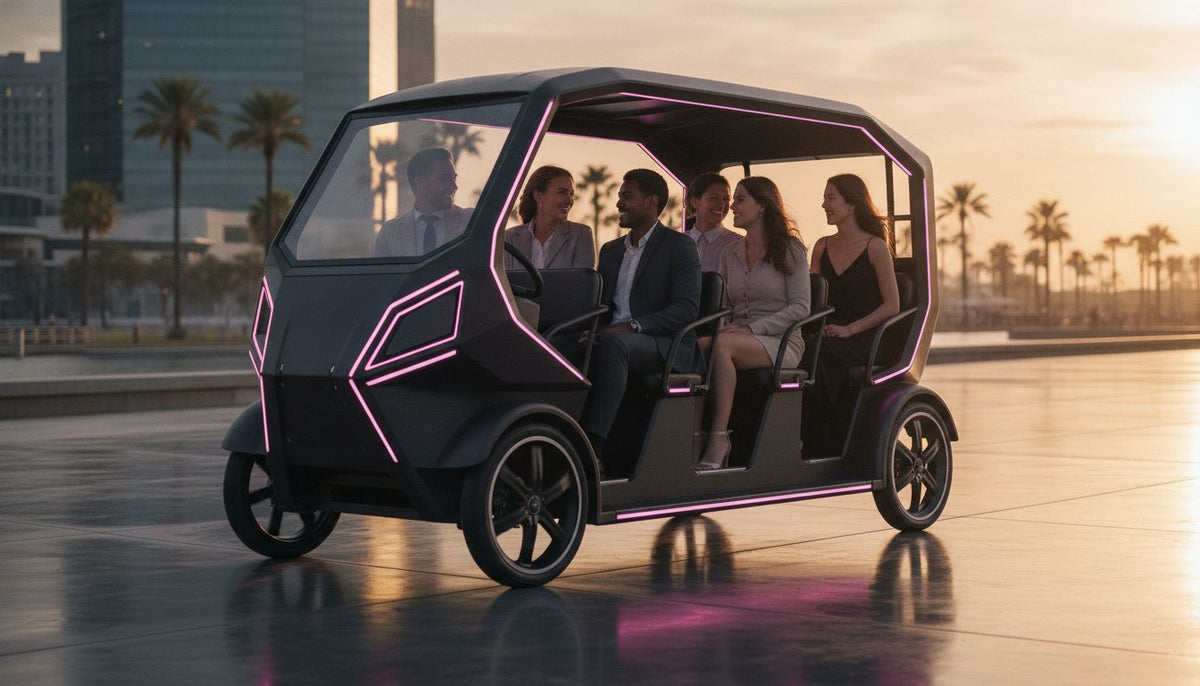
Transporting human cargo introduces a unique set of variables that standard transit policies often overlook. Passenger liability specifically addresses boarding and alighting accidents, which remain the most frequent source of claims in the micro-mobility sector. Your risk tier shifts significantly as your fleet's capacity grows. Operating a 6-seat VorteX presents a different actuarial profile than a 3-seat CyberX. Insurers view higher passenger counts as increased exposure, so your safety protocols must be as rugged and reliable as the industrial chassis you're driving. Mastering this coverage allows you to scale your fleet with confidence.
The Core Coverage Pillars for Professional Fleet Operators
Operating a high-capacity fleet requires more than just a basic liability policy. You must build a multi-layered defense to protect your capital investment. Many operators struggle with the gray area between commercial auto and specialized liability. While your vehicles are technically bicycles, their commercial use for transit places them in a high-exposure category. Professional bike taxi business insurance must bridge this gap to ensure no claim falls through the cracks of a standard policy exclusion.
Beyond the street, your business faces digital and operational risks. Workers’ compensation is non-negotiable if you employ hired riders. It protects your company from the debilitating costs of workplace injuries and long-term disability claims. Similarly, cyber liability has become essential for modern fleets using digital booking platforms. Protecting customer data and payment information is a core requirement for maintaining market trust. Legislative trends, such as the UK Pedicab Legislation, demonstrate how regulatory frameworks are tightening globally to enforce these professional standards. Adopting these pillars early positions your fleet as a leader in industrial-grade transit.
Property and Physical Damage Coverage
Your vehicles are the lifeblood of your revenue. Insuring your CyberX or VorteX fleet against theft, vandalism, and collision damage is a fundamental necessity. We recommend opting for replacement cost coverage rather than actual cash value (ACV). ACV accounts for depreciation, which can leave you short of the funds needed to buy a new vehicle after a total loss. Underwriters view a 6-seat VorteX differently than a standard trike. Your property coverage must reflect the higher replacement value of these high-capacity units. Don't forget to include coverage for your custom branding and advertising wraps. These assets are critical for your marketing ROI and should be protected with the same rigor as the chassis itself.
Inland Marine: More Than Just Shipping
Mobile fleets that travel for festivals or corporate activations need inland marine insurance. This policy covers your equipment while it's "in transit" across the country or stored at temporary event sites. It is specifically designed to protect property that doesn't stay at a single fixed location. For electric fleets, this coverage is vital for protecting expensive lithium-ion battery replacements during storage. If you're looking to scale, investing in Pedicab Fleet Packages that prioritize durability will naturally lower your long-term risk profile and simplify your coverage needs. High-performance equipment demands high-performance protection.
Mitigating High-Performance Risks: Electric vs. Traditional Pedicabs
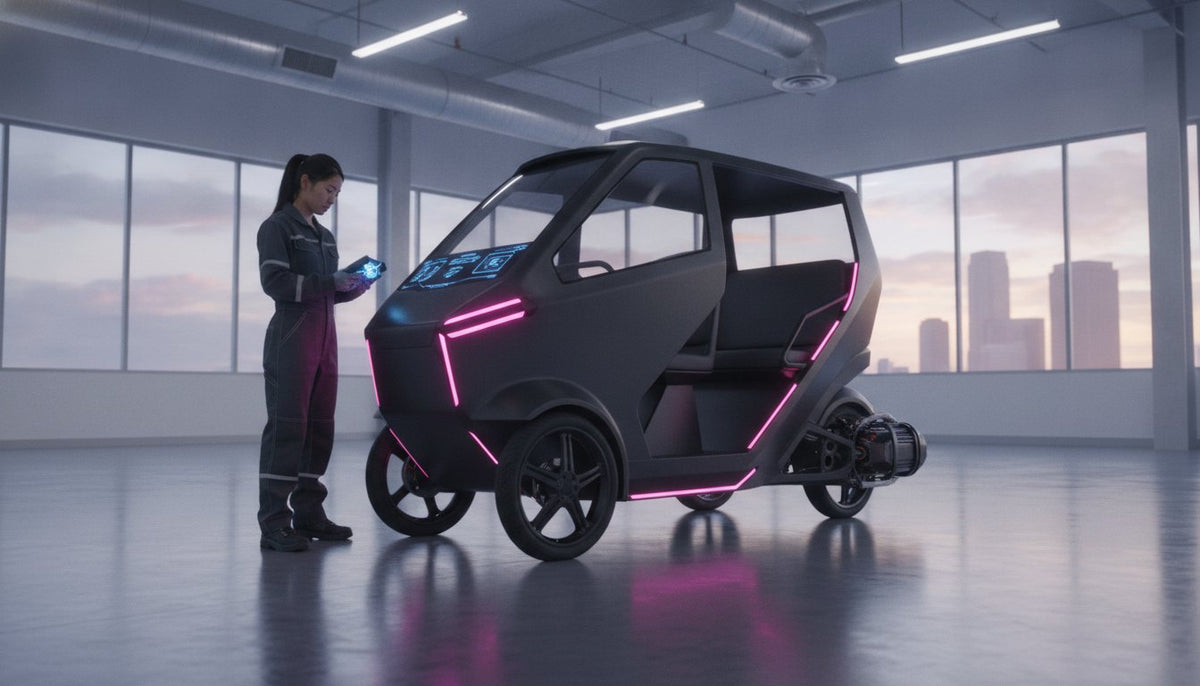
High-torque electric motors are the industry standard for 2026, but they introduce specific actuarial challenges. Insurers don't just look at your revenue; they look at your drive system. Standard bike taxi business insurance providers often raise red flags when they see high-performance motor assists. You must prove that your hardware is designed for commercial abuse, not just weekend leisure. This distinction is the core of modern Municipal Pedicab Regulation, where safety requirements are increasingly tied to vehicle engineering and power limitations.
The transition from human-powered trikes to electric fleets has forced a total re-evaluation of risk management. While traditional pedicabs rely on the physical limits of the rider, the CyberX and VorteX utilize advanced drive systems that demand professional-grade oversight. Insurers scrutinize these systems because higher speeds and heavier loads increase the potential severity of an impact. Demonstrating that your fleet uses industrial-grade components isn't just about pride; it's a strategic move to lower your liability profile and secure faster underwriting approval.
Battery Management and Fire Liability
Lithium-ion safety is the single greatest concern for modern underwriters. Insurers fear the catastrophic loss associated with thermal runaway during charging or storage. You can mitigate this risk by implementing professional charging protocols and utilizing only UL-certified components. In 2026, non-certified battery systems are a fast track to a denied application or a cancelled policy. We recommend dedicated, fire-rated storage areas for your fleet batteries to demonstrate a "safety-first" operational culture. This level of pragmatism signals to your broker that you're a master practitioner of risk management who understands the technical realities of the trade.
Engineering for Lower Premiums
Build quality is a powerful lever for reducing your annual premiums. Underwriters favor vehicles constructed with 4130 Chromoly steel frames because they offer superior impact resistance compared to standard aluminum. The CyberX chassis is engineered specifically to prevent structural failure claims under heavy commercial loads. Similarly, hydraulic braking systems are a non-negotiable safety feature for heavy-duty 6-seat models like the VorteX. These mechanical advantages reduce the likelihood of "failure to stop" accidents, which are a primary driver of passenger injury claims. Consistent electric pedicab maintenance is the final piece of the puzzle. Documenting your service intervals proves to your insurance provider that your fleet remains in peak, low-risk condition throughout the operating season.
Optimizing Insurance Premiums for Maximum Fleet ROI
View insurance as a profit-enabler rather than a mandatory tax on your operations. If you want to unlock the $30,000 to $35,000 annual revenue potential per vehicle, you must look beyond the initial premium cost. High-value corporate sponsors and municipal partners demand rigorous bike taxi business insurance standards before they sign a contract. They won't put their brand on a vehicle that isn't backed by a million-dollar liability shield. Professional coverage is the key that opens doors to elite urban entertainment districts and exclusive event venues.
Precision management requires data to satisfy skeptical underwriters. Implementing a "Safety First" rider training program is a direct way to reduce claim frequency and severity. Use telematics and GPS tracking to provide hard evidence of your fleet's street performance. Showing an insurer that your riders maintain controlled speeds and follow optimized routes transforms your fleet from a high-risk unknown into a predictable, manageable asset. This proof of operational discipline allows you to negotiate premiums from a position of rugged authority rather than desperation.
Insurance as a Sales Tool
Being "Fully Insured" is a massive competitive advantage when bidding for municipal RFPs. It signals that you're a veteran operator with the financial stability to handle the complexities of modern urban transit. High-end resorts and luxury hotels prioritize guest safety above all else. When you present a comprehensive policy, you're not just selling a ride; you're selling a secure, professional experience. Marketing your safety standards to premium passengers allows you to command higher rates, directly offsetting the cost of your premiums.
Risk Retention Groups vs. Traditional Carriers
As you scale your electric pedicab fleets, traditional carriers might become less efficient for your specific needs. Risk Retention Groups (RRGs) offer industry-specific pools that understand the unique engineering of the CyberX and VorteX. These groups allow you to benefit from the collective safety record of other professional operators who share your commitment to industrial-grade equipment. For physical damage, some large-scale fleets choose to self-insure, retaining the risk for minor cosmetic repairs while using traditional carriers for catastrophic liability. This hybrid approach keeps your capital working for you instead of sitting in an insurer's reserve.
Balancing your upfront costs with long-term risk requires a strategic deductible selection. A higher deductible lowers your monthly overhead but requires a rugged cash reserve for immediate repairs. It's a calculation of confidence. If your fleet is built on industrial-grade chassis like the VorteX, your likelihood of structural failure claims is statistically low. This makes a higher deductible a pragmatic choice for established businesses that prioritize cash flow for expansion. Ready to build a high-performance business? Explore our Pedicab Fleet Packages to secure the hardware that insurers trust.
Securing Your Assets: The Path to a Fully Insured Fleet
Securing your fleet for the 2026 season requires a methodical approach to risk transfer. You don't just buy a policy; you qualify for it through operational excellence. Obtaining bike taxi business insurance is the final gate before your vehicles hit the street to generate revenue. This process starts with documenting your equipment and safety specifications with surgical precision. Don't settle for a generalist broker. Choose an agent with specialized "Niche Transit" experience who understands the high-torque reality of electric livery. They'll recognize the difference between a flimsy consumer trike and an industrial-grade chassis.
Your operational safety manual is the cornerstone of your application. It should detail your rider training, battery charging protocols, and emergency response plans. This document proves you aren't just a hobbyist with a few trikes. It positions you as a professional fleet manager who prioritizes risk mitigation. Finalize your policy at least two weeks before your planned launch date. This lead time ensures all municipal filings are processed without delay, allowing you to focus on the $35,000 annual revenue potential per vehicle rather than paperwork.
The Underwriting Checklist
Underwriters require granular data to assess your risk profile. You'll need serial numbers for every chassis, Bills of Lading (BoL) for proof of ownership, and signed rider agreements for every operator. Highlighting the Custom VorteX Trike safety features, such as the reinforced 4130 Chromoly steel frame and hydraulic braking, can significantly speed up the approval process. These engineering standards demonstrate that the vehicle is built to withstand commercial abuse. A professional pedicab business blueprint is your most valuable asset during this phase. It provides the financial and operational context that traditional carriers need to see before they commit to your business.
Continuous Compliance and Renewal
The work doesn't end once the policy is bound. Maintain detailed maintenance logs for every unit in your fleet to prepare for annual insurance audits. These logs prove that your equipment remains in peak, low-risk condition throughout the year. Always update your carrier immediately when adding a 6-seat electric pedicab to your operations. Expanding your capacity changes your risk profile, and failing to notify your agent can lead to catastrophic coverage gaps. As your revenue scales toward $35,000 per vehicle, review your coverage limits to ensure your liability shield remains commensurate with your growing asset value. Stay disciplined, stay documented, and stay profitable.
Scaling Your Fleet with Industrial-Grade Security
Scaling a pedicab operation into a high-revenue enterprise requires more than just street smarts; it demands a foundation of professional risk management. You now understand that bike taxi business insurance isn't a hurdle but a strategic asset that unlocks municipal permits and elite corporate partnerships. By choosing equipment built for commercial abuse and maintaining rigorous safety protocols, you transform your fleet from a liability into a high-performance profit engine. Success belongs to the prepared.
We've spent 20 years in the trenches of the pedicab industry, perfecting the tools you need to dominate the market. Our industrial-grade CyberX engineering and 4130 Chromoly steel frames provide the durability that underwriters demand. With national shipping and comprehensive parts support, we ensure your fleet stays on the street and remains fully insurable as you scale toward your revenue goals. The 2026 market is ready for operators who prioritize precision and protection. Take the final step toward securing your business future today.
Build Your Insurable Fleet with Xion Motors
Your journey to a fully insured, high-revenue fleet starts with a single, decisive choice. Build with confidence and lead the market.
Expert Answers on Commercial Pedicab Risk Management
Do I need a commercial driver’s license (CDL) to insure a bike taxi?
You don't need a Commercial Driver’s License (CDL) to operate or insure an electric pedicab as long as it meets the federal classification for a bicycle. In the United States, this generally requires a motor of 750W or less and an assisted speed that doesn't exceed 20 mph. While a standard driver's license is often a municipal requirement, insurers prioritize your operational safety record and vehicle engineering over specialized heavy-vehicle certifications.
How much does bike taxi business insurance typically cost per vehicle?
Annual premiums for bike taxi business insurance typically range from $1,200 to $2,400 per vehicle. This cost varies based on your fleet size, location, and the specific risk profile of your equipment. High-performance units like the CyberX often attract better rates from specialized underwriters because their industrial-grade chassis and safety features reduce the likelihood of structural failure. Investing in professional-grade hardware is a pragmatic way to stabilize your long-term insurance overhead.
Is passenger liability insurance required by law for pedicabs?
Passenger liability is almost universally required by municipal ordinances for for-hire transit operations. While federal law provides a broad framework, local governments set the specific indemnity limits you must maintain to receive an operating permit. Failing to carry this coverage exposes your business to catastrophic financial loss from boarding or alighting accidents. Most professional operators carry at least $1,000,000 in liability to satisfy these legal and commercial requirements.
Can I insure a custom-built electric trike from Xion Motors?
Yes, you can insure a Custom VorteX Trike or any other Xion Motors vehicle through specialized niche transit carriers. Our 20 years of fleet experience ensures that our engineering meets the rigorous standards underwriters expect for commercial use. Providing your agent with the specific technical data for our 4130 Chromoly steel frames and hydraulic braking systems often simplifies the approval process. These industrial-grade features signal a lower risk profile to insurance providers.
What happens if my pedicab rider is an independent contractor?
If your riders are independent contractors, your bike taxi business insurance policy must include specific language that extends liability coverage to their operations. You should also verify state-specific workers' compensation requirements, as some jurisdictions classify all for-hire riders as employees for insurance purposes. Managing a fleet of contractors requires rigorous safety training documentation to prove to your carrier that you maintain high operational standards across your entire mobile workforce.
Does insurance cover the lithium-ion batteries in my electric fleet?
Insurance can cover lithium-ion batteries through property or inland marine policies, but underwriters often require proof of UL-certified components. In 2026, carriers are increasingly cautious about fire risks associated with charging and storage. Implementing professional charging protocols and using fire-rated storage areas will help you secure this coverage. High-performance fleets like the CyberX benefit from using standardized, industrial-grade power systems that insurers recognize as being more reliable than consumer-grade alternatives.
What is the minimum general liability limit for a pedicab business?
The standard minimum for general liability in the pedicab industry is $1,000,000 per occurrence. Major municipalities and corporate event sponsors rarely accept lower limits for for-hire transit. In some regions, like California, you may even need an additional $500,000 in umbrella coverage to satisfy permit requirements. Carrying these professional-grade limits protects your business assets and qualifies you for high-value contracts that generate up to $35,000 in annual revenue per vehicle.
How does vehicle maintenance impact my insurance claims?
Documented vehicle maintenance is the strongest defense against claims involving mechanical failure. If an accident occurs, insurers will audit your service logs to determine if the equipment was properly maintained according to industrial standards. Neglecting routine checks on hydraulic brakes or drive systems can lead to denied claims or policy cancellations. Maintaining a rigorous service schedule for your VorteX fleet proves you are a master practitioner who prioritizes passenger safety and operational reliability.