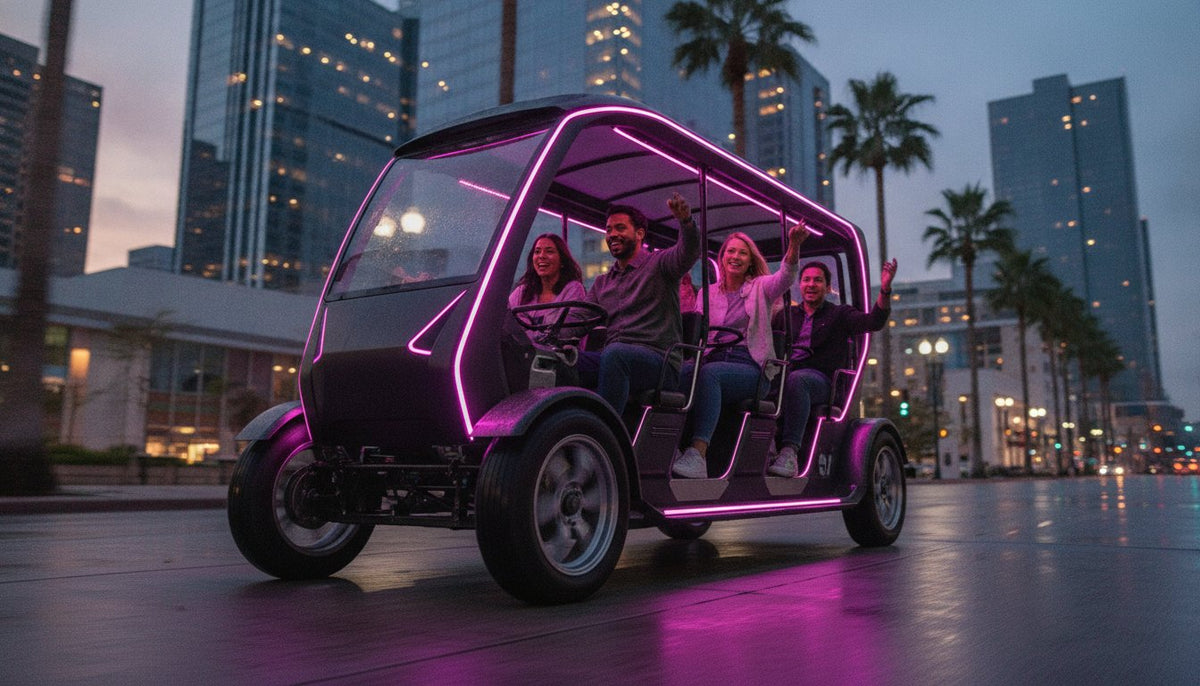
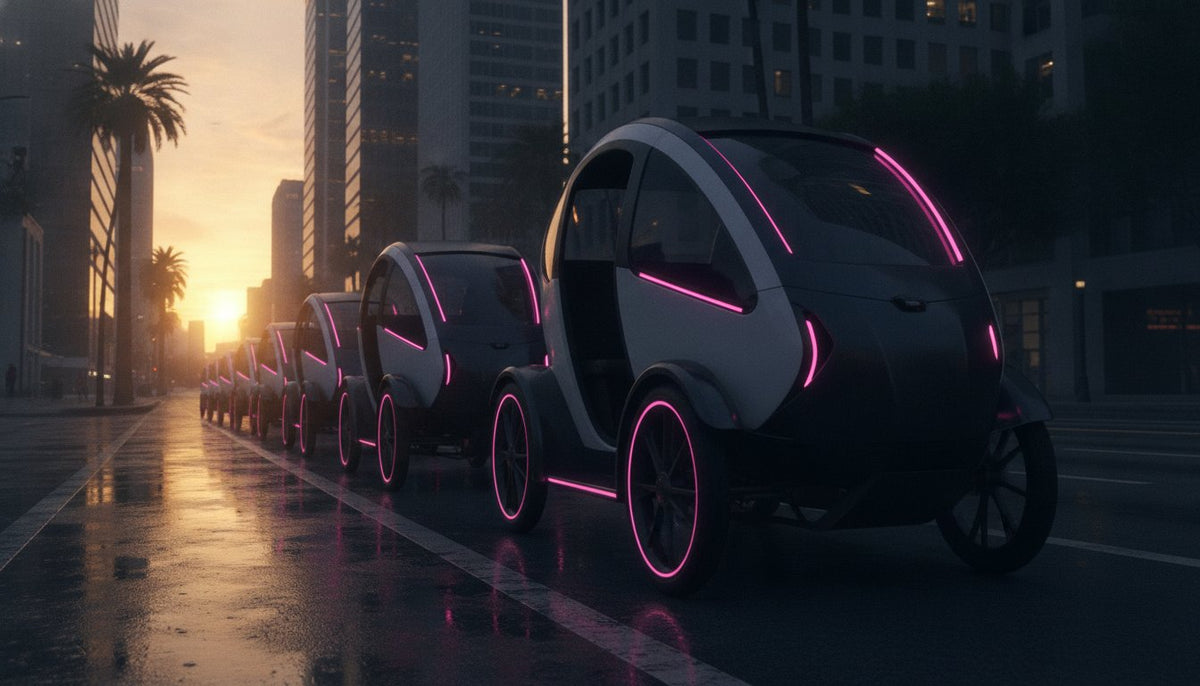
The standard golf cart fleet might be the biggest leak in your resort's bottom line. For decades, these vehicles have been the default for moving guests, yet they often fail the moment they hit high-density pedestrian zones or face strict municipal regulations. When evaluating a pedicab vs golf cart for resort transportation, you have to look beyond the initial sticker price. You're likely tired of seeing your shuttles stuck in congestion or sidelined by expensive battery replacements. It's a common frustration for operators who want to maximize every square foot of their property without compromising on safety or guest access.
This guide breaks down why high-torque electric pedicabs are outperforming traditional carts in 2026 revenue and long-term durability. We've spent over 20 years in the trenches of fleet operations, and the data is clear. You'll discover how industrial-grade builds like the $17,500 6-seat model provide a premium, open-air experience that guests actually pay for. We'll analyze the exact ROI shift, from reducing fleet downtime to tapping into lucrative advertising streams. This comparison provides the financial and operational blueprint you need to modernize your guest mobility and maximize revenue per vehicle.
Key Takeaways
- Analyze the "Revenue per Seat" metrics that make the $17,500 6-seat model a superior investment for high-volume tourism districts.
- Identify the regulatory advantages of electric pedicabs that allow you to operate in pedestrian-heavy zones where golf carts are often restricted.
- Evaluate the critical differences in a pedicab vs golf cart for resort transportation to see how industrial-grade steel outperforms thin-wall aluminum.
- Learn to optimize your resort's footprint by utilizing agile vehicle designs that require less storage and charging space than traditional shuttles.
- Discover how 20 years of fleet operation experience translates into high-torque drive systems engineered for maximum uptime and minimal maintenance.
The Evolution of Resort Guest Transit: Pedicabs vs. Golf Carts
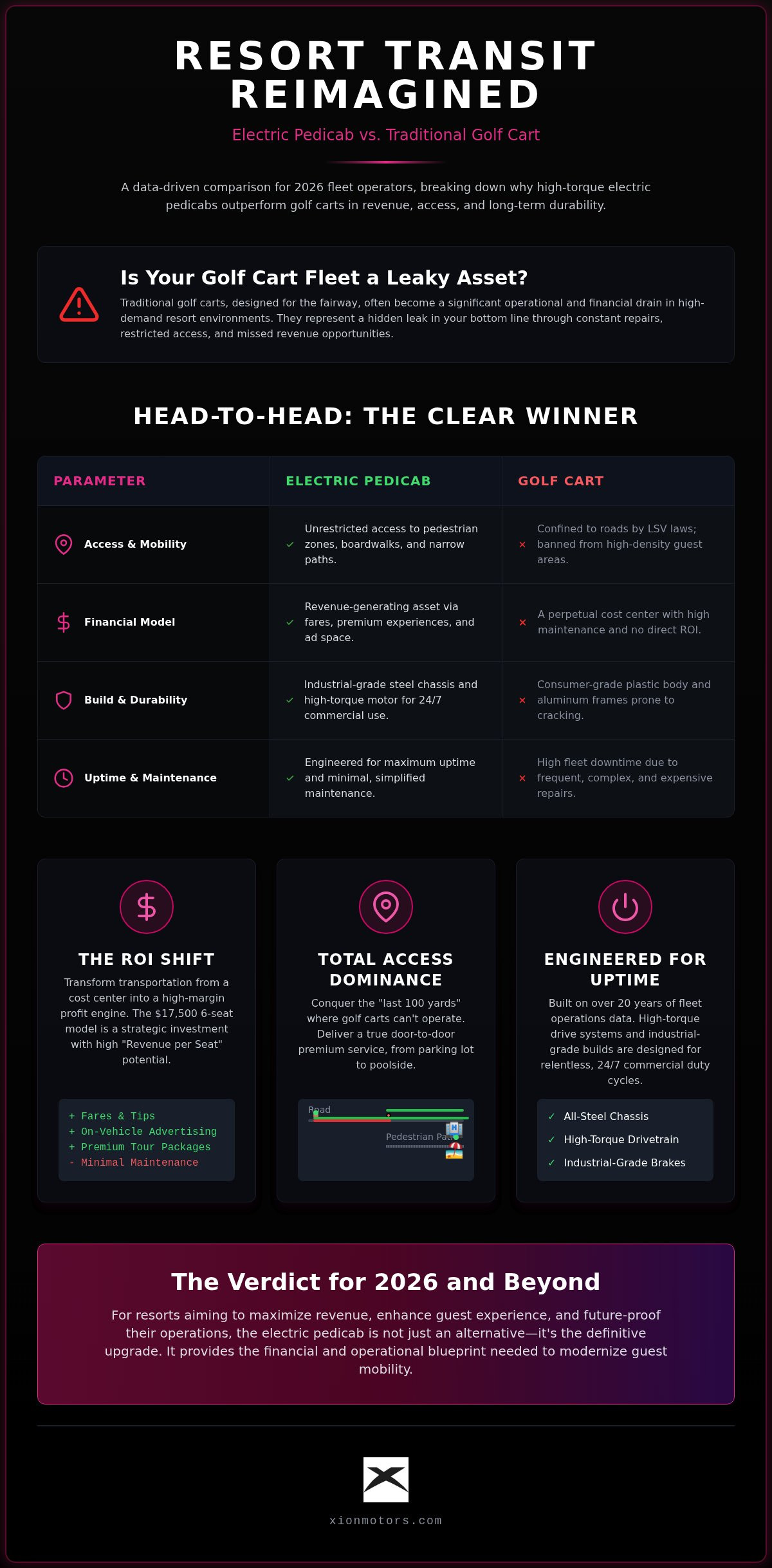
Hidden operational barriers often cripple golf cart fleets. Many street-legal carts fall under Low-Speed Vehicle (LSV) classifications. These federal rules require VINs and specific safety gear, but they also restrict these vehicles to roads with speed limits under 35 mph. More importantly, they're often banned from pedestrian-heavy boardwalks and narrow resort corridors. This creates a "last mile" problem where your guests are left walking exactly where they wanted a ride. You need a solution that bridges the gap between the parking lot and the guest's actual destination.
The Limitations of the Traditional Golf Cart
Traditional golf carts weren't built for 24/7 commercial rotations. They're designed for the golf course. When you put them into a high-volume resort environment, the maintenance costs spike. Plastic body panels crack under the daily abuse of luggage and passengers. Complex steering racks and suspension systems require frequent, expensive repairs. When deciding on a pedicab vs golf cart for resort transportation, you must account for the total cost of ownership beyond the purchase price. These vehicles often lack the industrial-grade chassis needed for constant duty cycles, leading to high fleet downtime that eats your margins.
The Pedicab Advantage in 2026
The Cycle rickshaw (or pedicab) has evolved into a high-torque powerhouse. In 2026, the modern electric pedicab bypasses many of the regulatory hurdles that plague LSVs. Because they're often classified as bicycles, they can navigate narrow corridors, crowded boardwalks, and restricted zones with ease. This maneuverability ensures your guests get door-to-door service, not just curb-to-curb. If you're looking to scale, understanding the logistics of starting a pedicab company is the first step toward building a high-margin transit infrastructure. It's about precision, power, and professional-grade performance that stands up to the rigors of the industry.
Regulatory Flexibility and Urban Access: Winning the Curb
Golf carts are often anchored to the asphalt. While they serve a purpose on the fairway, street-legal models must adhere to strict Federal low-speed vehicle (LSV) regulations, which limit their utility to specific public roads and designated paths. Pedicabs operate in the "grey areas" of resort infrastructure where carts simply cannot go. They transition seamlessly from public streets to private boardwalks and pedestrian zones. This flexibility is the deciding factor in the pedicab vs golf cart for resort transportation debate. When a golf cart becomes a liability due to restricted access, the pedicab remains a high-performance asset.
Accessing the "Last 100 Yards"
Guests don't want to walk from a distant parking lot to the beach or their villa. They want door-to-door delivery. High-torque electric pedicabs navigate narrow paths and tight-radius turns that would high-center or block a standard cart. The CyberX is engineered specifically for these tight environments. It reduces guest walking time in sprawling master-planned communities by delivering them directly to the patio or sand line. This isn't just a convenience; it's operational dominance over the guest experience.
Regulatory Compliance and Safety
Municipalities often view bicycle-based pedicabs with more leniency than motorized carts, which simplifies your fleet expansion and reduces red tape. Safety isn't sacrificed for this access. Industrial-grade braking systems on a professional fleet outperform the drum brakes found on consumer-grade carts. You need stopping power that handles heavy loads on mixed-terrain resort paths without fade. Whether you're deploying the $13,500 3-seat model or the $17,500 6-seat powerhouse, insurance providers recognize the value of purpose-built, industrial equipment. Professional operators know that reliability in the field is the only metric that matters.
Storage is expensive and often overlooked during the planning phase. A fleet of ten golf carts requires a massive footprint and high-amperage charging stations that can strain resort utilities. Pedicabs are leaner. They maximize your resort's footprint by fitting into tighter storage zones and requiring less specialized charging infrastructure. You can often park three pedicabs in the space required for two standard carts. This spatial efficiency directly impacts your bottom line. If you're ready to upgrade your guest mobility, explore our fleet packages to see how we build for the master practitioner.
Analyzing Operational ROI: Revenue Per Seat and Maintenance Costs
Operational success in the resort sector is measured by one metric: revenue density. When you evaluate a pedicab vs golf cart for resort transportation, you aren't just buying a vehicle; you're investing in a seat-based revenue engine. A standard golf cart has a fixed utility, often limited by its slow passenger turnover and lack of engagement. In contrast, an industrial-grade electric pedicab is built to maximize every rotation. Research indicates that a single industrial pedicab can generate between $30,000 and $35,000 in annual gross revenue. This figure often eclipses the earnings of traditional shuttles because it combines high-frequency trips with a premium guest experience that commands higher fares and tips.
The entry point for a professional fleet begins with the $13,500 3-seat model, but the real dominance occurs at the next tier. Choosing between the 3-seat and the $17,500 6-seat model depends on your specific traffic patterns. While the smaller unit is agile, the larger model triples your revenue potential per trip without tripling your overhead. It's a pragmatic choice for operators who want to move large families or wedding parties through high-volume entertainment districts with maximum efficiency.
Revenue Density: The 6-Seat Powerhouse
The 6 seat electric pedicab is the ultimate resort ROI tool. Consider the math of hourly earnings: moving two passengers in a standard cart vs. moving six in a high-torque trike. The ability to scale capacity on the fly allows you to capture more demand during peak resort hours. Beyond the fares, the open-air nature of the ride increases guest engagement. This human element is a core part of the municipal regulation of the pedicab industry and its commercial appeal; guests feel connected to the resort, leading to higher operator retention and significantly better profitability through tips.
Operational Continuity and Maintenance
Maintenance is where standard golf carts fail. They rely on proprietary spares and complex automotive-style steering that can take weeks to repair. Our fleet is built for the Master Practitioner who understands that downtime is lost revenue. By following an electric pedicab maintenance guide, you can sustain performance with standardized components that are easily sourced and replaced. Annual operating costs for these industrial trikes typically range from $2,000 to $4,000 after the first year, a predictable expense that keeps your fleet in constant rotation. High-torque drive systems handle all-day guest rotations and steep inclines without the mid-day charging requirements that plague lead-acid golf cart batteries. You get a vehicle that works as hard as you do, ensuring your pedicab vs golf cart for resort transportation analysis always favors the more durable, high-yield asset.
Industrial-Grade Engineering: Built for the Master Practitioner
Structural integrity defines the lifespan of a resort fleet. When comparing a pedicab vs golf cart for resort transportation, the most critical differences are hidden beneath the bodywork. Most commercial golf carts rely on thin-wall aluminum or molded plastic components that fatigue under constant passenger rotations. Our chassis are engineered from structural steel, designed to absorb the mechanical stress of high-capacity transport. We build for the Master Practitioner who understands that a vehicle is only as good as its frame. This rugged foundation is essential for coastal resorts where salt air and high humidity quickly degrade consumer-grade materials.
High-torque performance is non-negotiable. Resorts aren't always flat. You need a drive system that handles steep inclines and maximum payloads without overheating. While many electric trikes use standard 750W motors, these systems often fail under the weight of a 6-seat configuration. We utilize industrial-grade power plants that deliver consistent torque from a dead stop. This ensures your operators can navigate mixed-terrain paths safely and efficiently, regardless of the load. It's about precision engineering that stands up to the rigors of the industry.
The Anatomy of a Commercial Trike
We analyze every frame stress point to prevent the structural failures common in lighter vehicles. High-capacity lithium systems provide the energy density needed for all-day operations, while regenerative braking adds a layer of safety and efficiency. This technology captures energy during descents, extending your range and reducing wear on the primary braking system. It's a closed-loop engineering approach that prioritizes uptime over everything else. When you choose an industrial build, you're choosing a vehicle that doesn't need to be coddled.
Custom Configurations for Resort Excellence
Your fleet should be a mobile billboard. We offer custom electric trikes for business that transform standard transport into a VIP experience. From integrated sound systems and LED lighting packages to full weather protection, these vehicles are tailored to your resort's specific brand identity. Adding custom ad panels and resort logos turns each vehicle into a secondary revenue stream, paying for itself through high-visibility marketing. You aren't just buying a trike; you're deploying a professional branding tool that engages guests on a deeper level.
Precision and power are the hallmarks of a successful transit operation. Don't settle for consumer-grade equipment that will fail when you need it most. Explore our industrial-grade fleet packages to see how we can modernize your guest mobility today.
Deploying Your Resort Fleet: Scaling with Xion Motors
Strategic deployment is the hallmark of a veteran operator. When finalizing your strategy for a pedicab vs golf cart for resort transportation, the focus must shift from vehicle selection to fleet architecture. A balanced property requires a mix of specialized assets. We recommend leveraging the $13,500 3-seat models for on-demand guest shuttling and VIP concierge services where speed and agility are paramount. For high-traffic corridors and large family groups, the $17,500 6-seat powerhouse serves as your primary revenue engine. This combination ensures you aren't over-investing in capacity where it isn't needed while never missing a high-fare group opportunity.
Scaling from a single pilot unit to a dominant resort fleet requires a partner who understands the industrial lifecycle. Xion Motors provides direct-to-operator sales, removing the middleman and ensuring your capital goes directly into the quality of the chassis and drive system. By utilizing fleet pricing, you maximize your initial investment and accelerate your path to total ROI. Our goal is to move you from a trial phase to a full-scale operational standard that defines your property's guest experience.
Nationwide Logistics and Support
Reliability extends beyond the vehicle's frame. It includes the logistics of getting your equipment on the ground and keeping it there. We manage national shipping across the US, ensuring your units arrive ready for immediate deployment. Accessing specialized electric pedicab fleet packages allows you to lock in pricing and production schedules. Because we focus on US-based manufacturing and parts support, your fleet health is never compromised by international supply chain delays. We stock the components you need to ensure maximum uptime during your peak seasons.
The Next Step in Resort Transit
Transitioning from a legacy golf cart fleet to high-performance electric trikes is a move toward modernization and profitability. You don't have to navigate this shift alone. Our experts are available to help you architect a fleet that matches your property's unique topography and guest volume. Secure your 2026 production slots for the CyberX and VorteX lines now to ensure your resort is equipped for the upcoming season. It is time to replace outdated, high-maintenance carts with industrial-grade tools designed for the master practitioner. You've seen the ROI data; now it's time to execute.
Mastering the Future of Resort Mobility
The choice between a pedicab vs golf cart for resort transportation isn't just about moving people; it's about architecting a more profitable guest experience. You've seen how industrial-grade engineering outlasts consumer-grade plastics and how regulatory flexibility opens access to the most lucrative zones on your property. By prioritizing revenue density and mechanical integrity, you position your resort at the forefront of modern transit. The data supports a transition toward agile, high-torque vehicles that work as hard as your team does. It's time to stop managing fleet downtime and start maximizing your revenue per seat.
We provide the tools you need to dominate your market. Our 3-seat models start at $13,500, while our 6-seat high-capacity powerhouses are priced at $17,500. We ship to all 50 states and offer direct-to-operator support to ensure your success from day one. Scale your resort operation with Xion Motors industrial-grade fleet packages and secure your production slots for the 2026 season. You've done the math. Now, take the lead and transform your property's mobility into a high-performance asset that delivers real-world results.
Frequently Asked Questions
Is a pedicab or a golf cart more profitable for resort transport?
Pedicabs are generally more profitable due to their dual revenue streams and lower operational barriers. An industrial-grade electric pedicab can generate $30,000 to $35,000 in annual gross revenue through a combination of passenger fares and advertising sales. While a golf cart is limited to utility, a pedicab functions as a mobile billboard. This makes the pedicab vs golf cart for resort transportation comparison favor the pedicab for operators seeking maximum ROI.
Do I need a special license to operate an electric pedicab at a resort?
Licensing requirements for electric pedicabs are typically determined at the local municipal level rather than by federal law. In many jurisdictions, they are classified as bicycles, which bypasses the strict Low-Speed Vehicle (LSV) requirements that often apply to golf carts. However, some areas require a standard driver's license or specific city permits. You should check your local ordinances to ensure compliance with driver age and insurance requirements for commercial operations.
How many passengers can a commercial electric pedicab carry?
Capacity depends on the specific model you deploy for your fleet. Xion Motors offers two primary industrial configurations:
- The $13,500 3-seat model for agile, on-demand shuttling.
- The $17,500 6-seat high-capacity model for families and groups.
These vehicles are engineered to handle maximum passenger loads without compromising structural integrity or drive performance. Choosing the right mix allows you to capture diverse guest demand across your resort property.
What is the maintenance cost difference between pedicabs and golf carts?
Industrial pedicabs often have lower long-term maintenance costs than traditional golf carts. While first-year costs include the initial investment, annual operating expenses for a professional pedicab typically range from $2,000 to $4,000. Golf carts frequently face high costs for proprietary parts and specialized battery replacements. Pedicabs utilize standardized components and high-torque drive systems that reduce downtime and simplify repairs, making them a more pragmatically viable choice for heavy commercial use.
Can electric pedicabs handle steep hills at resort properties?
Yes, industrial-grade electric pedicabs are specifically engineered with high-torque drive systems to manage steep resort inclines. Unlike consumer-grade electric bikes that may stall under heavy loads, our VorteX and CyberX models utilize power plants designed for maximum torque from a dead stop. This ensures your operators can transport full passenger loads up hilly terrain safely and consistently. This performance is a critical factor when evaluating a pedicab vs golf cart for resort transportation in varied topographies.
Are Xion Motors pedicabs street legal across the United States?
Xion Motors pedicabs are designed to meet or exceed the requirements for street-legal operation in most US jurisdictions. Because they are often classified as bicycles with electric assist, they have broader access to roads and pedestrian zones than traditional carts. However, local regulations vary significantly by city. We recommend consulting with local authorities regarding specific equipment requirements, such as lighting and reflectors, to ensure your fleet meets all municipal safety standards for commercial use.
What is the typical battery range for a resort pedicab fleet?
The battery range for a commercial pedicab fleet depends on the payload and terrain, but high-capacity lithium systems are designed for all-day guest rotations. These industrial systems provide the energy density needed to operate through peak resort hours without requiring mid-day charging. Regenerative braking technology also helps extend the range by capturing energy during descents. This ensures your vehicles stay in service when guest demand is highest, maximizing your daily revenue potential per unit.
How does Xion Motors handle nationwide shipping for fleet orders?
Xion Motors manages the entire logistics process to provide seamless national shipping across all 50 states. We ship our vehicles directly to operators, ensuring they arrive ready for immediate deployment at your resort. Our team provides direct-to-operator support to assist with the unboxing and initial setup of your new fleet. We also maintain a comprehensive inventory of vehicle parts to ensure you have long-term support for your investment regardless of your location.